
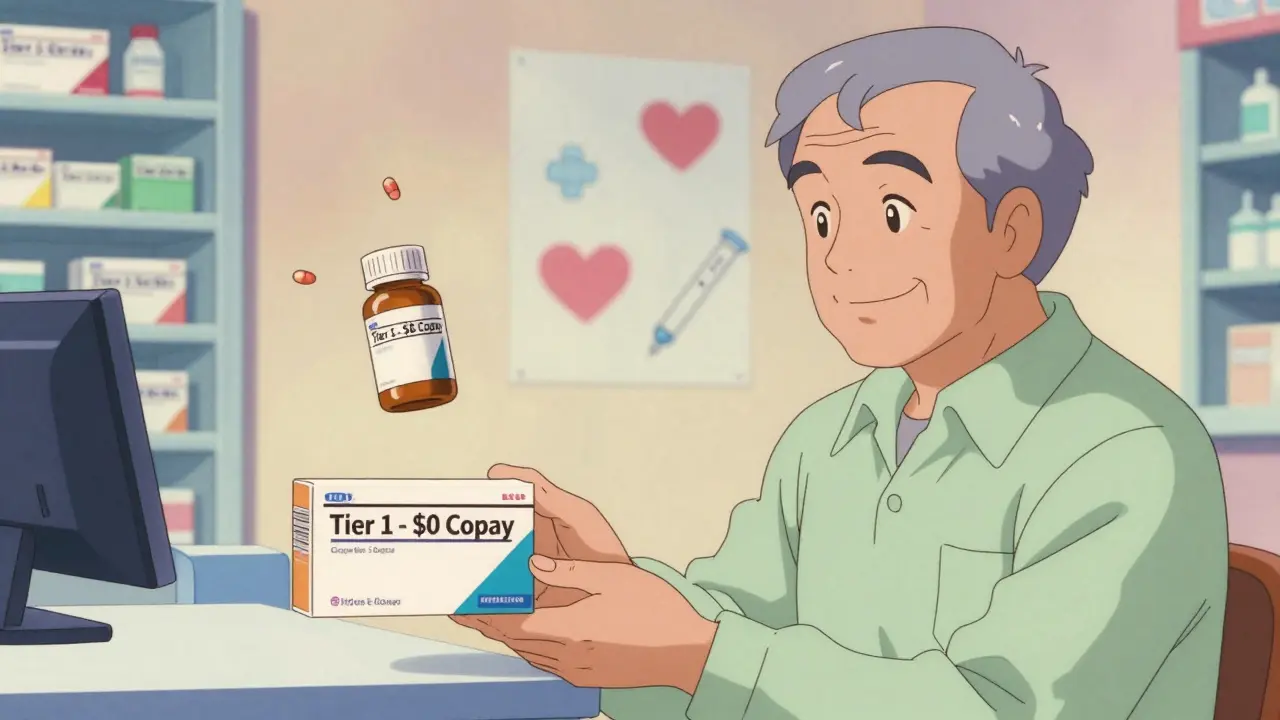
The VA formulary isn’t just a list of drugs-it’s the backbone of how millions of veterans get their prescriptions at low or no cost. If you’re a veteran enrolled in VA healthcare, understanding this system means knowing exactly what you’ll pay, what you’ll get, and how to avoid surprises at the pharmacy. The VA doesn’t follow the same rules as private insurance. It doesn’t use five tiers. It doesn’t charge high deductibles. And it doesn’t make you fight for generic drugs-because the system is built around them.
How the VA Formulary Works
The VA National Formulary is mandatory. Every VA clinic, hospital, and pharmacy across the country must stock these medications. It’s not optional. It’s not a suggestion. It’s the law of the land for VA-prescribed drugs. And it’s updated every single month. The latest version as of October 2025 includes over 1,500 medications, with new additions and removals posted monthly on VA.gov.
At its core, the VA formulary is designed for one thing: cost savings without sacrificing care. When a generic version of a drug exists, the VA covers the generic-always. Brand-name drugs are only approved if there’s a documented medical reason. That could mean an allergy, a proven lack of effectiveness with generics, or a rare condition that only the brand treats. Even then, you’ll need prior authorization.
The formulary is split into three tiers. Each tier has a different copay, and it’s simple:
- Tier 1: Preferred generics. These are the cheapest. Most common meds like aspirin, metformin, or sertraline fall here. Copay is $0 to $5 for a 30-day supply.
- Tier 2: Non-preferred generics or some brand-name drugs with generic alternatives. Copay is $8 to $12.
- Tier 3: Brand-name drugs with no generic, or specialty medications. Copay is $15 to $20.
Compare that to Medicare Part D, where a Tier 5 drug can cost you $100 or more per month. The VA system is designed to keep veterans from choosing between medicine and rent.
What Medications Are Covered? Real Examples
You don’t need to guess what’s covered. The VA formulary includes everyday drugs you’d expect-and a few you might not.
For heart health: atorvastatin (generic Lipitor), furosemide (Lasix), and hydrochlorothiazide are all Tier 1. That’s $0 copay for most veterans.
For diabetes: metformin, glimepiride, and insulin glargine are all covered. Newer drugs like semaglutide (Ozempic) are covered-but only if you have type 2 diabetes. Weight loss alone? Not covered under the VA formulary as of January 2025.
For mental health: fluoxetine (Prozac), sertraline (Zoloft), and trazodone are all Tier 1. Veterans report no difference in effectiveness between brand and generic versions. One veteran on Reddit wrote: “Switched to generic sertraline through VA Mail Order. Same effect as Zoloft, but I pay $0 instead of $15.”
For arthritis and pain: ibuprofen, allopurinol, and alendronate (for osteoporosis) are all Tier 1. These are among the most commonly prescribed drugs in the VA system.
The VA doesn’t cover every new drug on the market. If a drug came out last year and there’s no generic yet, it’s likely Tier 3. If it’s a specialty drug for a rare condition, you might need to go through prior authorization. But for the vast majority of prescriptions-92% of them, according to VA data-veterans get the generic version without hassle.
How the VA Saves You Money
The VA formulary isn’t just about coverage-it’s about savings. On average, veterans pay $5 to $10 for a 30-day supply of a Tier 1 generic. In the private market, the same drug might cost $20 to $50. That’s not a small difference. For someone on five or six medications, that’s hundreds of dollars a month saved.
And it’s not just the copay. The VA’s annual pharmaceutical spending per veteran is $1,850. For Medicare Part D beneficiaries, it’s $2,300. For those with private insurance, it’s $2,700. The VA’s aggressive use of generics cuts costs by nearly 20% compared to commercial insurers.
That’s why the VA formulary saves $2.8 billion a year. That’s money that goes back into care-more mental health counselors, better diabetes education, more home visits for elderly veterans.
How to Check If Your Drug Is Covered
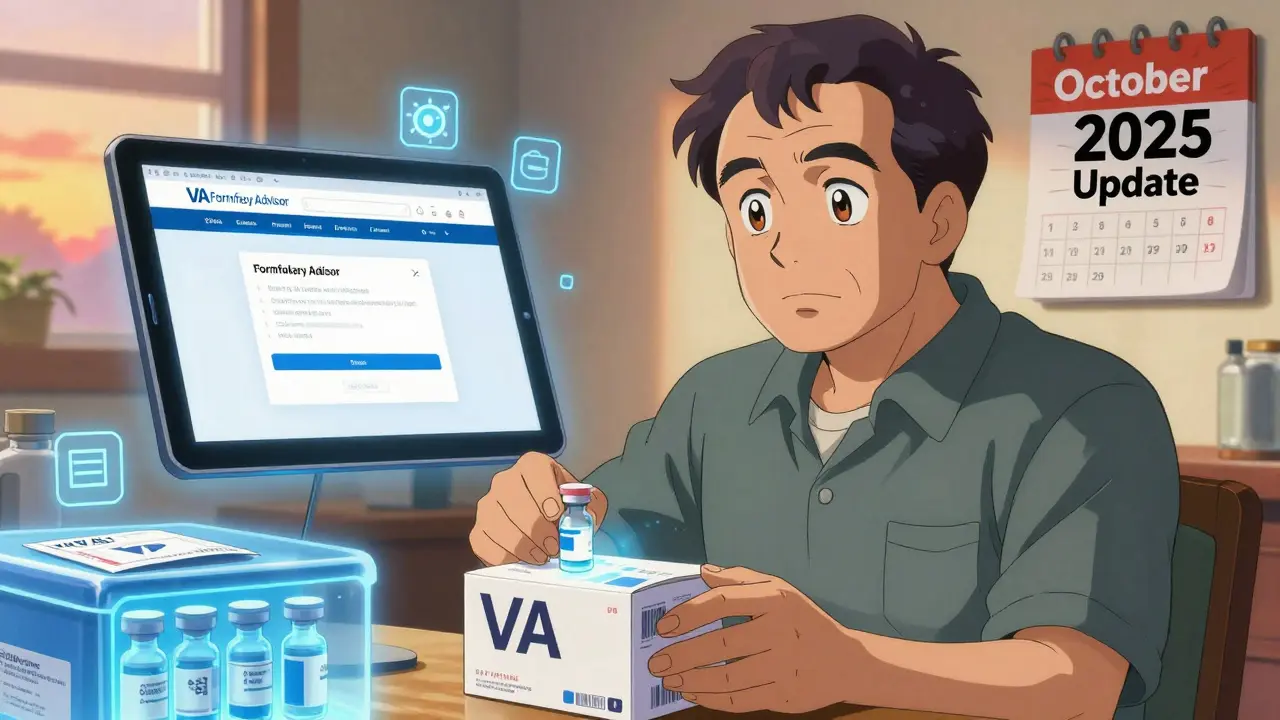
You don’t need to call anyone to find out if your medication is covered. Use the VA Formulary Advisor tool on VA.gov. Just type in the drug name-generic or brand-and it tells you the tier, the copay, and whether prior authorization is needed.
It’s simple. For example, if you search “Wegovy,” you’ll see it’s not covered for weight loss. But if you search “Ozempic,” you’ll see it’s covered for type 2 diabetes-and only for that.
You can also download the full formulary as an Excel file or CSV. It’s updated monthly. No guesswork. No hidden rules. Everything’s public.
Getting Your Meds: VA Pharmacy, Meds by Mail, or Community Care
You have three ways to get your prescriptions:
- VA Pharmacy: Pick up at your local VA clinic. Wait times vary, but it’s free.
- Meds by Mail: The most popular option. Your maintenance medications (like blood pressure or diabetes pills) are mailed to your home. No copay. No deductible. No trip to the pharmacy. 87% of users rate it positively.
- Community Care: If you’re away from a VA facility or need an urgent refill, you can use a local pharmacy. But you must get prior authorization first. Otherwise, you’ll pay full price and file for reimbursement-which can take weeks.
For veterans on Meds by Mail, refrigerated drugs like insulin or biologics are shipped with special packaging. The VA handles it. You don’t have to worry about ice packs or delivery windows.
What’s Not Covered-and Why
Not every drug makes the list. Some newer weight loss drugs like Wegovy and Zepbound are only covered if you have type 2 diabetes or severe sleep apnea. They’re not approved for general weight loss under VA policy as of 2025.
Some specialty cancer drugs are also restricted. The VA requires clinical evidence that the drug offers real benefit over cheaper alternatives. If a $10,000-a-month drug only extends life by two months, the VA won’t cover it unless there’s no other option.
Some veterans complain about this. One user on the Veterans Benefits Network wrote: “My doctor wanted me on Wegovy for weight loss. I had to submit five forms and wait three weeks. They finally approved it-but only because I have prediabetes.”
The VA doesn’t deny care because it’s cheap. It denies care because it’s not proven to be better than what’s already available.
Common Problems and How to Fix Them
Most veterans navigate the system without issues. But problems happen.
- “My doctor prescribed a brand-name drug, but the VA won’t fill it.” Ask your provider to write “dispense as written” or “medical necessity” on the prescription. You may still need prior authorization.
- “I got a generic and it didn’t work.” 12% of veterans report initial concerns about generics. But 94% continue taking them after talking to their VA provider. The VA encourages you to report side effects. They’ll switch you if needed.
- “I don’t understand my copay.” 35% of new enrollees are confused about tiers. Use the Formulary Advisor. Or call the VA Pharmacy Benefits line: 1-800-877-8339. They handle 18,000 calls a day.
The VA has video tutorials on their website, step-by-step guides, and live chat support. You’re not alone in figuring this out.
What’s Changing in 2026
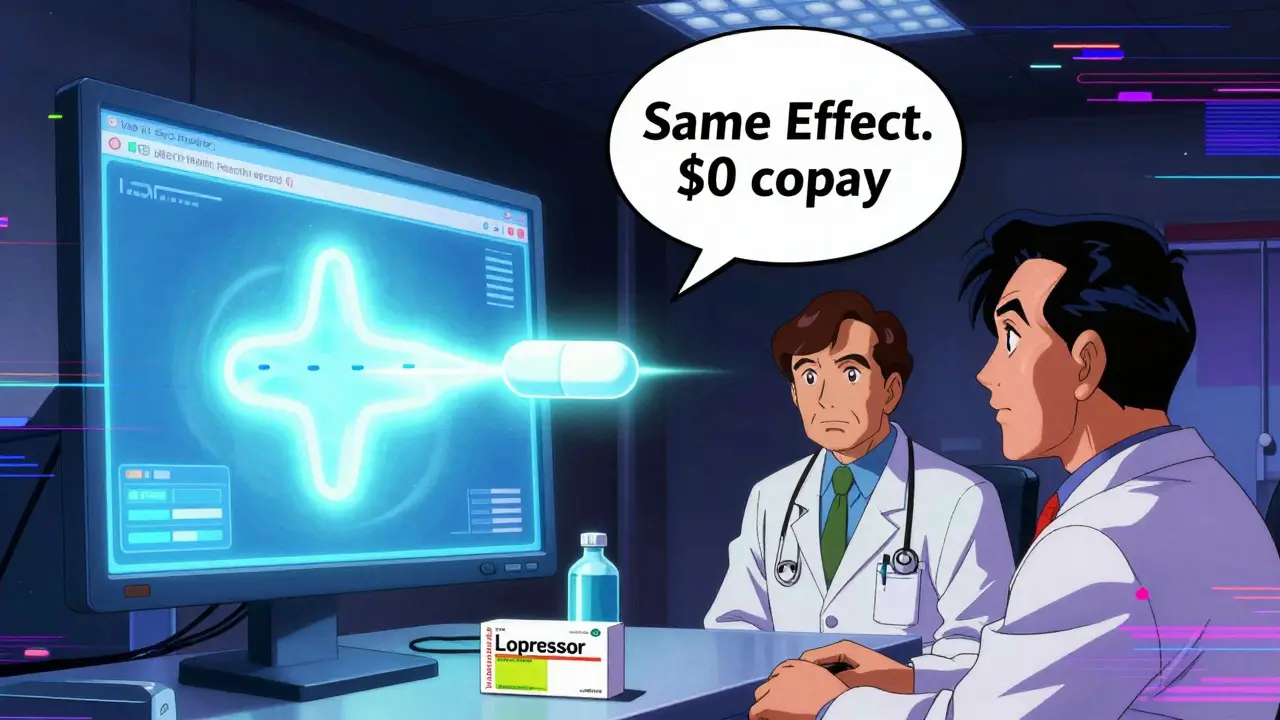
The VA isn’t standing still. By Q3 2026, the system will start using AI to recommend generic switches right inside the electronic health record. If your doctor prescribes a brand-name drug with a generic equivalent, the system will pop up: “Consider switching to generic atenolol. Same effectiveness. $0 copay.”
They’re also expanding access to rare disease drugs and oncology treatments. A new 2025-2027 plan focuses on precision medicine-using genetic testing to match veterans with the right drug the first time.
And they’re making the formulary more transparent. By next year, you’ll see real-time status updates in the e-prescribing system: “Covered,” “Requires Prior Auth,” or “Not Covered.” No more guessing.
Final Thoughts
The VA formulary isn’t perfect. But it’s one of the most effective, patient-centered pharmacy systems in the country. It’s built on trust-not profit. It’s built on science-not marketing. And it’s built to keep veterans healthy without breaking the bank.
If you’re a veteran, know your formulary. Use the tools. Ask questions. Don’t assume a drug is covered-check it. And if you’re told no, ask why. The VA’s job is to help you get the care you earned.
Are all generic drugs covered by the VA?
Yes, if a generic version of a medication exists, the VA covers it by default. Brand-name drugs are only approved if there’s a documented medical reason, such as an allergy or lack of effectiveness with the generic. The VA’s policy is clear: generic first, brand only when necessary.
How do I know if my medication is on the VA formulary?
Use the VA Formulary Advisor tool on VA.gov. Enter the drug name-generic or brand-and it will show you the tier, copay, and whether prior authorization is needed. You can also download the full monthly formulary as a spreadsheet from the VA Pharmacy Benefits website.
Why isn’t Wegovy covered for weight loss by the VA?
As of January 2025, the VA only covers GLP-1 medications like Wegovy for FDA-approved uses: type 2 diabetes, obstructive sleep apnea, or cardiovascular risk reduction. Weight loss alone is not an approved indication under VA formulary policy. Veterans seeking weight loss treatment may qualify through other VA programs, such as nutrition counseling or behavioral health support.
Can I get my VA prescriptions through my local pharmacy?
Yes, but only with prior authorization through the VA’s Community Care program. Without authorization, you’ll pay full price and have to file for reimbursement, which can take weeks. For maintenance medications, Meds by Mail is faster, free, and more reliable.
What’s the copay for VA prescriptions in 2025?
Copays are based on tier: Tier 1 generics cost $0-$5, Tier 2 drugs cost $8-$12, and Tier 3 brand-name or specialty drugs cost $15-$20 for a 30-day supply. Many veterans pay $0 if they’re enrolled in Priority Group 1 or have a service-connected condition.
How often does the VA update its formulary?
The VA updates its formulary monthly. New drugs are added, restrictions are changed, and tiers may shift. The most recent update was October 2025. All changes are published in the VA National Formulary Monthly Decision Newsletter and posted on VA.gov.


carissa projo
December 25, 2025 AT 21:19The VA formulary is one of those quiet miracles in American healthcare-no haggling, no surprise bills, just science and decency working together. I’ve seen friends struggle with private insurance for years, jumping through hoops just to get their blood pressure meds. Here? They get metformin for free. No drama. No shame. Just care.
It’s not perfect, sure-but it’s built on the idea that if you served, you deserve dignity. And that’s worth more than any corporate profit margin.
Jody Kennedy
December 26, 2025 AT 07:13OMG I JUST FOUND OUT I CAN GET INSULIN FOR $5?? I’ve been paying $120 a vial on my private plan. This is life-changing. I’m telling every vet I know to check the formulary. The VA doesn’t just treat you-it respects you.
Alex Ragen
December 26, 2025 AT 18:35Let us not romanticize the VA formulary-its efficiency is a product of rigid, utilitarian cost-control, not benevolence. The system suppresses innovation by design; it prioritizes the median patient over the outlier. Semaglutide? Only for diabetes. Wegovy? Denied. Why? Because the algorithm doesn’t recognize adiposity as a disease-only a symptom.
And yet, paradoxically, this same system achieves near-perfect adherence rates. Is this ethical? Or merely expedient? The answer, as always, lies in the tension between equity and excellence.
Lori Anne Franklin
December 27, 2025 AT 11:38i just used the formulary advisor and found out my anxiety med is tier 1?? like… i’ve been paying $20 a month for years. i thought i was getting a deal. turns out the va was just waiting for me to figure it out. thanks for the info, this site is a lifesaver. also, meds by mail is a dream. no more standing in line at cvs.
Bryan Woods
December 28, 2025 AT 18:40The VA’s formulary model represents one of the most effective public health interventions in recent memory. By standardizing access to generics and eliminating financial barriers, it reduces disparities in chronic disease management among a vulnerable population. The data supporting its cost-effectiveness is robust, and its impact on adherence is measurable.
That said, the rigid tiering structure may inadvertently disadvantage patients with complex polypharmacy needs. Future iterations should consider dynamic tiering based on clinical complexity, not just drug class.
Ellie Stretshberry
December 30, 2025 AT 11:30so i switched to generic sertraline and honestly? same feeling. no weird side effects. just cheaper. i was scared at first but the va nurse said it’s the same stuff. she was right. now i can afford my cat’s food too. thanks va. you guys are the real MVPs.
Zina Constantin
January 1, 2026 AT 09:20As a veteran and a healthcare advocate, I want to emphasize that the VA’s formulary isn’t just policy-it’s principle. It reflects a societal commitment to care over commerce. The monthly updates, the transparency, the AI-driven recommendations coming in 2026? These aren’t bureaucratic tweaks-they’re acts of respect.
When you see a veteran hesitate to fill a prescription because of cost, remember: this system exists to prevent that moment. Use it. Share it. Protect it.
Dan Alatepe
January 3, 2026 AT 04:11bro… i just got my first VA prescription… and it was free?? 😭 i thought i was gonna get billed for everything… like… i’ve been eating rice and beans for months just to save for meds… now i can actually sleep at night… thank you VA… you saved my life… 🙏❤️