
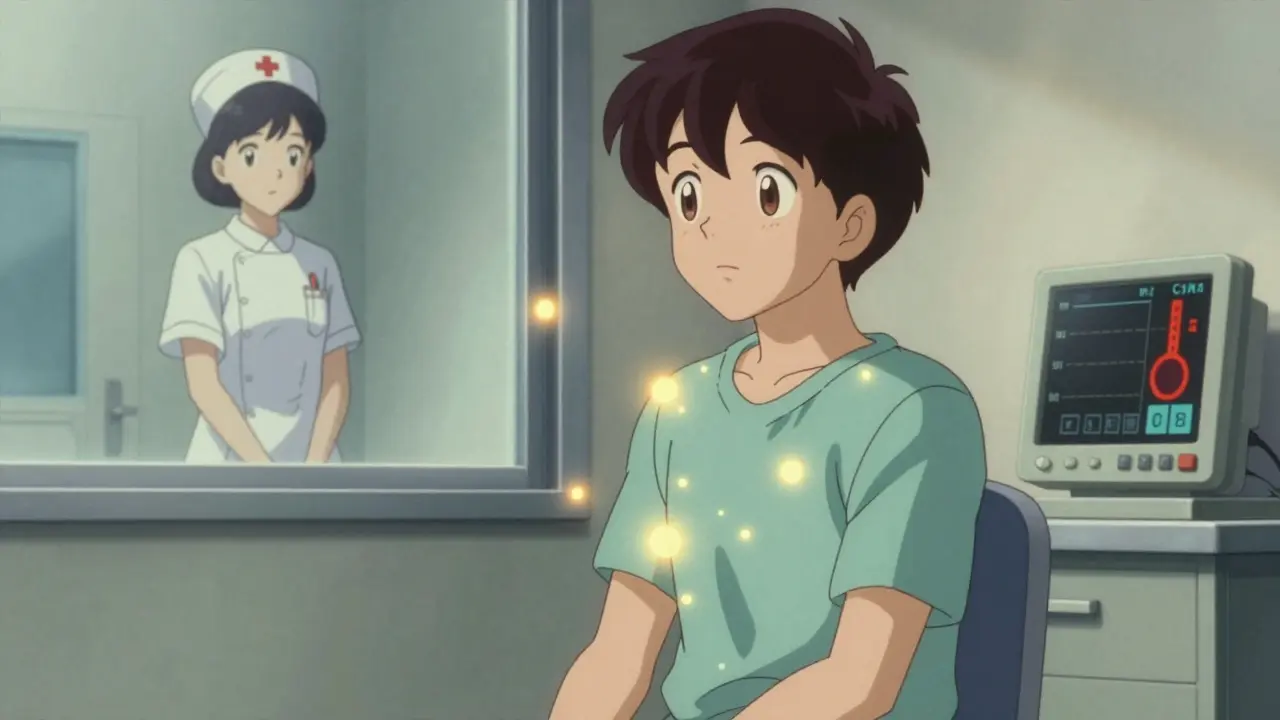
Esketamine Blood Pressure Monitor
Esketamine nasal spray can cause blood pressure spikes. Learn what to expect and if you're eligible for treatment based on your baseline blood pressure.
Your Baseline Blood Pressure
Blood Pressure Timeline During Treatment
Blood pressure typically peaks around 40 minutes after treatment and returns to normal within 2 hours. Most patients don't notice these changes.
Note: This is for educational purposes only. Always follow your doctor's specific instructions regarding blood pressure monitoring.
When you’ve tried multiple antidepressants and nothing works, the idea of a new treatment can feel like a lifeline. But esketamine nasal spray - brand name Spravato - isn’t like your typical pill. It’s given in a clinic, you’re watched closely for hours, and you might feel like you’re floating out of your body. That’s not a side effect you can ignore. It’s built into how the drug works.
Esketamine is the first FDA-approved nasal spray for treatment-resistant depression. That means it’s for people who haven’t responded to at least two other antidepressants. It’s not a cure-all, but for some, it’s the first real relief they’ve felt in years. The catch? You can’t just pick it up at the pharmacy. You have to go to a certified clinic, sit in a quiet room, and be monitored for at least two hours after each dose. Why? Because of two big risks: dissociation and blood pressure spikes.
How Esketamine Works - And Why It Feels So Strange
Most antidepressants work on serotonin, norepinephrine, or dopamine. Esketamine doesn’t. It blocks a different brain pathway - the NMDA receptor. This receptor is usually activated by glutamate, a chemical that helps neurons talk to each other. By blocking it, esketamine doesn’t just calm things down. It temporarily shakes up how your brain processes signals. That’s what leads to the dissociation.
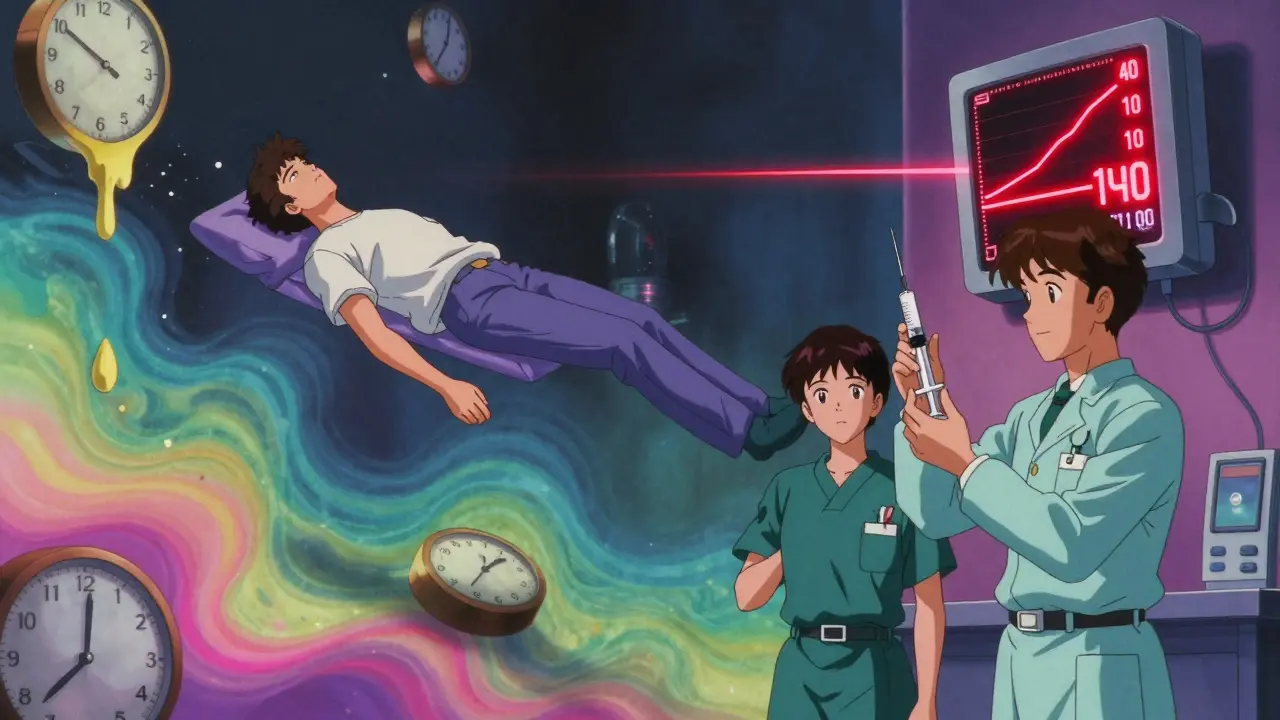
Think of it like hitting a pause button on your normal sense of reality. You might feel detached from your body, as if you’re watching yourself from outside. Time might slow down or feel warped. Some people report seeing colors more vividly, or hearing sounds differently. It’s not a hallucination in the psychotic sense - more like being in a dream you can’t wake up from. For many, it’s unsettling the first time. But after a few sessions, it often fades.
According to clinical trials, about 56% of people using esketamine plus an oral antidepressant experienced dissociation. That’s more than four times higher than the placebo group. The worst effects usually hit around 40 minutes after spraying, and most people feel back to normal within two hours. The higher the dose - 84 mg vs. 56 mg - the more likely you are to feel it. That’s why doctors start low and go slow.
Why Your Blood Pressure Might Spike - And What They Do About It
Alongside dissociation comes another side effect that sounds scarier than it usually is: a sudden jump in blood pressure. In trials, 33% of patients saw their systolic blood pressure rise above 140 mmHg. That’s not a stroke waiting to happen - it’s a temporary reaction. But it’s serious enough that clinics have to check your pressure every 5 to 10 minutes during treatment.
Typically, your blood pressure starts climbing within 5 minutes of spraying. It peaks around the same time as dissociation - 40 minutes in. Then, it drops back down. Most people don’t even notice it. No headache. No dizziness. Just a number on a monitor that spikes and then settles. But for someone with untreated high blood pressure, heart disease, or a history of aneurysms, this could be dangerous.
That’s why clinics screen you before every session. If your blood pressure is over 160/100 before treatment, they won’t give you the spray. You’ll be referred to your doctor first. In the real world, most patients on esketamine already have their blood pressure under control. But if you’re on medication for hypertension, your doctor will watch you extra closely. One study found that 87% of patients who had noticeable spikes saw their numbers return to normal within 90 minutes - without any intervention.
The Monitoring Protocol - Why It’s Not Optional
There’s no way around it: you have to stay at the clinic for two hours after each dose. This isn’t just bureaucracy. It’s a safety net.
The FDA’s REMS program (Risk Evaluation and Mitigation Strategy) is one of the strictest for any antidepressant. Every clinic that gives esketamine must be certified. Staff must be trained. Equipment must be ready. Oxygen, emergency meds, and a way to monitor your vitals are all required.
Here’s what happens during that two hours:
- First 5 minutes: Blood pressure and heart rate checked.
- Every 5-10 minutes for the first 30-40 minutes: Vital signs tracked. Dissociation assessed using a scale (CADSS or PDSS).
- At 40 minutes: The peak. Staff check how you’re feeling. If dissociation is severe, they may give a benzodiazepine - but this happens in less than 2% of cases.
- After 40 minutes: Monitoring slows to every 15-30 minutes. Blood pressure, heart rate, oxygen levels, and mental status are all logged.
- At 2 hours: If you’re stable, you’re cleared to go home - no driving allowed.
Some clinics are now testing a shorter 1-hour monitoring window for patients who’ve had multiple treatments and show no major side effects. Early data suggests it’s safe for about 63% of those patients. But for now, the two-hour rule still applies to everyone.
What Patients Really Say - The Good, the Bad, and the In-Between
Online forums like r/Spravato and Healthgrades are full of real stories. One user wrote: "My first session, I felt like I was floating. I couldn’t tell if I was crying or laughing. It was terrifying. But after the fourth time? I barely noticed anything. Just a little lightheadedness. And I finally felt like myself again."
Another said: "I had to stop after two sessions. My blood pressure hit 170. I was on meds already. The clinic said they’d never seen that before. I’m grateful I didn’t have a stroke, but it wasn’t worth the risk."
Most people who stick with it say the dissociation fades. The blood pressure spikes become predictable. The real reward? A lift in mood that lasts for days - sometimes weeks - between treatments. For people stuck in severe depression for years, that’s life-changing.
One common thread? Patients who felt prepared were much less anxious. Clinics that explain what to expect - "You might feel weird, but it’s normal," "Your BP will go up, but we’ll catch it," "You’ll be safe here" - see far fewer panic attacks during sessions.

Who It’s For - And Who Should Avoid It
Esketamine isn’t for everyone. It’s meant for adults with treatment-resistant depression who’ve tried at least two other antidepressants without success. It’s not for mild depression. Not for people with a history of psychosis. Not for anyone under 18.
You should not use it if you:
- Have uncontrolled high blood pressure (systolic >160 or diastolic >100)
- Have a history of aneurysm, arteriovenous malformation, or recent heart attack
- Have a substance use disorder (especially ketamine or PCP)
- Are pregnant or breastfeeding (data is limited)
It’s also not a standalone treatment. You must be taking an oral antidepressant at the same time. Esketamine doesn’t replace your other meds - it boosts them.
The Bigger Picture - Access, Cost, and the Future
As of 2023, over 2,800 clinics in the U.S. are certified to give esketamine. That sounds like a lot - until you realize rural areas still have less than one clinic per 100,000 people. Urban centers have more than three times that. Transportation, time off work, and insurance hurdles make it hard for many to even start.
The cost is high - around $1,000 per session - though most insurance covers it. Still, prior authorizations can take weeks. Many patients wait months before getting in.
Companies are working on alternatives: oral versions, lower-dose sprays, digital monitoring tools. But nothing else has matched esketamine’s speed and strength in treatment-resistant cases. Experts agree: the dissociation and blood pressure risks are real. But for the right patient, the benefits outweigh them - especially when you have a system in place to manage them.
One psychiatrist in Seattle put it this way: "I’ve had patients who couldn’t get out of bed for a year. After three esketamine treatments, they went back to work. They hugged their kids again. The side effects? Yes, they’re real. But so is the relief. We don’t ignore the risks. We manage them - and that’s what makes this treatment possible."
Is esketamine nasal spray addictive?
Esketamine is not considered addictive in the way opioids or stimulants are. It doesn’t cause cravings or compulsive use. However, because it affects brain pathways linked to reward and perception, there’s potential for misuse if not properly supervised. That’s why it’s only given in certified clinics under direct observation. The risk of abuse is low when used as directed.
How long do the effects of esketamine last?
The acute effects - dissociation and blood pressure changes - usually last 1.5 to 2 hours. But the antidepressant effect can last days or even weeks. Most patients start with twice-weekly treatments for four weeks, then taper to once a week or once every other week. Long-term studies show that with continued use, the benefits can be sustained, especially when paired with talk therapy and an oral antidepressant.
Can I drive after getting esketamine?
No. You cannot drive, operate heavy machinery, or make important decisions on the day of treatment. Even if you feel fine, your reaction time and judgment may still be impaired. Clinics require you to have someone pick you up. If you don’t, you’ll have to wait until the next day or arrange transportation through the clinic.
Does esketamine work faster than other antidepressants?
Yes. Traditional antidepressants can take 4 to 8 weeks to show results. Esketamine can lift mood in as little as 24 hours. In clinical trials, many patients reported feeling better within hours of the first dose. This rapid action is why it’s so valuable for people in severe crisis - especially those with suicidal thoughts.
Are there long-term risks from repeated use?
So far, no major long-term risks have been found. Studies tracking patients for over a year show no worsening of dissociation, no cumulative blood pressure damage, and no signs of cognitive decline. The most common issue is nasal irritation from the spray, which usually improves over time. Ongoing research continues to monitor for rare side effects, but current data supports its safety for long-term use under medical supervision.
tatiana verdesoto
March 2, 2026 AT 16:44Still, I get why people panic. That first hour? My heart was racing. But they checked my BP every 5 minutes like clockwork. I felt seen, not just monitored.
Also - no driving. Don't even think about it. I called my sister to pick me up. Best decision ever.
Justin Rodriguez
March 3, 2026 AT 04:48Raman Kapri
March 5, 2026 AT 03:16Tildi Fletes
March 5, 2026 AT 12:55Siri Elena
March 6, 2026 AT 00:08Next they’ll charge extra for the ‘I’m not in my body’ aura.
Meanwhile, my cousin in Ohio is still on Medicaid trying to get a therapist who takes appointments before 2030. But hey - at least you can get high while being watched. #SelfCare
RacRac Rachel
March 6, 2026 AT 23:24Don’t let fear stop you. You’re not broken. You’re just waiting for the right key. 💙 And yes - I cried during my third session. And laughed. And didn’t care. That’s the magic.
Jane Ryan Ryder
March 7, 2026 AT 07:27They call it 'treatment-resistant depression' - I call it capitalism refusing to fix mental health.
Meanwhile, I’m still on Prozac and working two jobs. But hey - at least I didn't pay $1000 to feel like I was floating into space. #America
Callum Duffy
March 8, 2026 AT 18:48Chris Beckman
March 9, 2026 AT 02:16Also, why do you need a whole clinic? Just give it to people and let them deal. It’s not like you’re giving out heroin.
Betsy Silverman
March 10, 2026 AT 16:31That’s what matters. Not the cost. Not the weirdness. The fact that she could hold her baby without crying for three hours straight? That’s the win.
Ivan Viktor
March 11, 2026 AT 09:25Also, no driving? That’s fine. But what about getting a Lyft? Do they have a shuttle? No? Then it’s basically a luxury treatment for people with flexible schedules. Not exactly equitable.
Matt Alexander
March 12, 2026 AT 17:23John Cyrus
March 14, 2026 AT 03:22