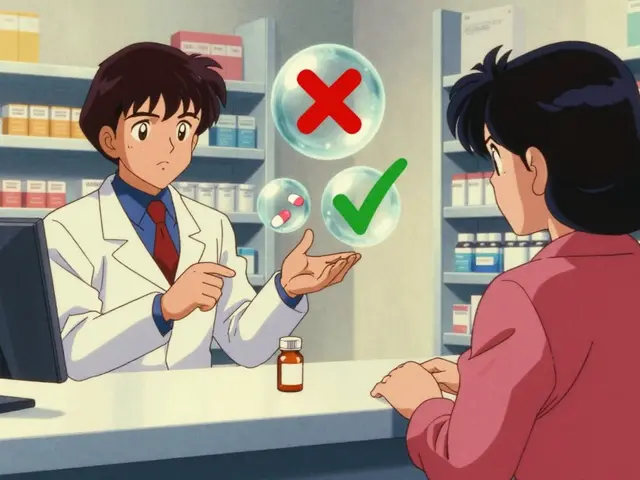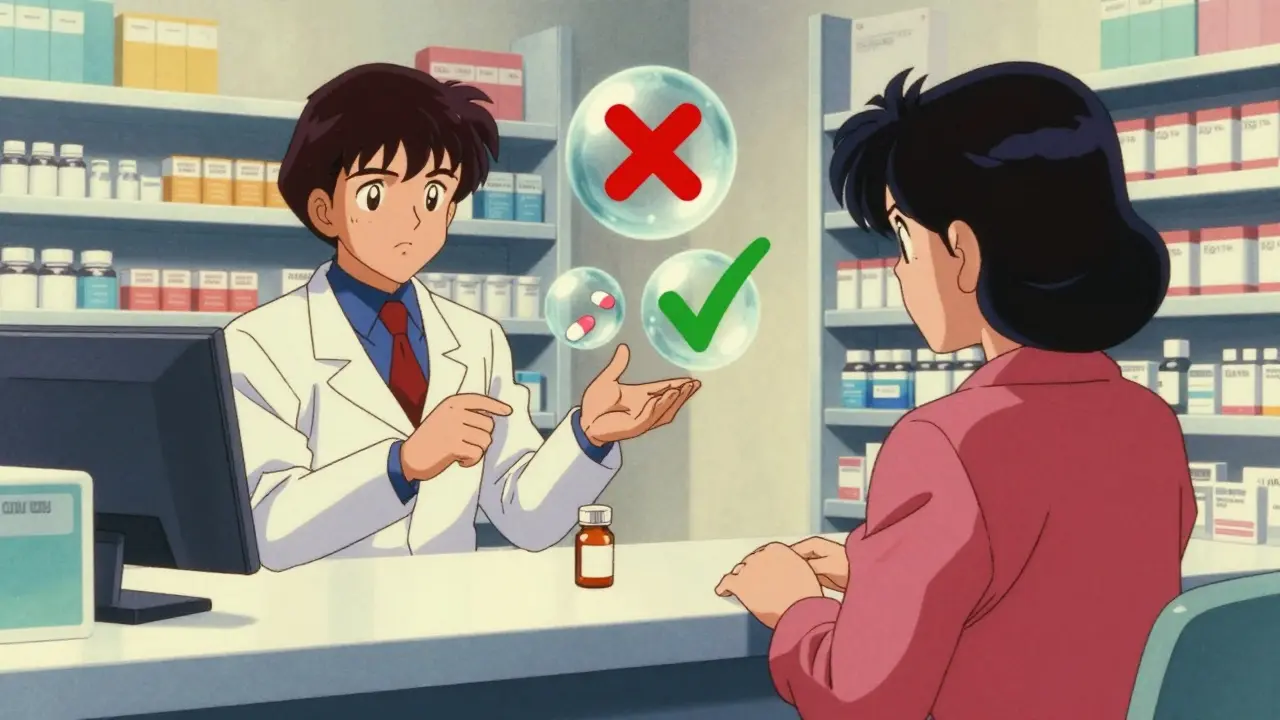
You're at the pharmacy counter, and the pharmacist tells you that your new "combo pill" isn't covered, but if your doctor writes two separate prescriptions for the same ingredients, you'll save $40. It feels like a glitch in the system, but it's actually a calculated move by insurance companies. Whether you're dealing with blood pressure, diabetes, or cholesterol, the way your plan handles generic drug combinations versus individual generics can either simplify your life or break your budget.
For most people, the goal is simple: get the medicine that works for the lowest price. But because insurance companies use complex "formularies" (the list of drugs they agree to pay for), the cheapest clinical option isn't always the cheapest financial option. Understanding the gap between a single pill containing two drugs and two separate pills is the key to avoiding surprise costs at the pharmacy.
The Basics: What are Generic Combinations?
Generic Combinations is a single medication formulation that contains two or more active ingredients, both of which are available as generic versions. For example, instead of taking one pill for a beta-blocker and another for a diuretic, you might take one "combination" pill that does both. The FDA ensures these are bioequivalent to the brand-name versions, meaning they work the same way in your body.
On the flip side, individual generics are simply the standalone versions of those ingredients. While it seems logical that a combined generic would be cheaper than two separate ones, insurance plans often see them as entirely different products with different price tags. This is where the frustration starts for patients who just want the most convenient dosing schedule.
How Insurance Tiers Dictate Your Cost
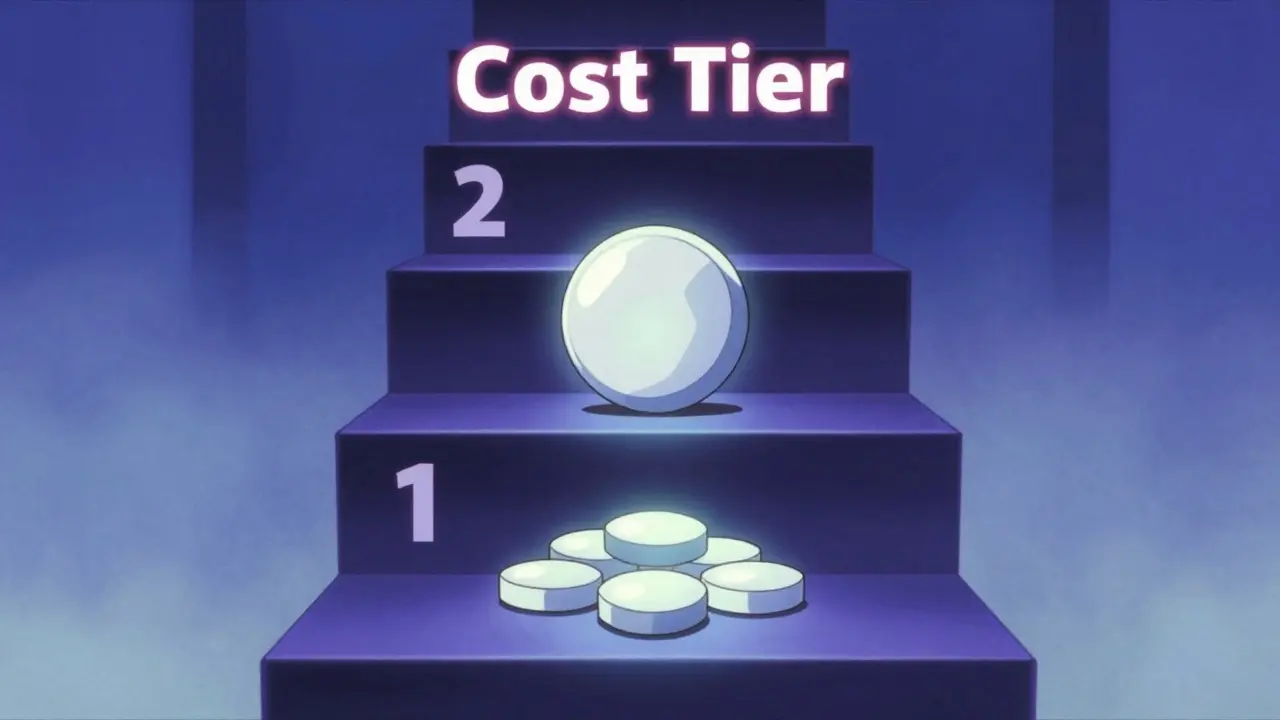
Insurance companies don't just say "yes" or "no" to a drug; they place them into tiers. Think of these as cost brackets. Most Medicare Part D plans and private insurers use a four-to-five tier system:
- Tier 1 (Preferred Generic): The lowest cost, sometimes $0. This is where most individual generics live.
- Tier 2 (Generic/Preferred Brand): A medium copay. Some generic combinations end up here if they are newer or more expensive to produce.
- Tier 3 (Non-Preferred Brand): Higher cost, usually reserved for brand-name drugs.
- Specialty Tier: The most expensive, used for high-cost biologics or rare medications.
The trap happens when an insurance company puts individual generics in Tier 1 but places the generic combination in Tier 2. Even though the ingredients are identical, you might pay $10 for two separate pills (Tier 1) but $50 for the one combined pill (Tier 2). This is a strategy used by Pharmacy Benefit Managers (PBMs) like CVS Caremark or OptumRx to steer patients toward the lowest possible cost for the insurance company, even if it's less convenient for the patient.
| Feature | Generic Combination | Individual Generics |
|---|---|---|
| Convenience | High (One pill, one dose) | Lower (Multiple pills) |
| Typical Tier | Varies (Tier 1 or 2) | Usually Tier 1 |
| Insurance Preference | Mixed | Very High |
| Patient Adherence | Better (Easier to remember) | Risk of missing a dose |
Why the Difference Exists: The Economics of Generics
You might wonder why insurers care if the drug is in one pill or two. It comes down to market competition. The Hatch-Waxman Act created the pathway for generics to enter the market, and when multiple companies make the same individual drug, the price plummets. In fact, drugs with six or more generic competitors can see price drops of up to 95%.
Combination products are more complex to manufacture. Because they require blending two stable ingredients into one tablet, there are often fewer companies making them. This leads to "single-source generics"-products that are generic but only have one manufacturer. Without competition, the price stays higher, and the insurance company moves it to a higher tier to avoid paying the premium.
This creates a weird paradox: the medication that is most helpful for a patient's adherence (the combo pill) is often the one the insurance company is least likely to incentivize. If you have a condition that requires five different meds, taking five pills is a chore, but taking one combo pill might cost you an extra $30 a month.
Navigating the System: How to Get Better Coverage
If your insurance is forcing you to take individual generics instead of a combination product you prefer, you aren't totally out of luck. You can fight for "preferred" status for your combo drug through a few specific steps:
- Check the Formulary: Use your plan's online search tool to see exactly which tier your medication falls into. Don't guess; look for the "Tier" number.
- Request a Coverage Determination: Your doctor can submit a request to the insurer stating that the combination product is medically necessary. For example, if you have a history of forgetting your second pill, that's a valid clinical reason for a combo drug.
- The 72-Hour Rule: Standard coverage requests usually take about 72 hours. If you're out of medication, your doctor can request an "expedited" review, which should be handled in 24 hours.
- Step Therapy: Be prepared for "step therapy." The insurer might require you to try the individual generics for 30-90 days first to prove they don't work or that you can't adhere to the regimen before they'll pay for the combo pill.
Keep in mind that new laws are changing the game. As of 2024, the Inflation Reduction Act has capped out-of-pocket spending for Medicare Part D at $2,000 annually. This means that even if you're stuck in a higher tier for a combo drug, your total yearly cost is now limited, which takes some of the sting out of expensive tier placements.
Real-World Scenarios: Which One Should You Choose?
Deciding between a combination and individual generics usually comes down to a trade-off between your wallet and your willpower. Consider these two scenarios:
Scenario A: The Cost-Saver. Imagine a patient who is highly organized and uses a pill organizer. They find that their insurance charges $5 for two individual generics but $25 for the combination. Since the convenience doesn't add much value to their structured routine, they save $20 a month by sticking with the individual pills.
Scenario B: The Adherence-Struggler. Imagine another patient who frequently forgets their afternoon dose. They've had two blood pressure spikes in a year because of missed pills. For them, paying an extra $15 a month for a combination product is a small price to pay for the security of knowing they've taken their full dose in one go. In this case, the combination product is the "cheaper" option in the long run because it prevents expensive ER visits.

Frequently Asked Questions
Are generic combinations as effective as individual generics?
Yes. The FDA requires generic combinations to be bioequivalent to the original brand-name combination. This means the strength, purity, and how the drug is absorbed by your body are virtually identical to the individual components taken separately. The only difference is the delivery method (one pill vs. two).
Why does my insurance cover the parts but not the combination?
This usually happens because individual generic drugs have more manufacturers and more competition, driving the price down to Tier 1. Combination products often have fewer manufacturers, which keeps the cost higher. Insurers place these in higher tiers to incentivize you to use the cheapest possible version of the medicine.
Can I switch from individual generics to a combination pill without a new prescription?
No. A combination product is considered a different medication by the pharmacy and the law. You will need your doctor to write a new prescription specifically for the combination drug. You should also check your formulary first to see if the new prescription will be covered at a reasonable price.
What is a 'single-source generic' and how does it affect my cost?
A single-source generic is a drug that has only one manufacturer approved by the FDA. Because there is no competition, the manufacturer can set the price higher. Insurers often treat these differently than 'multi-source' generics, sometimes placing them in a higher cost tier.
Will the $2,000 Medicare cap help me get combination drugs?
The cap doesn't change whether a drug is covered or which tier it's in, but it does limit your total financial risk. If you are forced into a higher tier for a combination product, you now have a guaranteed ceiling on your annual spending, making those higher copays more manageable over the course of a year.
Next Steps for Patients
If you're trying to decide which route to take, start by calling your insurance provider or logging into your member portal. Ask specifically: "Is the combination generic for [Drug A] and [Drug B] on a different tier than the individual generics?"
If you find that you're paying a premium for the combo pill, talk to your doctor about a "Prior Authorization." If you have a clinical reason-like difficulty swallowing multiple pills or a history of missed doses-your doctor can often override the insurance company's preference and get the combination product moved to a lower, more affordable tier. Don't assume the first answer from the pharmacy is the final word on what you have to pay.