
C. diff Risk Assessment Calculator
Determine your risk of developing C. difficile infection based on factors discussed in the article. This tool helps you understand your personal risk level and what steps you can take to reduce it.
Your Risk Factors
When you take an antibiotic, it doesn’t just kill the bad bacteria-it wipes out the good ones too. That’s why so many people end up with diarrhea after a course of pills. For most, it’s mild and goes away on its own. But for some, it’s not just upset stomach-it’s a dangerous infection called C. difficile, or C. diff. This isn’t just a nuisance. It can lead to hospitalization, long-term health problems, and even death. In the U.S., more than 500,000 cases happen every year, and nearly 30,000 people die within 30 days of diagnosis. The good news? Most cases are preventable. The better news? There are real, proven ways to protect yourself and recover faster if it happens.
What Exactly Is C. difficile?
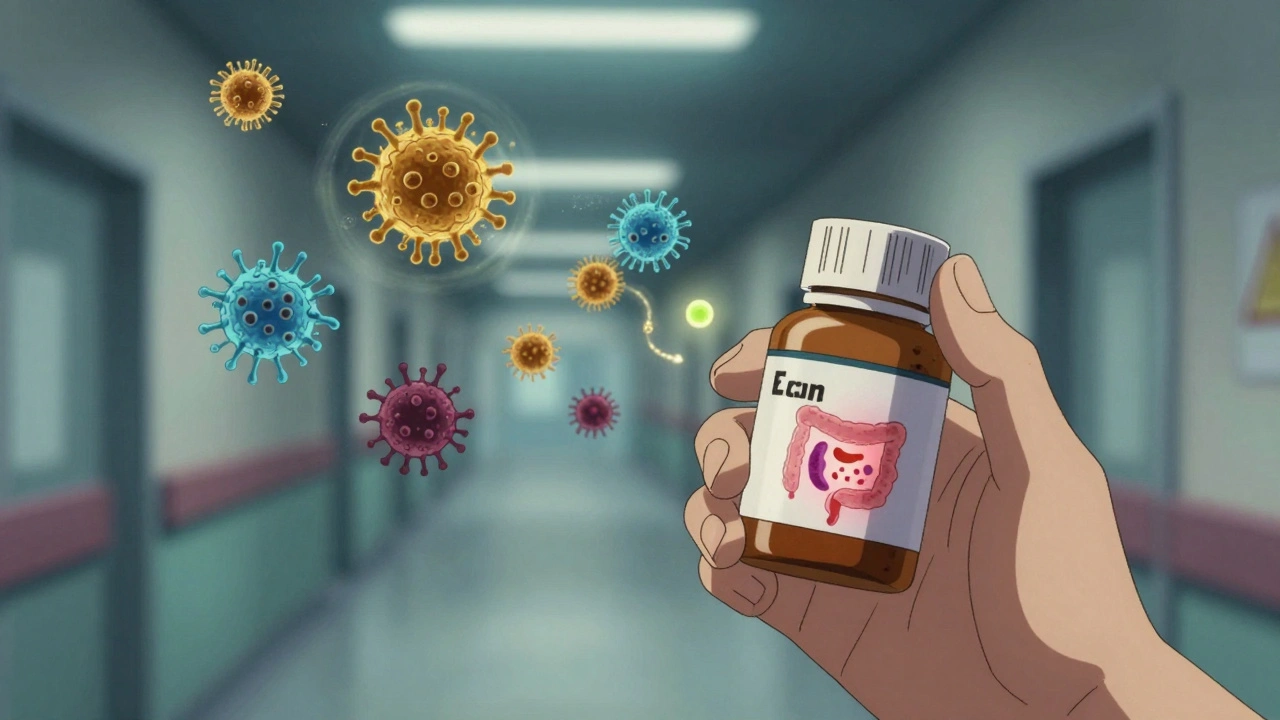
C. difficile is a tough, spore-forming bacterium that lives in the gut without causing harm-until something disrupts the balance. Antibiotics are the biggest disruptor. When you take them, especially broad-spectrum ones like clindamycin, fluoroquinolones, or cephalosporins, you kill off the helpful bacteria that normally keep C. diff in check. Suddenly, C. diff multiplies, releases toxins, and attacks the lining of your colon. That’s when diarrhea, cramping, fever, and nausea start.
The spores are the real problem. They can survive for months on doorknobs, bed rails, toilets, and even your phone. You don’t need to be in a hospital to catch it anymore. Community cases have jumped 24% since 2012. One study found that nearly 40% of people initially diagnosed with C. diff were first told they had a virus or IBS. Misdiagnosis delays treatment-and lets the infection spread.
Who’s at Risk?
It’s not just older adults or hospital patients. While people over 65 are at highest risk, younger people with weakened immune systems, recent surgery, or long-term antibiotic use are also vulnerable. If you’ve been hospitalized for more than three days, taken antibiotics in the last 90 days, or have chronic conditions like Crohn’s or diabetes, your risk goes up. Even taking proton pump inhibitors (PPIs) for heartburn can increase your chances.
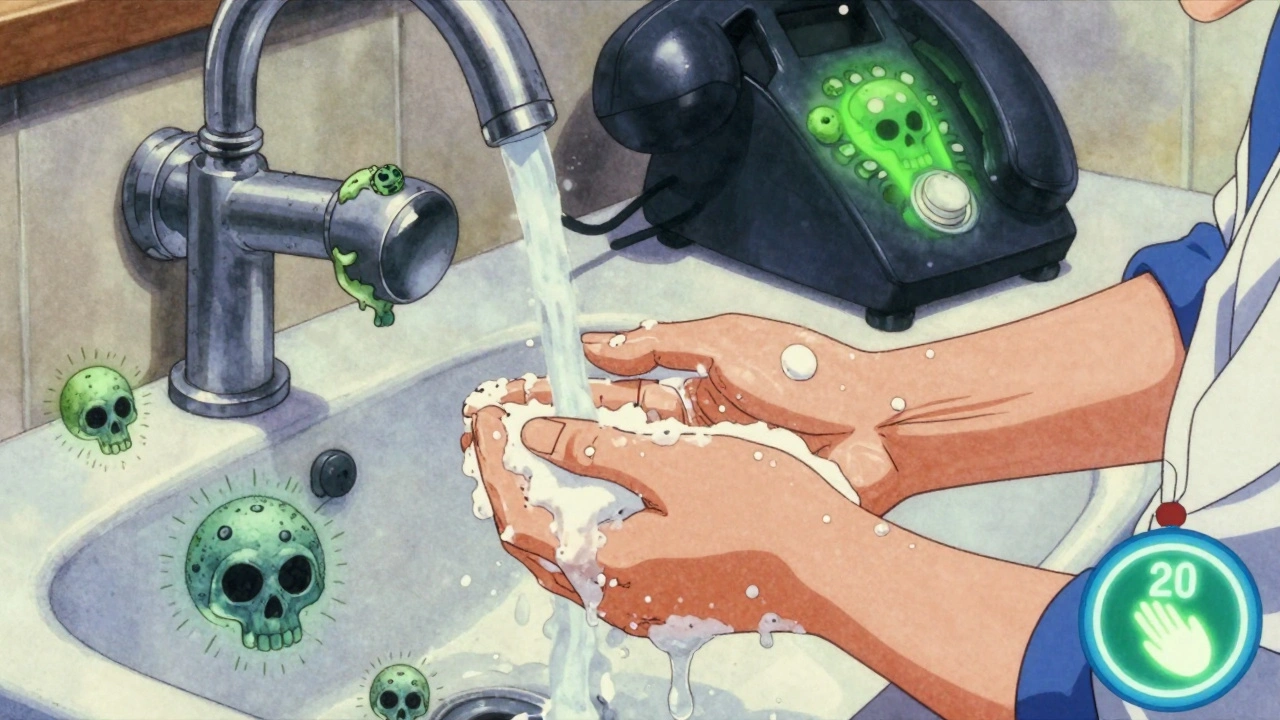
One big myth? Alcohol-based hand sanitizers protect you. They don’t. C. diff spores survive them. Only soap and water can wash them away. That’s why healthcare workers wash their hands with soap after every patient-even if they wore gloves. At home, if someone in your house has C. diff, clean the bathroom with bleach-based cleaners (EPA List K disinfectants). Regular cleaners won’t cut it.
How Is It Diagnosed?
There’s no single perfect test. Doctors don’t just look at your symptoms-they run a lab test on your stool. The most common method starts with a glutamate dehydrogenase (GDH) screen, which detects the presence of the bacteria. If that’s positive, they check for toxins A and B using an enzyme immunoassay (EIA). Some places use nucleic acid amplification tests (NAAT), which detect the bacteria’s DNA but can’t tell if it’s actively producing toxins. That’s why some people test positive but don’t need treatment-they’re just carriers.
Important: You can’t test if you’ve taken laxatives in the last 48 hours. And if your stool is formed, not watery, they won’t test at all. That’s because C. diff only causes diarrhea when it’s active. If you’re having loose stools after antibiotics, don’t wait. Get tested early. Delayed diagnosis means more damage to your colon.
Treatment: What Actually Works?
For years, metronidazole was the go-to. Now? It’s a last resort. Studies show it fails in 30-40% of cases now, compared to 5-15% a decade ago. The CDC and Infectious Diseases Society of America (IDSA) stopped recommending it as first-line in 2017. Why? Resistance. It’s not just less effective-it’s becoming useless.
Today, two drugs are standard:
- Vancomycin (125 mg, four times a day for 10 days): Works well, costs about $1,650 for a full course. It’s the most widely available.
- Fidaxomicin (200 mg, twice a day for 10 days): More expensive-around $3,350-but it cuts recurrence rates nearly in half. In trials, only 13% of patients on fidaxomicin had another episode, compared to 22% on vancomycin.
Why does fidaxomicin work better? It doesn’t wipe out as many good bacteria. It’s targeted. Vancomycin hits a wider range, which is why your gut doesn’t recover as fast. If you’re young and healthy with a first-time infection, vancomycin is fine. If you’ve had it before, or you’re older with other health issues, fidaxomicin is worth the cost.
For severe cases-high fever, fast heart rate, low blood pressure, or a white blood cell count over 15,000-doctors may add intravenous metronidazole. In life-threatening cases (like toxic megacolon), they might give vancomycin through a tube directly into the colon. And never, ever take anti-diarrhea meds like loperamide (Imodium). They trap the toxins inside you. That’s like locking a fire in a room.
What If It Comes Back?
One in five people get C. diff again after treatment. For a second episode, doctors often repeat the same antibiotic-or switch to a tapering schedule. That means taking vancomycin daily for 10 days, then every other day for a week, then once every 2-3 days for up to two months. This gives your gut time to rebuild its natural bacteria slowly.
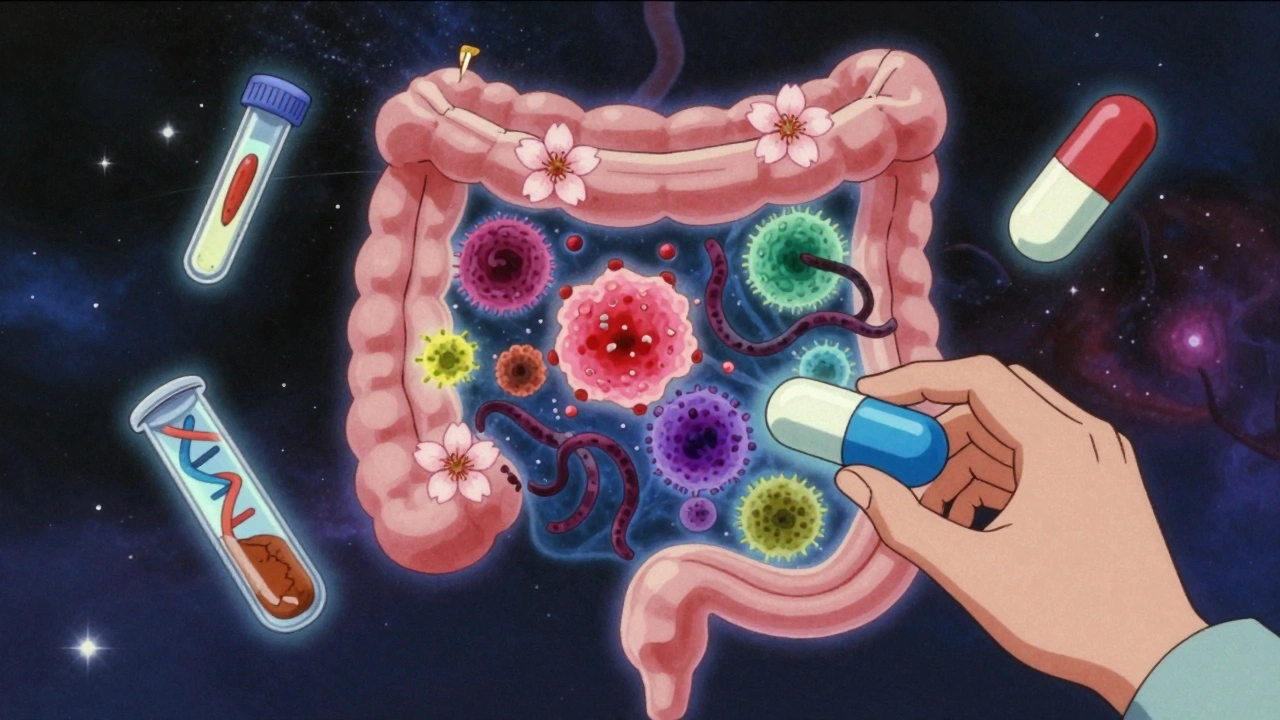
For three or more recurrences, the best option is fecal microbiota transplantation (FMT). It’s not as weird as it sounds. Doctors take healthy stool from a screened donor, process it, and put it into your colon-through a colonoscopy, capsule, or enema. Success rates? 85-90%. One patient on a health forum said, “After seven recurrences over 18 months, one FMT cleared me. I wish I hadn’t waited so long.”
In April 2023, the FDA approved the first oral microbiome therapy: Vowst. It’s a capsule with frozen spores from healthy donor stool. No colonoscopy needed. It’s already being used in clinics across the U.S. Another new drug, ridinilazole, showed better results than vancomycin in a 2022 trial and could be available soon.
What About Probiotics?
You’ve probably seen ads for probiotics to “restore gut balance.” Some strains, like Saccharomyces boulardii and Lactobacillus rhamnosus GG, have shown promise in studies. One Cochrane review found they reduced C. diff risk by 60% in high-risk patients. But the IDSA doesn’t recommend them routinely. Why? The evidence is mixed. Not all probiotics are the same. Some don’t survive stomach acid. Others don’t colonize the gut. And they’re not regulated like drugs. If you want to try one, talk to your doctor. Don’t just grab the cheapest bottle off the shelf.
Prevention: The Real Game-Changer
The best treatment is no treatment. And the best way to avoid C. diff is to avoid unnecessary antibiotics. The CDC says 30-50% of antibiotic prescriptions in hospitals are unnecessary. That’s not just overprescribing-it’s dangerous.
Ask your doctor:
- Is this antibiotic really needed?
- Could this be viral? Do I need a test first?
- Is there a narrower-spectrum option?
- How long do I really need to take it?
Many infections-like sinusitis, bronchitis, and ear infections-are viral. Antibiotics do nothing. But they still put you at risk. If you’re prescribed antibiotics, take them exactly as directed. Don’t stop early because you feel better. Don’t save leftovers for next time. And never share them.
At home, clean surfaces with bleach-based cleaners. Wash your hands with soap and water for at least 20 seconds. If you’re in a hospital, remind staff to wash their hands before touching you. If you’ve had C. diff before, avoid hospitals unless absolutely necessary. And if you’re on long-term antibiotics, talk to your doctor about monitoring your gut health.
Recovery: What to Expect After
Diarrhea might stop in a few days. But your gut doesn’t heal overnight. Many people report brain fog, fatigue, and food intolerances for weeks-even months. A 2022 survey of over 1,200 patients found 45% had mental fog after recovery. 37% felt exhausted long after the diarrhea ended. 82% had to avoid dairy, spicy foods, or caffeine for a while.
Focus on gentle, fiber-rich foods: bananas, rice, applesauce, toast, and cooked vegetables. Stay hydrated. Avoid sugar and processed foods-they feed bad bacteria. Some people benefit from low-FODMAP diets during recovery. Talk to a dietitian if symptoms linger.
And remember: your gut microbiome can take months to recover. Don’t rush it. Don’t take probiotics without guidance. Give your body time. The right bacteria will come back-if you let them.
Final Thoughts: You Have Power
C. diff isn’t inevitable. It’s not a curse. It’s a consequence-and one we can change. Every time you ask your doctor, “Do I really need this?” you reduce your risk. Every time you wash your hands with soap, you protect others. Every time you choose not to take an unnecessary antibiotic, you help the whole system.
It’s not just about you. It’s about the next person who might need an antibiotic-and not have it work because too many people already overused them. We’re all connected by the bacteria in our guts. Protect yours. Respect the balance. And don’t wait until you’re sick to act.
Can C. diff go away without antibiotics?
In mild cases, stopping the antibiotic that caused the infection can be enough. The body sometimes clears the infection on its own once the gut microbiome starts to recover. But this only works if symptoms are very mild-like occasional loose stools without fever or cramping. If you have moderate to severe diarrhea, fever, or abdominal pain, you need medical treatment. Waiting can lead to serious complications like colon damage or sepsis.
Is C. diff contagious?
Yes, extremely. C. diff spreads through spores in feces. If someone with the infection doesn’t wash their hands properly, they can leave spores on surfaces, food, or objects. Others touch those surfaces, then touch their mouth. You don’t need to be sick to spread it-some people carry the bacteria without symptoms. That’s why handwashing with soap and water is critical, especially in hospitals and nursing homes.
Can you get C. diff from food?
It’s possible but rare. C. diff spores can be found in soil, water, and some animal products, but food isn’t a major source of transmission. Most cases come from person-to-person spread in healthcare settings or from contaminated surfaces. The real risk isn’t what you eat-it’s what you touch and then touch your face with.
Why is metronidazole no longer recommended?
Metronidazole was once the standard treatment, but studies show it’s failing more often now. Its cure rate has dropped from 85% to around 60-70% in recent years. It also causes more side effects-like nausea, metallic taste, and nerve damage with long-term use. Vancomycin and fidaxomicin are more effective, have fewer side effects, and lower recurrence rates. Guidelines updated in 2017 moved metronidazole to second-line use only.
Does insurance cover fidaxomicin and FMT?
Most insurance plans cover fidaxomicin, but you may need prior authorization because of its high cost. Fecal microbiota transplantation (FMT) is covered by Medicare and most private insurers for recurrent C. diff after at least two antibiotic failures. Some plans require you to try other treatments first. Vowst, the new oral capsule, is also covered under most plans. Always check with your provider-costs vary by hospital and region.
How long does it take to recover from C. diff?
Most people start feeling better within 2-5 days of starting the right antibiotic. Diarrhea usually stops in about a week. But full gut recovery takes longer-weeks to months. Fatigue, brain fog, and food sensitivities can linger. Studies show 37% of patients still feel tired 4-6 weeks after symptoms resolve. Recovery isn’t just about stopping diarrhea; it’s about rebuilding your gut ecosystem. Patience and good nutrition are key.
Can C. diff cause long-term damage?
Yes, especially if untreated or if you have multiple recurrences. Severe cases can lead to toxic megacolon, bowel perforation, or sepsis-all life-threatening. Even after recovery, some people develop post-infectious IBS, chronic diarrhea, or malabsorption. Repeated infections can permanently alter your gut microbiome. That’s why preventing recurrence is as important as treating the first one.
Are there any natural remedies that help?
There’s no proven natural cure. Some people try kefir, bone broth, or herbal teas, but none have been shown to kill C. diff or stop toxin production. The only proven treatments are antibiotics, FMT, and newer microbiome therapies. Natural remedies might help with comfort or hydration, but they shouldn’t replace medical care. Delaying treatment because of a “natural approach” can be dangerous.




Jimmy Kärnfeldt
December 10, 2025 AT 11:50Man, this post hit different. I had C. diff after a round of amoxicillin for what turned out to be a viral sinus infection. No one warned me. I thought diarrhea was just part of the deal. Turns out, I was lucky it wasn’t worse. Now I ask my doctor every time: 'Is this really necessary?' And I wash my hands like my life depends on it-because it kinda does.
Ariel Nichole
December 11, 2025 AT 16:07So glad someone finally laid this out so clearly. I’ve seen too many people brush off diarrhea after antibiotics like it’s no big deal. This isn’t just 'gut feeling bad'-it’s a silent threat. Thanks for the breakdown on fidaxomicin vs vancomycin. I’m sharing this with my mom-she’s 72 and just finished a 14-day course of cipro.
john damon
December 12, 2025 AT 03:26bro i got c diff after a dental antibiotic 😭 and now i won’t touch any pill unless i have to. also soap and water > sanitizer. learned that the hard way. 🤢🧼
Taylor Dressler
December 13, 2025 AT 17:32Excellent summary. One clarification: the CDC’s 30–50% unnecessary antibiotic prescription statistic applies specifically to outpatient settings, not just hospitals. Additionally, while probiotics aren’t routinely recommended, Saccharomyces boulardii has demonstrated efficacy in reducing recurrence in meta-analyses-particularly when taken concurrently with antibiotics. Always consult a clinician before starting any supplement, but the evidence isn’t as mixed as some suggest.
Sylvia Frenzel
December 14, 2025 AT 16:11Another overhyped medical article. People get diarrhea from antibiotics because they’re weak. Stop whining. Just take the pills. And stop acting like handwashing is some miracle cure. We’ve had antibiotics for 80 years-why are we suddenly scared of a little bacteria?
matthew dendle
December 14, 2025 AT 21:24metronidazole is trash now? yeah right. my cousin took it for 10 days and was fine. now they wanna charge 3 grand for some fancy pill? capitalism at its finest. also who the hell has time to wash hands for 20 seconds? i got places to be
Aman deep
December 15, 2025 AT 02:35As someone from India where antibiotics are sold over the counter like candy, this is gold. I’ve seen friends take cipro for a cold and end up in the hospital. The spore thing? Mind blown. We never thought about surfaces-just blamed 'bad food.' This post should be mandatory reading before any script is written. Thank you.
Eddie Bennett
December 16, 2025 AT 21:22I had two recurrences. FMT saved me. It’s not sci-fi-it’s science. I was skeptical too. But after seven months of hell, one procedure and boom-I could eat rice without panic. People need to know this isn’t a last resort. It’s a lifeline. And yeah, it’s weird to say 'I got poop in a capsule' but I’ll say it again: it worked.
Vivian Amadi
December 17, 2025 AT 00:57Why are we even talking about this? If you can’t handle a little diarrhea, don’t take antibiotics. It’s not rocket science. Stop coddling people. Also, probiotics are snake oil. Stop wasting money.
Aidan Stacey
December 18, 2025 AT 00:46Just got back from my sister’s funeral. She was 54. No chronic illness. Just a routine sinus infection. Antibiotics. Then C. diff. Then sepsis. They didn’t catch it until her colon ruptured. This isn’t hypothetical. This is real. Please, if you’re reading this-ask your doctor. Wash your hands. Don’t wait until it’s too late.
Katherine Liu-Bevan
December 18, 2025 AT 13:09Important note on fecal microbiota transplantation: while success rates are high, donor screening is critical. The FDA has issued warnings about drug-resistant organisms transmitted via FMT. Always ensure your provider uses FDA-compliant, screened stool products. DIY or unregulated FMT carries serious risk. Vowst and ridinilazole are promising, but long-term data is still emerging.
Courtney Blake
December 20, 2025 AT 06:21Another 'gut health' cult article. People are so obsessed with their microbiomes now. It’s not a sacred garden. It’s bacteria. You take antibiotics, you get sick. Deal with it. And why are we treating this like a moral issue? 'Ask your doctor'-like they’re always right. Most doctors don’t even know the difference between vancomycin and fidaxomicin.
Lisa Stringfellow
December 22, 2025 AT 04:43Wow. So many people are so dramatic about this. I’ve had diarrhea after antibiotics five times. I just drink Gatorade and move on. Why are we turning a common side effect into a public health crisis? The real problem is people who don’t take their meds properly. Blame them, not the antibiotics.
Kristi Pope
December 22, 2025 AT 23:19This is the kind of info that should be in every pharmacy pamphlet. I’m a nurse and I still learned something new about the GDH/EIA testing流程. And the part about not testing if you’ve taken laxatives? That’s huge. So many people get misdiagnosed because no one asks the right questions. Thank you for writing this with heart and science. We need more of this.