
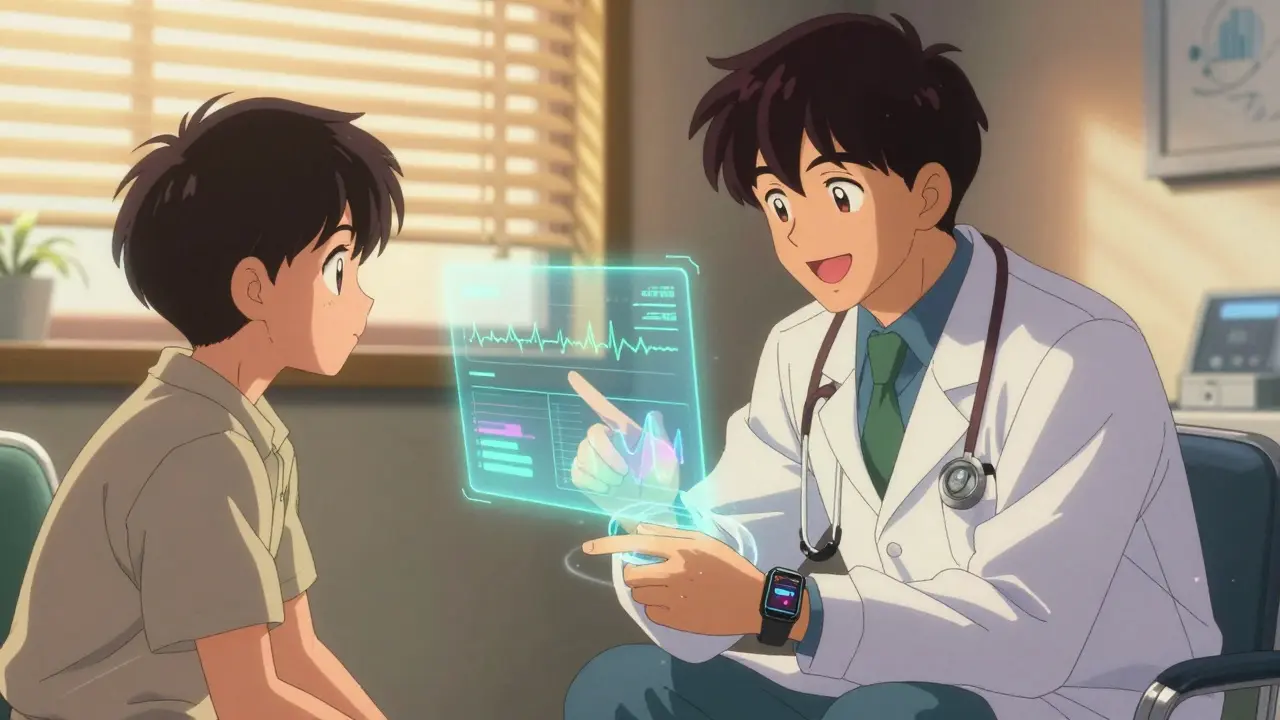
By 2026, the way healthcare providers think about their jobs has changed more in the last two years than it did in the last two decades. It’s not just about new tools or bigger clinics-it’s about a fundamental shift in healthcare provider attitudes. Doctors, nurses, and allied staff no longer see themselves as isolated caregivers. They’re now part of a broader system where technology, patient input, and team-based care define success.
From Reaction to Prediction: How Providers Think About Patients Differently
Five years ago, a patient walked into a clinic with a symptom and a vague idea of what might be wrong. Today, they arrive with a wearable tracking their heart rate, sleep patterns, glucose levels, and even stress spikes. They’ve read articles, watched videos, and used apps to self-diagnose. And they expect their provider to know this data before they even sit down. This isn’t hypothetical. According to NIH research from early 2025, physicians are now routinely reviewing consumer-generated health data before appointments. That means the conversation starts at a different level-not “What’s bothering you?” but “I see your overnight heart rate spiked three times last week. What was going on?” Providers aren’t resisting this. They’re adapting. A 2025 survey by IPG Health found that over half of Americans now own at least one wearable device. More importantly, 78% of patients expect their provider to use that data to make decisions. So providers are learning how to interpret trends, not just symptoms. They’re training in data literacy, not just medicine. This shift has turned the patient-provider relationship into a partnership. It’s no longer about authority-it’s about collaboration. The best providers now say things like, “You’ve done the hard work tracking this. Let’s figure out what it means together.”AI Isn’t Coming-It’s Already Here, and Providers Are Learning to Work With It
The fear of AI replacing doctors is fading. In its place is a new reality: AI is becoming part of the care team. Forrester’s 2025 report says the biggest mistake providers can make is to treat AI like a threat. Instead, the most successful clinics are training staff to use AI as a co-pilot. One clinic in Seattle started using AI to flag early signs of sepsis in ER patients based on real-time vitals. The tool didn’t diagnose-it alerted. The nurse then confirmed, acted, and saved a life. That’s the model now. Providers aren’t being penalized for using AI wrong. They’re being trained. Hospitals are creating “AI literacy” programs that teach staff how to question outputs, spot bias, and understand privacy limits. One Oregon hospital reduced diagnostic errors by 32% in six months after implementing a mandatory training module that focused on responsible AI use-not just technical how-tos. The key insight? AI doesn’t replace judgment. It amplifies it. And providers who embrace that are seeing better outcomes, less burnout, and higher job satisfaction.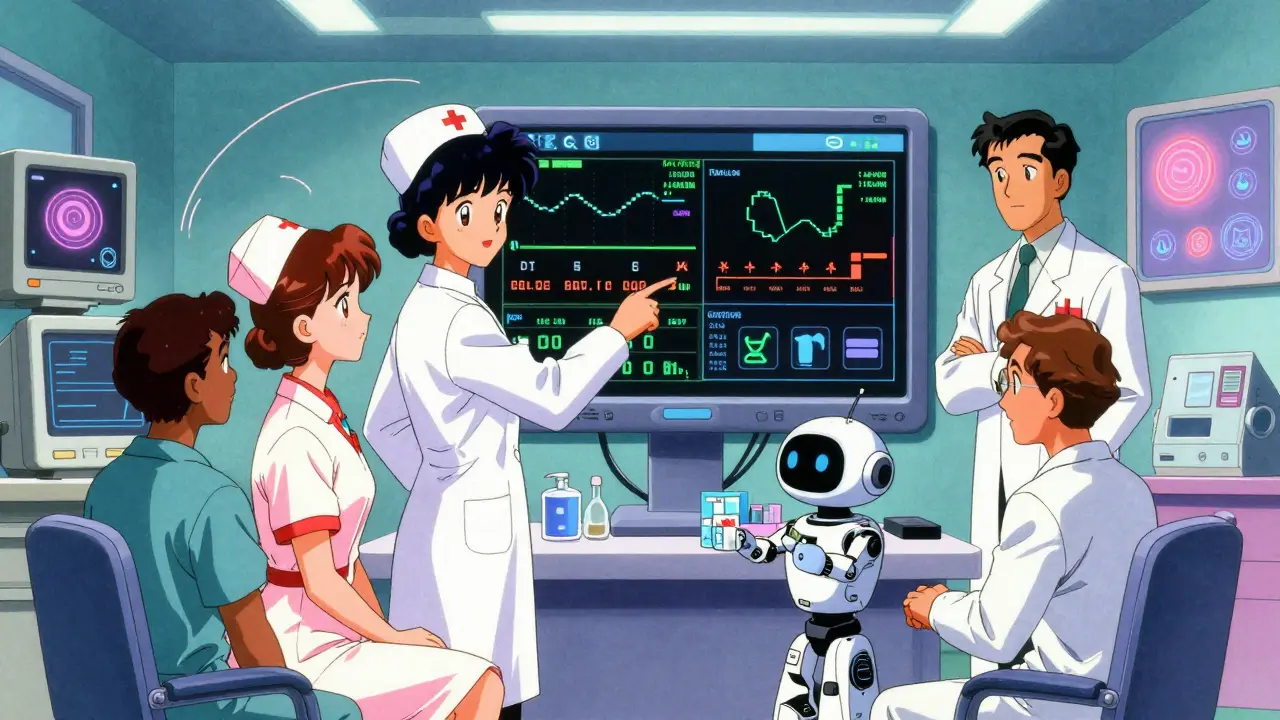
Workforce Changes: Certifications, Pay, and the Rise of Team-Based Care
The shortage of clinicians isn’t getting better. But providers aren’t just hiring more nurses-they’re rethinking who does what. The National Healthcareer Association (NHA) reported in early 2025 that 70% of employers now require certifications for roles like medical assistants, pharmacy techs, and phlebotomists. And it’s not just paperwork. Seventy-one percent of employers increased pay for employees who earned certifications. That’s a direct financial incentive to upskill. This is changing the culture. Providers now see allied health professionals as equals, not assistants. A certified medical assistant might manage chronic care for 50 patients, freeing up a nurse to focus on complex cases. A pharmacy tech might run a medication adherence program. Roles are expanding, and respect is growing. Even physicians are working differently. No longer tied to a desk or a hospital floor, many now deliver care through virtual platforms. A primary care doctor in Seattle might see a patient at 8 a.m. in person, then review data from three remote patients before lunch. Flexibility isn’t a perk-it’s a requirement.Building Ecosystems, Not Just Clinics
The old model-show up, get treated, leave-doesn’t work anymore. Patients with chronic conditions, mental health needs, or social barriers (like food insecurity or transportation issues) need more than a prescription. Forward-thinking providers are building ecosystems. That means partnering with food banks, ride-share services, mental health apps, and housing nonprofits. One clinic in Minnesota now has a social worker embedded in the ER. They don’t just treat asthma-they help patients apply for air purifiers if their home has mold. PwC’s 2024 analysis calls this “digital front doors”-a single portal where patients can schedule, pay, access records, get educational content, and connect with community resources. Providers who’ve implemented this report 40% fewer no-shows and 25% higher patient satisfaction scores. It’s not about technology alone. It’s about seeing care as a network, not a transaction.
The Human Element Isn’t Optional-It’s the Competitive Advantage
Here’s the twist: as tech gets more advanced, the demand for human connection grows. IPG Health found that patients are tired of robotic, AI-generated emails and chatbots that can’t answer simple questions. They want authenticity. A provider who says, “I saw your data, and I’m worried about your sleep patterns. Let’s talk about what’s keeping you up,” lands differently than an automated alert. Transparency is now a brand builder. Patients trust providers who admit when they don’t know something, who explain why a certain test is needed, and who take time to listen-even if it’s just five extra minutes. McKinsey’s 2025 Wellness Survey found that patients who feel heard are 60% more likely to stick with their treatment plan. That’s not just good ethics-it’s good business.What’s Next? Three Real Shifts Already Underway
- From volume to value: Providers are moving away from fee-for-service. They’re being paid to keep people healthy, not just treat them when they break.
- From solo practice to team practice: No one person can handle the complexity of modern care. Teams of doctors, techs, social workers, and AI tools are the new norm.
- From reactive to predictive: The goal isn’t to fix problems after they happen. It’s to stop them before they start.
Are healthcare providers really using AI in daily practice by 2026?
Yes. By 2026, AI is embedded in daily workflows-not as a replacement, but as a tool. It helps prioritize patient cases, flag potential complications, summarize medical records, and even suggest differential diagnoses. But every decision still goes through a human. Clinics that train staff to use AI responsibly report fewer errors and higher job satisfaction. The key is not whether AI is used, but how it’s integrated-with clear guidelines, ongoing training, and accountability.
Why are certifications becoming so important for allied health workers?
Certifications are now tied directly to patient safety and operational efficiency. Employers see certified staff as more reliable, better trained, and less likely to make costly mistakes. Over 70% of healthcare employers have increased pay for certified employees, and 73% say certification improves retention. In roles like phlebotomy or medical assisting, where errors can have serious consequences, certification isn’t optional-it’s the baseline standard for quality care.
Do patients really care if their provider uses data from wearables?
Absolutely. A 2025 survey by IPG Health showed that 78% of patients expect their provider to review data from their smartwatch or fitness tracker. They feel more in control when their provider acknowledges their efforts. Providers who ignore this data risk losing trust. Those who use it thoughtfully build stronger partnerships. It’s not about the device-it’s about showing patients their input matters.
Is the doctor-patient relationship really changing?
Yes, fundamentally. The old model was hierarchical: doctor knows best. The new model is collaborative: patient and provider work together using data, evidence, and shared decision-making. Patients arrive with more information than ever. Providers who listen, validate, and co-create treatment plans see better outcomes and higher loyalty. This shift isn’t going away-it’s becoming the standard.
How are providers dealing with workforce shortages?
They’re not just hiring more people-they’re redesigning roles. Many clinics now use certified medical assistants to manage chronic care, pharmacists to handle medication reviews, and AI to handle routine administrative tasks. This frees up nurses and doctors for complex cases. Flexible scheduling, remote care options, and higher pay for certifications are also helping retain staff. The focus is shifting from quantity to quality of care delivery.




Tom Bolt
March 9, 2026 AT 14:07Also, the PwC 'digital front door' metric? 40% fewer no-shows? That's not magic. That's system design done right.
Shourya Tanay
March 10, 2026 AT 04:08Furthermore, the certification premium isn't merely financial-it's a legitimization of epistemic authority among non-physician providers. This is structural equity in action.
Adam Kleinberg
March 10, 2026 AT 22:11Chris Bird
March 12, 2026 AT 09:32Mike Winter
March 13, 2026 AT 06:45Randall Walker
March 14, 2026 AT 04:53Miranda Varn-Harper
March 14, 2026 AT 11:34Alexander Erb
March 14, 2026 AT 14:34Donnie DeMarco
March 15, 2026 AT 13:29