
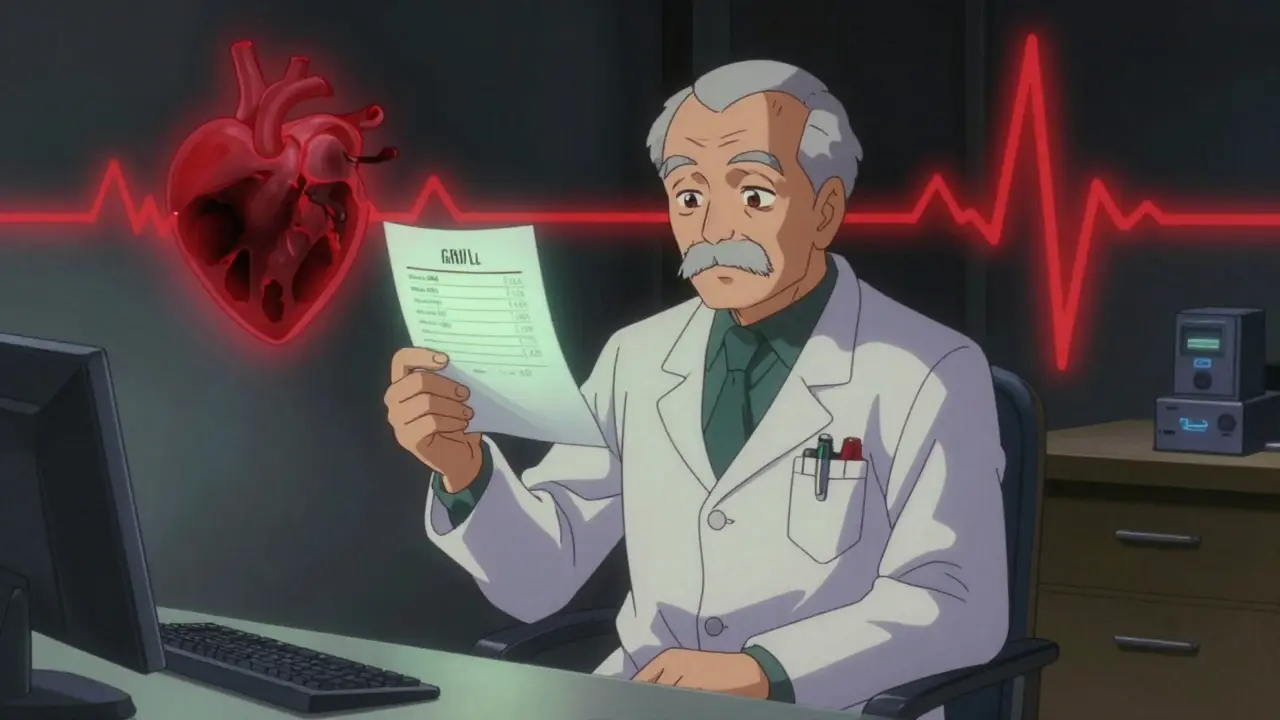
Most people think of hyperthyroidism as the kind that makes you jittery, lose weight fast, or feel like your heart’s about to jump out of your chest. But there’s a quieter version-subclinical hyperthyroidism-that flies under the radar. It doesn’t show the classic symptoms. No tremors. No night sweats. No racing pulse you can feel in your wrists. Yet, for many, especially those over 65, it’s quietly raising the risk of heart trouble. And that’s where the real danger lies.
What Exactly Is Subclinical Hyperthyroidism?
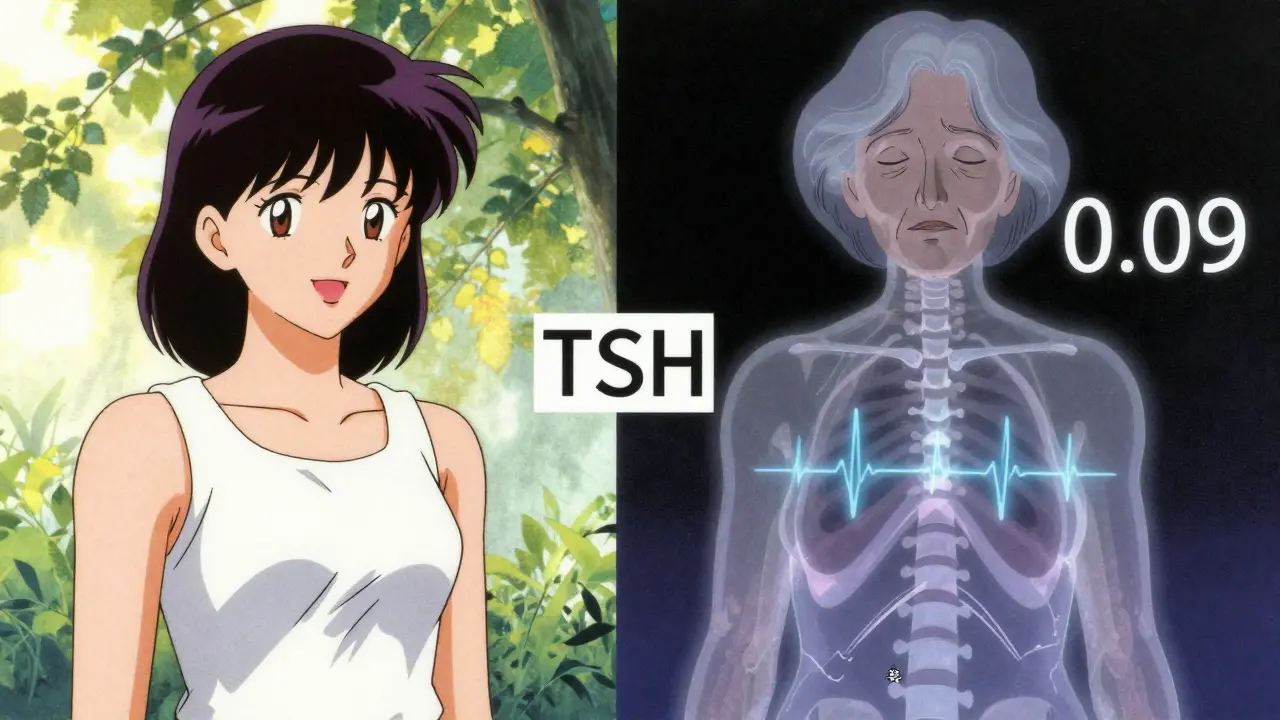
Subclinical hyperthyroidism means your thyroid is slightly overactive, but not enough to push your T4 or T3 levels out of the normal range. The only sign? Your TSH-thyroid-stimulating hormone-is too low. Usually below 0.45 mIU/L. In some cases, it’s even below 0.1 mIU/L. This isn’t a one-time lab fluke. It’s confirmed with repeat testing over weeks or months.
It’s not rare. About 4% to 8% of adults have it. But among people over 75, that number jumps to over 15%. Why? Older adults are more likely to have thyroid nodules or be on thyroid hormone pills (like levothyroxine) for hypothyroidism, and sometimes the dose gets too high. It’s often found by accident during routine blood work.
Why Your Heart Should Care
Your thyroid doesn’t just control metabolism. It talks directly to your heart. Even mild overactivity can change how your heart beats, pumps, and recovers.
Studies tracking over 25,000 people for 10 years found that those with TSH below 0.1 mIU/L had nearly double the risk of heart failure. Those with TSH between 0.1 and 0.44 mIU/L still had a 63% higher risk. Atrial fibrillation-the irregular, often fast heartbeat that can lead to stroke-is even more common. One analysis showed people with TSH under 0.1 had more than double the chance of developing AFib. For those with TSH between 0.1 and 0.44, the risk was still 63% higher.
It’s not just rhythm. The heart muscle thickens. The left ventricle gets heavier. Blood doesn’t relax between beats as well. Heart rate variability drops, meaning your nervous system isn’t balancing stress and rest like it should. All of this adds up to a heart under strain-even if you feel fine.
It’s Not Just the Heart
While heart issues are the biggest concern, subclinical hyperthyroidism doesn’t stop there. Bone density takes a hit. People with TSH below 0.1 mIU/L have a 2.3 times higher risk of fractures, especially hip and spine fractures. This is worse in postmenopausal women, who are already at risk for osteoporosis.
Cognitive changes are less clear, but some studies suggest subtle declines in memory and executive function in older adults with long-term low TSH. Quality of life? Often unchanged-until you start having palpitations or dizziness from an irregular heartbeat.
When Should You Treat It?
This is where things get personal. Not everyone with low TSH needs treatment. Guidelines don’t say ‘treat all.’ They say ‘treat smart.’
If your TSH is below 0.1 mIU/L, most experts agree: consider treatment. Especially if you’re over 65, have heart disease, high blood pressure, or a history of atrial fibrillation. Even if you feel fine, the long-term damage adds up.
If your TSH is between 0.1 and 0.44 mIU/L? It’s trickier. Treatment isn’t automatic. You need to look at the bigger picture:
- Are you over 65?
- Do you have heart disease or high blood pressure?
- Do you have low bone density or a history of fractures?
- Are you on thyroid medication, and could the dose be too high?
If yes to any of these, treatment makes sense. If you’re young, healthy, and have no symptoms? Watchful waiting may be the right call.
What Does Treatment Look Like?
It depends on what’s causing the low TSH.
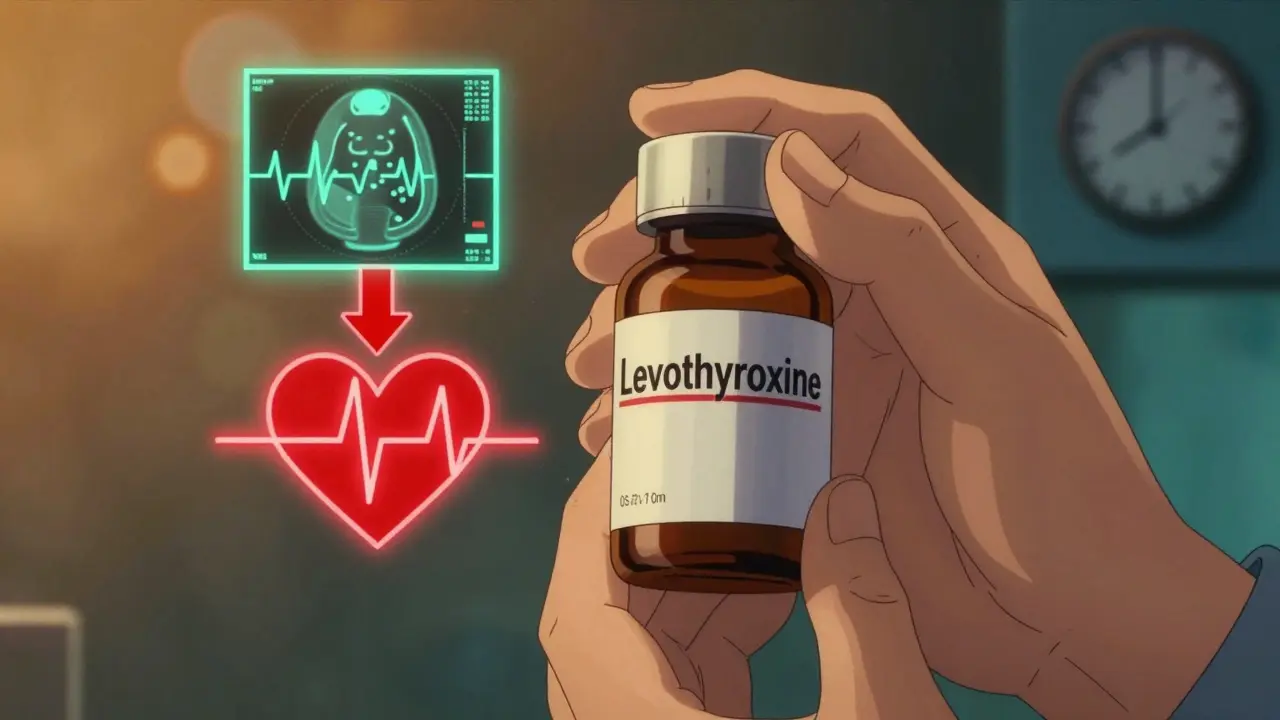
If it’s from too much thyroid medicine (like levothyroxine for hypothyroidism): the fix is simple-lower the dose. Most people see TSH rise back into the normal range within 6 to 8 weeks. No surgery. No radiation. Just a tweak.
If it’s from a toxic nodule or Graves’ disease: the options are more involved. Radioactive iodine is common. It shuts down the overactive part of the thyroid. Surgery is another option, especially if the gland is large or there’s a risk of cancer. Both can lead to hypothyroidism-which then needs lifelong thyroid hormone replacement. That’s why doctors hesitate. You’re trading one problem for another.
For immediate relief of heart symptoms-palpitations, fast heartbeat-beta-blockers like metoprolol or atenolol are often used. They don’t fix the thyroid, but they calm the heart. Studies show they reduce heart rate and improve heart muscle thickness over time.
Monitoring: How Often Should You Get Tested?
If your TSH is below 0.1 mIU/L: check every 3 to 6 months. Watch for changes in heart rhythm, bone density, or symptoms.
If your TSH is between 0.1 and 0.44 mIU/L and you’re low-risk (under 65, no heart or bone issues): annual testing is enough.
For older adults with nodules or on thyroid meds: annual TSH checks are a must. The American Thyroid Association recommends this as standard care.
What’s Changing in the Field?
Doctors aren’t just guessing anymore. Large studies are underway.
The DEPOSIT study, tracking 5,000 people over 65 across Europe, is set to finish in 2026. It’s looking at whether treating low TSH in older adults actually prevents heart attacks and strokes. The THAMES trial in the U.S. is testing whether treating people with TSH under 0.1 improves heart outcomes over 5 years.
One thing’s clear: the old idea that ‘if you feel fine, don’t treat’ is fading. We now know that silent doesn’t mean harmless. The heart doesn’t wait for symptoms to start getting damaged.
What Should You Do?
If you’re over 60 and have a low TSH:
- Ask your doctor if you need an EKG to check for atrial fibrillation.
- Request a bone density scan if you’re postmenopausal or have a history of fractures.
- Review your thyroid medication dose-if you’re on any.
- Don’t assume ‘no symptoms’ means ‘no risk.’
If you’re under 60 and have a low TSH with no heart or bone issues: monitor. Don’t rush to treat. But don’t ignore it either. A single low TSH reading isn’t a diagnosis. Repeat it. Confirm it. Then decide.
Subclinical hyperthyroidism isn’t an emergency. But it’s a warning sign. And like any warning sign, you don’t ignore it. You investigate. You assess. You act-if the evidence says so.

Stephen Rudd
March 8, 2026 AT 10:29Jazminn Jones
March 10, 2026 AT 10:09Erica Santos
March 11, 2026 AT 15:37George Vou
March 12, 2026 AT 04:26Scott Easterling
March 12, 2026 AT 19:32Mantooth Lehto
March 14, 2026 AT 04:54Melba Miller
March 14, 2026 AT 18:08Katy Shamitz
March 15, 2026 AT 17:41Nicholas Gama
March 16, 2026 AT 05:56Mary Beth Brook
March 17, 2026 AT 16:04Neeti Rustagi
March 18, 2026 AT 18:20Stephen Rudd
March 19, 2026 AT 17:03