
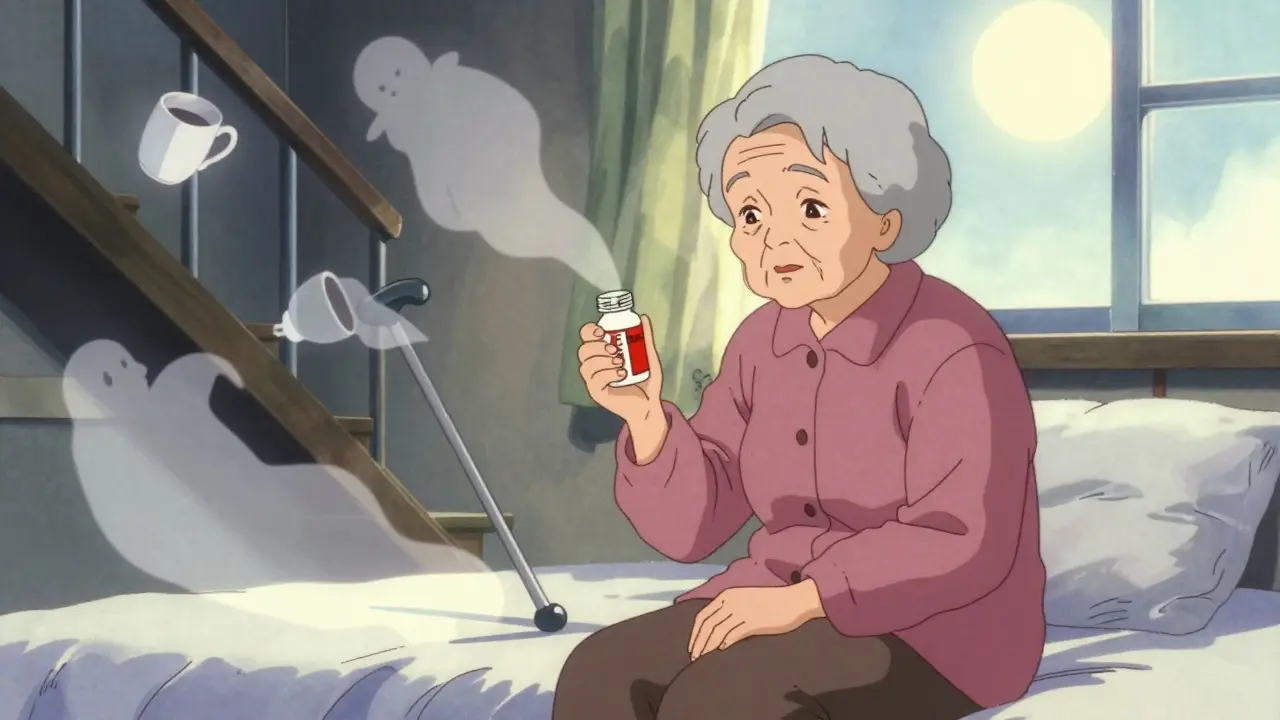
For millions of older adults, a small white pill labeled benzodiazepines has been a go-to solution for anxiety, trouble sleeping, or panic attacks. But what many don’t realize is that these drugs-commonly prescribed as Xanax, Valium, or Ativan-are now considered one of the riskiest medication classes for people over 65. The data is clear: the dangers far outweigh the short-term benefits, and safer options exist.
Why Benzodiazepines Are Riskier for Seniors
Benzodiazepines work by boosting GABA, a calming neurotransmitter in the brain. That sounds helpful, right? But in older adults, the body doesn’t process these drugs the same way it did in younger years. Liver function slows down. Kidneys filter less efficiently. And the brain becomes more sensitive to sedation. This means even low doses can lead to serious side effects.
Studies show that seniors on benzodiazepines are at least 50% more likely to suffer a hip fracture. Why? The drugs cause dizziness, poor balance, and delayed reaction times-exactly what you don’t want when walking across a slick kitchen floor or climbing stairs. One study of over 43,000 people found that those taking benzodiazepines had a risk of falling and breaking a hip similar to someone driving with a blood alcohol level of 0.06%. That’s legally impaired in most states.
Then there’s the brain. Long-term use is linked to memory loss, confusion, and even an increased chance of developing Alzheimer’s. A 2023 analysis from French and Canadian researchers found that seniors who took benzodiazepines for 3 to 6 months had a 32% higher risk of dementia. For those on them longer than six months? The risk jumped to 84%. And here’s the kicker: cognitive decline didn’t reverse even three months after stopping the medication.
These aren’t theoretical risks. They’re real, documented, and growing. The American Geriatrics Society’s Beers Criteria-used by doctors nationwide to guide safe prescribing-has listed benzodiazepines as potentially inappropriate for older adults since 2019. And the 2024 update made it even clearer: all benzodiazepines, no matter how short-acting, carry serious risks for seniors.
The Hidden Cost of “Just One Pill”
Many older adults start benzodiazepines after a stressful event-a death in the family, a move to a new home, or trouble sleeping after surgery. Their doctor says, “Try this for a few weeks.” But “a few weeks” often turns into months, then years. Why? Because stopping is harder than starting.
Withdrawal symptoms are real and often misunderstood. When someone stops benzodiazepines suddenly, they can experience rebound anxiety, insomnia, tremors, nausea, and even seizures. That’s why tapering is essential. But many doctors don’t have the time or training to guide patients through it. A 2024 guideline from the American Society of Addiction Medicine recommends reducing the dose by 5-10% every one to two weeks. For some, that takes 6 to 12 months.
And then there’s the emotional barrier. Patients often believe the medication is the only thing keeping them calm. A Reddit post from a geriatric nurse in March 2024 said, “Nine out of ten elderly patients I see think their Xanax is completely safe because their doctor prescribed it.” That trust is understandable-but dangerous.
What Works Better Than Benzodiazepines?
The good news? There are safer, more effective ways to manage anxiety and insomnia in older adults.
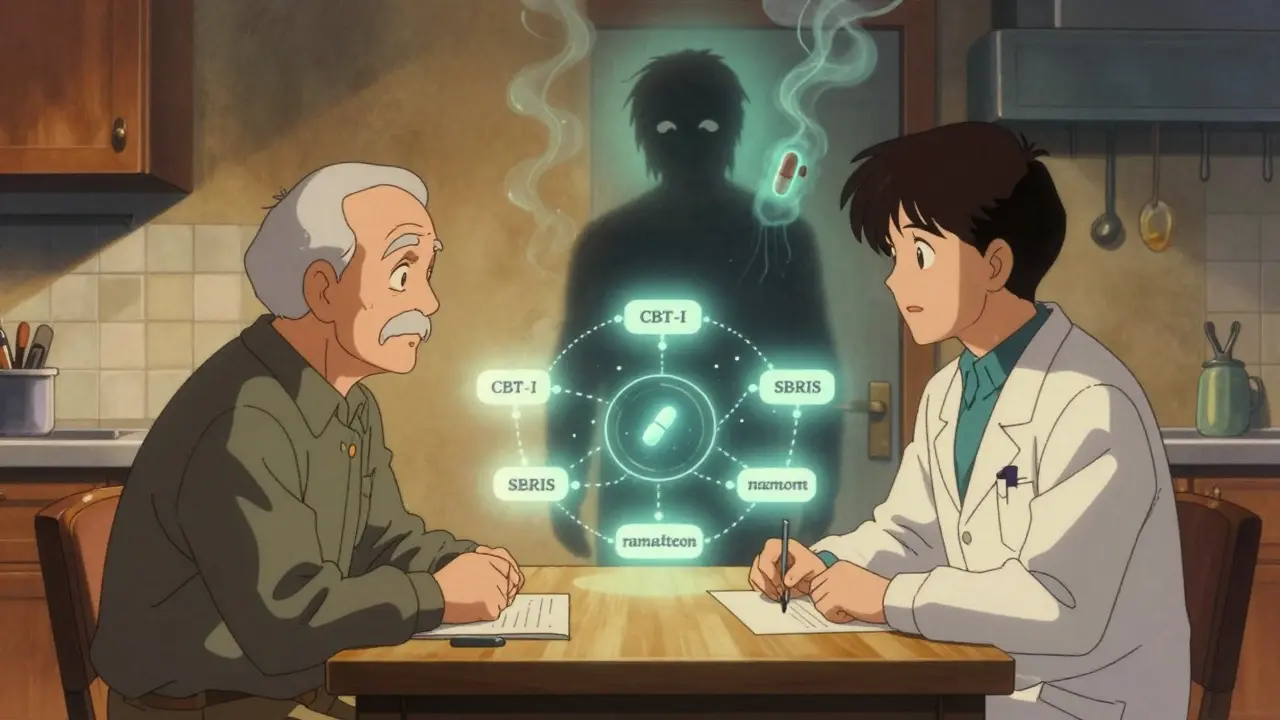
Cognitive Behavioral Therapy for Insomnia (CBT-I) is the gold standard. It’s not a pill. It’s a structured program that helps retrain your brain around sleep. Studies show 70-80% of seniors who complete CBT-I see major improvements in sleep quality-and those gains last. Unlike sleeping pills, CBT-I doesn’t wear off. Medicare started covering CBT-I in 2022, but only 12% of eligible seniors are using it, mostly because providers are scarce.
SSRIs and SNRIs (like sertraline or venlafaxine) are now first-line treatments for chronic anxiety in seniors. They take 4-6 weeks to work, which is slower than a benzodiazepine, but they don’t cause dizziness, memory loss, or falls. They also don’t lead to dependence. And unlike benzodiazepines, they’re safe for long-term use.
Ramelteon is a melatonin receptor agonist approved for sleep onset problems. It’s not a sedative. It doesn’t cause dependency. And it doesn’t impair balance or memory. It’s not perfect-it doesn’t help much with staying asleep-but for seniors who struggle to fall asleep, it’s a solid option.
What about over-the-counter sleep aids? Diphenhydramine (Benadryl) is common, but it’s a big no-no. It has strong anticholinergic effects, which are linked to higher dementia risk. Same goes for hydroxyzine or doxylamine. These aren’t safe just because they’re available without a prescription.
When Might Benzodiazepines Still Be Used?
It’s not all black and white. There are rare cases where benzodiazepines may still be appropriate. For example:
- Short-term use during acute panic attacks
- Severe, treatment-resistant anxiety that hasn’t responded to other therapies
- Procedural sedation before surgery
- End-of-life care for severe distress
Even then, the goal should be to use the lowest possible dose for the shortest possible time. The FDA now requires all benzodiazepine labels to include a warning about dementia risk in seniors, especially for long-acting versions like Valium or Librium.
How to Talk to Your Doctor About Stopping
If you or a loved one has been on benzodiazepines for more than a few months, it’s worth having a conversation. Don’t stop cold turkey. That’s dangerous. Instead, ask:
- “Is this medication still necessary, or was it meant for short-term use?”
- “What are the risks of continuing versus stopping?”
- “Can we try a taper? How long would it take?”
- “Are there non-drug options we can try together?”
Bring the Beers Criteria with you. Print it out. Doctors are more likely to take action when they see evidence-based guidelines. If your provider is hesitant, ask for a referral to a geriatric specialist or a pharmacist trained in deprescribing.
What’s Changing in 2025 and Beyond
Change is happening. Medicare is expanding access to CBT-I. The FDA has updated drug labels. CMS is flagging inappropriate prescriptions in real time. And the American Geriatrics Society has made benzodiazepine deprescribing one of its top priorities for 2025-2027.
There’s even a new NIH-funded trial called BRIGHT, launching in 2024, testing telehealth-assisted tapering for seniors. Results won’t be in until 2029, but the goal is clear: make safe discontinuation easier, faster, and more widely available.
Prescriptions for benzodiazepines in seniors have dropped 18% since 2015. That’s progress. But 3.2 million older adults are still on them. And for those over 85, nearly 1 in 10 are still taking them. That’s too many.
Final Thoughts
Benzodiazepines aren’t evil drugs. They helped many people in the past. But science has moved on. We now know too much about their long-term harm in older adults to keep using them as a first-line fix.
For seniors, the goal isn’t just to manage symptoms-it’s to live safely, clearly, and independently for as long as possible. That means avoiding drugs that cloud the mind, weaken the body, and increase the risk of dementia. Safer alternatives exist. They take time. They require effort. But they’re worth it.
Are benzodiazepines ever safe for elderly patients?
Benzodiazepines can be used in rare, short-term situations-like acute panic attacks, procedural sedation, or end-of-life care. But for chronic anxiety or insomnia, they are not considered safe for older adults. The risks of falls, cognitive decline, and dementia outweigh the benefits. The American Geriatrics Society recommends avoiding them entirely unless no other option exists.
How long does it take to safely stop taking benzodiazepines?
Tapering should be slow and personalized. For most seniors, a 5-10% dose reduction every 1-2 weeks over 8-16 weeks is typical. For those with long-term use, complex health issues, or severe withdrawal symptoms, the process may take 6-12 months. Never stop suddenly. Withdrawal can cause seizures, extreme anxiety, or hallucinations. Always work with a doctor who understands deprescribing.
What are the best non-drug treatments for anxiety and insomnia in seniors?
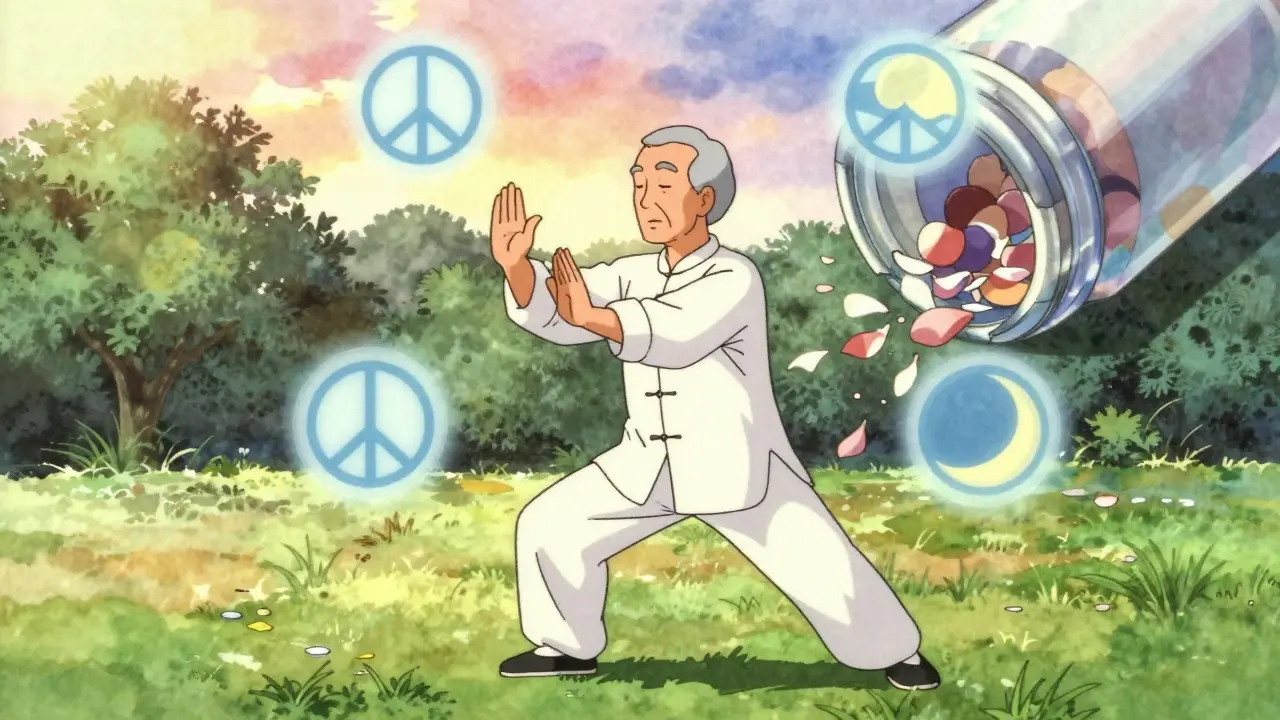
Cognitive Behavioral Therapy for Insomnia (CBT-I) is the most effective treatment for sleep problems. For anxiety, CBT and mindfulness-based stress reduction show strong results. Physical activity, especially tai chi or gentle yoga, helps reduce both anxiety and improve sleep. Light therapy and regular sleep schedules are also proven tools. These methods don’t carry the side effects of medication and often work better over time.
Can benzodiazepines cause dementia?
Yes, long-term use is strongly linked to increased dementia risk. A 2023 study found seniors who took benzodiazepines for more than six months had an 84% higher risk of developing Alzheimer’s disease. The risk rises with higher doses and longer duration. The FDA now requires all benzodiazepine labels to include a warning about this risk. Even short-term use can have lasting effects on memory and thinking.
Why are benzodiazepines still prescribed if they’re so risky?
Many prescriptions continue because they were started years ago and never re-evaluated. Some doctors aren’t aware of the latest guidelines. Others feel pressured to prescribe because patients ask for them. Also, alternatives like CBT-I aren’t widely available. But awareness is growing. Medicare now covers CBT-I, and providers are being trained to deprescribe. The goal is to stop these prescriptions before they become long-term habits.



Liam Crean
February 21, 2026 AT 09:19I’ve seen this play out with my dad. He was on lorazepam for ‘sleep’ for seven years-never questioned it until he started stumbling in the hallway. One fall, three surgeries, and a PT referral later, his geriatrician gently asked if we’d considered CBT-I. We did. Six weeks in, he’s sleeping better than he has in a decade. No pills. No hangover. Just quiet, deep rest. It’s not magic-it’s science. Why aren’t more doctors pushing this? Because they’re not trained to.
Also-Medicare covers CBT-I now. But good luck finding a provider who takes it. The system’s broken, not the patients.
Ellen Spiers
February 21, 2026 AT 15:39The empirical literature on benzodiazepine-induced cognitive decline in geriatric populations is unequivocal. A 2023 meta-analysis by Gagnon et al. (Journal of the American Geriatrics Society) demonstrated a dose-dependent correlation between cumulative benzodiazepine exposure and hippocampal volume reduction (p < 0.001). Furthermore, the pharmacokinetic profile of long-acting agents (e.g., diazepam, clonazepam) in elderly patients-characterized by prolonged half-lives due to reduced hepatic clearance and increased volume of distribution-renders them pharmacologically inappropriate for chronic use.
That said, the assertion that CBT-I is universally accessible is empirically untenable. Rural healthcare deserts, provider shortages, and reimbursement barriers render this ‘gold standard’ inaccessible to over 60% of the target demographic. Policy interventions must precede behavioral interventions.
Marie Crick
February 21, 2026 AT 16:32Doctors keep prescribing these like candy. And patients? They believe the white pill is their lifeline. It’s not. It’s a slow poison wrapped in a prescription pad. My mom took Valium for 12 years. She forgot my wedding. Forgot my name. Forgot how to make coffee. She didn’t die from a fall. She died from being forgotten. And they called it ‘normal aging.’
Stop normalizing this.
Jonathan Rutter
February 22, 2026 AT 18:09Look, I get it. You’re all about ‘safe alternatives’ and ‘non-drug options.’ But let’s be real-most seniors aren’t sitting around doing CBT-I or yoga. They’re lonely. They’re scared. They’re dealing with grief, chronic pain, or the terror of insomnia after midnight. You think telling them to ‘just try mindfulness’ is going to help? That’s not compassion-that’s privilege.
And don’t get me started on SSRIs. Ever seen someone on sertraline turn into a zombie? Or worse-have them develop hyponatremia, fall, crack their hip, and end up in a nursing home? Benzodiazepines are dangerous? Fine. But so is leaving someone terrified and sleepless for months while waiting for a therapist who’s booked out for six months. We’re not talking about healthy 70-year-olds. We’re talking about 85-year-olds with dementia, arthritis, and no family. What’s the alternative? Let them cry themselves to sleep every night?
And yes, I’ve worked in geriatrics for 22 years. I’ve seen both sides. The system is broken. But the answer isn’t to pull the rug out from under people who are already barely hanging on. You want to fix this? Fix the system. Don’t just blame the pills.
Ashley Paashuis
February 23, 2026 AT 04:30Thank you for this thorough and compassionate overview. As a healthcare professional who works with older adults daily, I can confirm that the underutilization of non-pharmacological interventions is not due to patient resistance, but systemic neglect. CBT-I requires trained clinicians, time, and infrastructure-resources that are often absent in primary care settings. The fact that Medicare now covers CBT-I is a critical step forward, but without provider education and reimbursement incentives, it remains theoretical for most.
I encourage clinicians to collaborate with pharmacists trained in deprescribing. They often have more time to counsel patients on tapering protocols than overburdened physicians. Also, community-based programs-like those run by Area Agencies on Aging-can be powerful allies in supporting behavioral interventions. Collaboration, not condemnation, is the path forward.
Oana Iordachescu
February 23, 2026 AT 23:07Have you considered that the FDA warning on benzodiazepines might be part of a larger pharmaceutical agenda? I’ve seen data suggesting that the push to eliminate benzos coincides with increased marketing of SSRIs and melatonin agonists. Who funds the NIH’s BRIGHT trial? Who profits from CBT-I certification programs? There’s a pattern here.
Also-did you know that some dementia cases diagnosed as ‘benzodiazepine-induced’ were later found to be caused by undiagnosed sleep apnea? Or that withdrawal symptoms mimic Alzheimer’s? We’re pathologizing normal aging and replacing one chemical dependency with another-just a different brand.
Be skeptical. Always.
Davis teo
February 24, 2026 AT 06:31I’m 78 and I’ve been on Xanax for 14 years. My doctor says I can’t stop. I tried once-woke up screaming at 3 a.m., heart pounding, convinced the walls were breathing. I called my daughter. She cried. I went back on the pill.
Now they want me to go to therapy? Who’s gonna pay for that? Who’s gonna drive me? I live alone. My kids are 300 miles away. My Medicare doesn’t cover a therapist who speaks Spanish. I’m not lazy. I’m scared.
Don’t tell me to ‘just quit.’ Tell the system to help me quit.
Michaela Jorstad
February 26, 2026 AT 05:41Thank you for sharing this. I’ve been trying to get my 82-year-old mother to taper off her clonazepam for two years. She’s terrified. Her doctor says, ‘It’s fine.’ But I’ve read the studies. I’ve printed the Beers Criteria. I’ve scheduled a geriatric pharmacy consult. We’re starting a 5% reduction next week.
It’s scary. But we’re doing it together. And yes-it’s taking months. But she’s sleeping better already. Less confusion. More laughter. It’s not about ‘giving up pills.’ It’s about getting back life.
Small steps. Big impact.
Chris Beeley
February 26, 2026 AT 15:50Let’s be honest-this entire narrative is a Western, neoliberal fantasy. You assume that every elderly person has access to a smartphone, a caregiver, a private physician, or the literacy to understand CBT-I manuals. In Nigeria, where I practice, the average 75-year-old lives with their grandchild in a one-room flat with no running water. Their ‘anxiety’ comes from not knowing if they’ll eat tomorrow. You think they care about hippocampal volume? They care about not being abandoned.
And let’s not pretend SSRIs are some kind of miracle. In low-resource settings, they’re often unaffordable, unregulated, or misused. Meanwhile, benzodiazepines? Cheap. Available. Effective. For now.
Stop preaching to the choir. The real problem isn’t benzodiazepines-it’s global healthcare inequality. But you won’t see that in your glossy JAMA article.
Arshdeep Singh
February 28, 2026 AT 12:50There’s a deeper metaphysical layer here that nobody’s addressing. Benzodiazepines aren’t just drugs-they’re modern-day amulets. We use them to numb the existential dread of aging, of mortality, of being forgotten. The real tragedy isn’t the falls or the dementia-it’s that we’ve outsourced our emotional resilience to a pill. We’ve become a society that equates peace with chemical sedation.
CBT-I? SSRIs? These are just Band-Aids on a wound we refuse to name: the collapse of intergenerational connection. When an elder no longer has a grandson to talk to, no ritual to belong to, no purpose beyond ‘staying alive’-of course they reach for a pill.
The solution isn’t pharmacology. It’s community. It’s presence. It’s love that doesn’t require a prescription.
Danielle Gerrish
February 28, 2026 AT 14:53I’m a nurse in a memory care unit. I’ve watched 17 seniors go through benzo withdrawal. Eleven of them had seizures. Two died. Not from the withdrawal itself-but because the hospital didn’t have a neurologist on call. The rest? They screamed for days. Cried. Punched walls. Begged for their pills.
And now you want us to ‘just taper slowly’? Who’s gonna sit with them? Who’s gonna hold their hand at 2 a.m. when they’re convinced the ceiling is falling? We’re understaffed. Underpaid. Overworked.
Don’t talk to me about ‘safe alternatives.’ Talk to me about staffing ratios. Talk to me about funding. Talk to me about why we let our elders be abandoned in rooms with a pill bottle and a TV.
Stop romanticizing CBT-I. It’s not the answer. It’s a luxury.
madison winter
March 2, 2026 AT 09:28I’ve read every study. I’ve read the Beers Criteria. I’ve read the FDA warnings. And I still don’t believe this is as clear-cut as everyone says.
What about the 2021 Canadian study that found no significant dementia increase in patients who used low-dose, short-acting benzos for less than three months? What about the fact that SSRIs have their own risks-sexual dysfunction, weight gain, GI issues? And CBT-I? It’s great-if you’re not cognitively impaired. But many seniors with insomnia also have early dementia. They can’t follow the sleep restriction protocol.
Maybe the problem isn’t benzodiazepines. Maybe it’s that we’re trying to force a one-size-fits-all solution onto a population that’s wildly diverse in health, cognition, and social support.
There’s nuance. There’s always nuance.