
Sedative & Supplement Interaction Checker
Check potential risks when combining sedatives with supplements based on current medical evidence.
Select Your Medications
When you take a sedative like Xanax, Valium, or even a sleep pill like zolpidem, your brain is being gently put to sleep. These drugs work by boosting the effect of a natural chemical in your brain called GABA. Now, millions of people also take GABA supplements - often marketed as a natural way to reduce anxiety or improve sleep. But what happens when you mix the two? Is there a real danger of your breathing slowing down, your blood pressure dropping, or worse?
How GABA Actually Works in Your Brain
GABA - gamma-aminobutyric acid - is the main calming signal your brain uses. Think of it like a brake pedal for your nervous system. When GABA binds to receptors on brain cells, it opens up channels that let in chloride ions. This makes the cells less likely to fire, which slows down overactive thoughts, reduces anxiety, and makes you feel relaxed. That’s why drugs like benzodiazepines (Xanax, Ativan) and barbiturates work: they make GABA more effective.
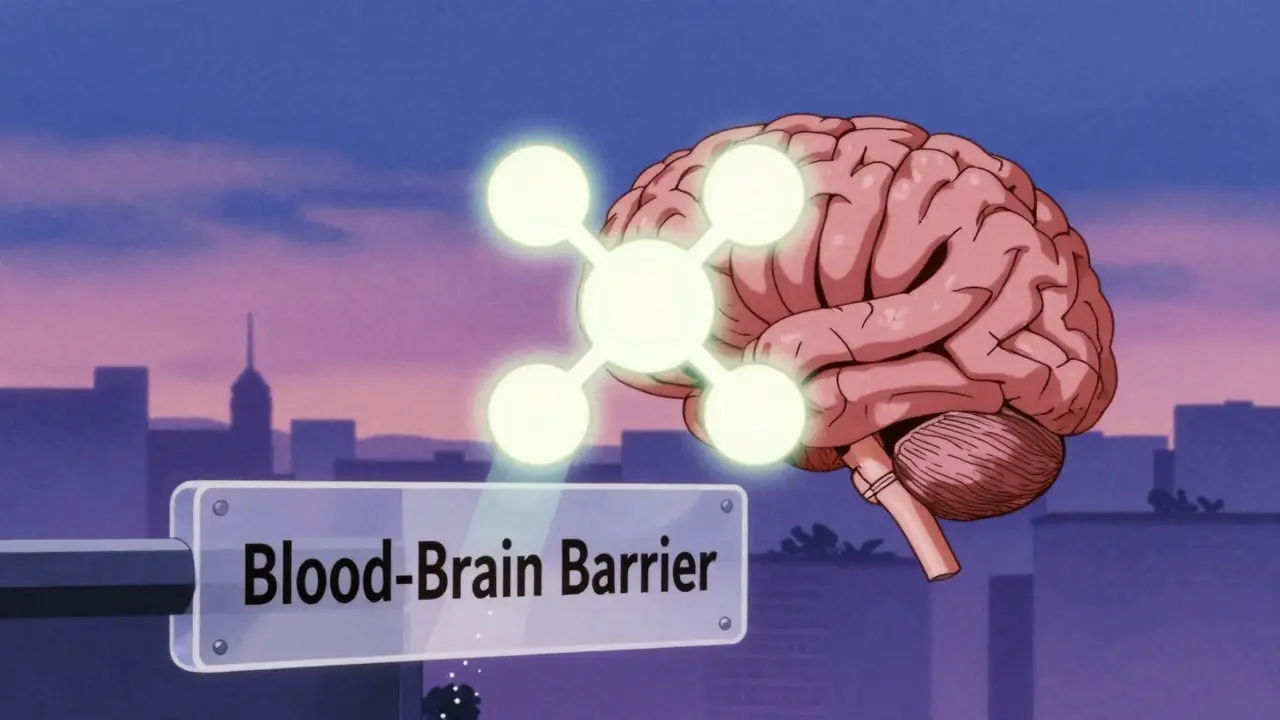
But here’s the catch: the GABA you take in a pill is not the same as the GABA your brain makes. Your brain produces GABA inside neurons. Oral GABA supplements, even at doses of 500-750 mg, don’t cross the blood-brain barrier in any meaningful way. Studies show less than 0.03% of ingested GABA reaches the brain. Your body sees it as a foreign molecule and actively pushes it back out. The rest stays in your bloodstream or gets broken down in your gut.
Why People Think GABA Supplements Work
If GABA can’t get into your brain, why do so many people swear they feel calmer after taking it? The answer might not be in the brain at all. Some researchers think GABA might influence your nervous system through your gut. The vagus nerve - a major highway connecting your gut to your brain - could be picking up signals from GABA in the intestines. That might explain why some people report feeling relaxed, even if their brain GABA levels haven’t changed.
It’s also possible that placebo effects play a big role. People who believe they’re taking something natural and calming often feel better - even if the substance itself isn’t doing much. Amazon reviews for top-selling GABA supplements show a 4.1 out of 5 rating, but 78% of negative reviews say one thing: “I didn’t feel anything.” Not side effects. Not drowsiness. Just nothing.
The Real Risk: It’s Not GABA - It’s Everything Else
Here’s the key point: There’s no strong evidence that GABA supplements add to the sedative effects of prescription drugs. A 2018 meta-analysis of 17 studies with over 1,200 people found zero meaningful increase in drowsiness when GABA supplements were taken with benzodiazepines. The FDA hasn’t issued any warnings about GABA and sedatives. The American Academy of Neurology says GABA supplements are “unlikely to contribute meaningfully to CNS depression.”
So why do people worry? Because they confuse GABA supplements with other substances that do affect GABA - and those are the real danger.
- Valerian root: Increases GABA release in the brain. Can boost sedation when taken with sleep meds.
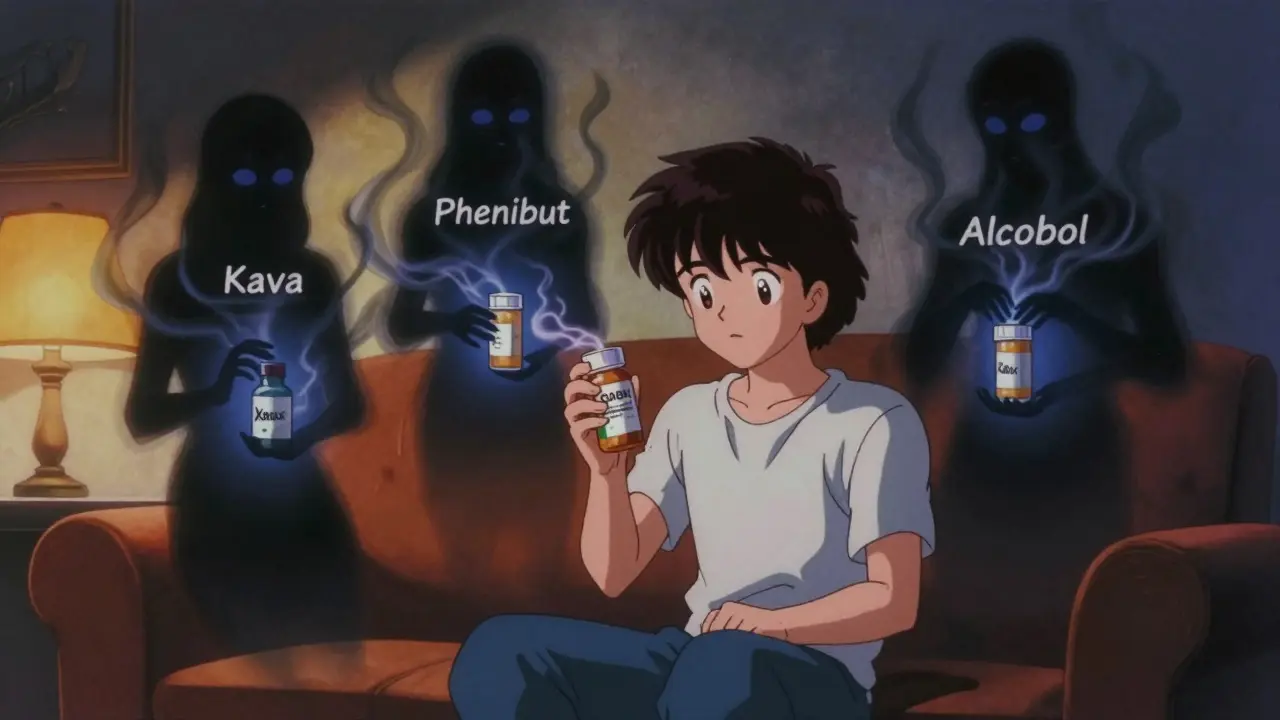
- Kava: Blocks GABA reuptake. Has been linked to liver damage and dangerous drowsiness with alcohol or benzodiazepines.
- Phenibut: A GABA-B agonist that crosses the blood-brain barrier easily. Not legal in the U.S. but sold online. Causes dependence and severe withdrawal.
- Alcohol: The biggest risk factor. Combines with sedatives to increase CNS depression by 45% according to NIAAA data.
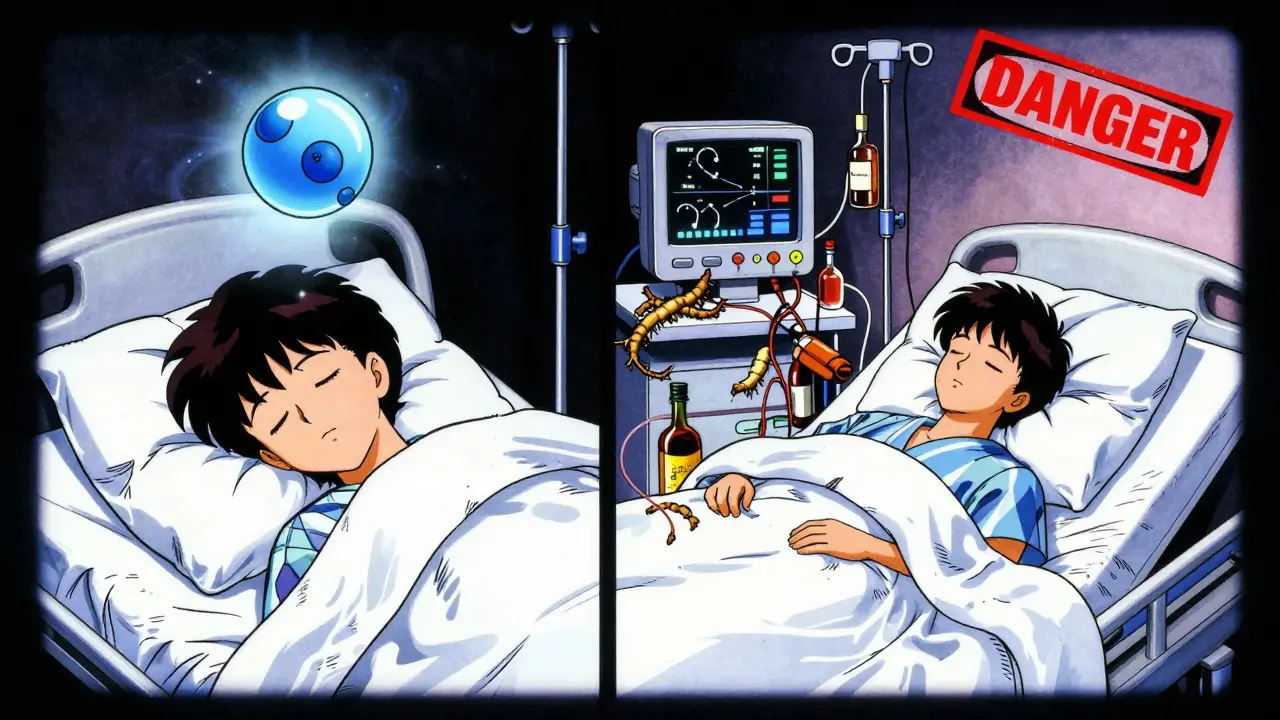
When you hear about someone going to the ER after mixing supplements and sedatives, it’s almost never because of GABA. It’s because of kava, melatonin, or alcohol. The FDA’s adverse event database from 2010-2022 recorded only 3 possible cases involving GABA supplements - and none were confirmed as true interactions. Compare that to over 12,800 cases involving opioids and benzodiazepines.
What Experts Say - And What They Don’t
Dr. Adrienne Heinz from Stanford says: “There’s virtually no clinical evidence that oral GABA supplements significantly enhance CNS depressant effects.” Dr. David Eagleman, a neuroscientist at Stanford, puts it bluntly: “The blood-brain barrier effectively filters out 99.97% of orally consumed GABA.”
But not everyone is convinced. Dr. Charles P. O’Brien from the University of Pennsylvania warns about the gut-brain connection. He points out that while GABA itself doesn’t reach the brain, it might still affect the vagus nerve - and we don’t fully understand what that means long-term. That’s why experts still say: be cautious.
What You Should Do
If you’re taking a sedative - whether it’s for anxiety, insomnia, or muscle spasms - here’s what you need to know:
- Don’t panic about GABA supplements. The risk of dangerous interaction is extremely low based on current science.
- Avoid other GABA-modulating supplements. Valerian, kava, phenibut, and high-dose melatonin are far more concerning than plain GABA.
- Never mix with alcohol. Alcohol + sedatives is a well-documented killer combo. GABA or not, this is where the real danger lies.
- Talk to your doctor. Even if the risk is low, your doctor needs to know what you’re taking. A 2021 study found 97% of primary care physicians want patients to disclose supplement use.
- Start low, go slow. If you want to try GABA, begin with 100-200 mg. Watch for drowsiness. If you feel too sleepy, stop.
- Use objective measures. If you’re worried about sedation, use the Epworth Sleepiness Scale. It’s a simple 8-question test doctors use to measure daytime sleepiness.
The Future: What’s Coming Next
Researchers are working on a new version of GABA called GABA-C12 - a molecule modified with a fatty acid tail that lets it slip past the blood-brain barrier. Early animal studies show it penetrates the brain 12.7 times better than regular GABA. If it gets approved, everything changes. Suddenly, GABA supplements might become as risky as benzodiazepines. But that’s still years away. Right now, the science is clear: the GABA you buy at the store doesn’t reach your brain enough to matter.
Bottom Line
You don’t need to stop taking GABA supplements if you’re on sedatives. But you should stop taking kava, phenibut, or mixing with alcohol. The science is simple: GABA supplements alone are not a problem. The real danger comes from other substances people lump together with them. Stay informed. Talk to your doctor. And don’t assume all supplements are safe just because they’re natural.




Hugh Breen
March 12, 2026 AT 17:21Okay but like… I took GABA for a week and suddenly my anxiety just… vanished? 🤯 I don’t care what the science says, my nervous system felt it. Maybe it’s the gut-brain thing? Or maybe my soul just needed a hug. Either way, I’m not stopping. 🙌
Byron Boror
March 13, 2026 AT 03:24Typical liberal pseudoscience. GABA supplements are fine. The real problem is Big Pharma pushing prescriptions like they’re candy. If you’re scared of a natural supplement but not scared of Xanax, you’re the problem.
Lorna Brown
March 13, 2026 AT 07:35I appreciate how this post breaks down the science, but I’m still uneasy about the vagus nerve angle. We don’t fully understand how gut signals affect mood long-term. Just because something doesn’t cross the BBB doesn’t mean it’s harmless. Biology is messy. I’d rather be safe than sorry.
Rex Regum
March 14, 2026 AT 18:24LOL so the ‘expert’ says GABA doesn’t work but then recommends starting with 100-200mg? That’s like saying ‘water doesn’t hydrate you’ then telling you to drink 8 glasses a day. This whole thing is a scam. GABA supplements are for suckers.
Kelsey Vonk
March 15, 2026 AT 08:00Thank you for this. I’ve been on lorazepam for years and was terrified to even try GABA. Knowing the real risks (kava, alcohol, phenibut) instead of just panicking about ‘natural supplements’ feels so much better. 🌿❤️
Emma Nicolls
March 16, 2026 AT 18:53im so glad i read this bc i was about to buy that kava thing bc it said 'natural calm' but now im not. also i take gaba and it kinda works for me? idk. but i dont mix it with wine lol
Jimmy V
March 17, 2026 AT 01:25Stop. The real danger isn't GABA. It's people who think 'natural' = 'safe'. Kava = liver failure. Phenibut = addiction. Alcohol + benzos = death. GABA? Just a useless pill. Don't confuse correlation with causation. Your gut doesn't scream at your brain because of a supplement. It screams because you're stressed. Fix that.
Richard Harris
March 17, 2026 AT 21:34Interesting. I’ve been taking GABA for sleep for 3 years. Never had a problem. But I do avoid alcohol with it. Just… better safe than sorry, right? 😊