

More than half of people stop taking their meds because of side effects. Not because they don’t care. Not because they’re lazy. But because they feel like they have no choice. You get a new prescription. You read the list of possible side effects. You feel dizzy, nauseous, or tired. You think, Is this worth it? And you quit.
Here’s the truth: side effects don’t always mean you need to stop. Many are temporary. Many are manageable. And many can be fixed without ditching the treatment that’s keeping you alive or helping you feel better. The key isn’t enduring discomfort-it’s knowing how to talk about it the right way.
Don’t Wait Until It’s Unbearable
The biggest mistake people make? Waiting until side effects are crushing their daily life before saying anything. By then, they’ve already stopped taking the medicine-or they’re so frustrated they don’t trust their doctor anymore.
Don’t do that. Talk early. Even if it’s just a mild headache or a little dry mouth. Tell your provider the moment you notice something new. You don’t need to wait for your next scheduled visit. Call the nurse line. Send a secure message through your portal. Text your pharmacist if they offer it.
Why? Because timing matters. A lot of side effects fade within 7 to 14 days as your body adjusts. But if you don’t speak up, your doctor has no idea you’re struggling. And if you quit without telling anyone, you lose the chance to fix it.
Track It Like a Pro
Doctors aren’t mind readers. Saying “I feel weird” doesn’t help them help you. You need specifics.
Start a simple side effect log. You don’t need an app-though many good ones exist. A notebook, a Notes app, or even a spreadsheet works. Write down:
- What you’re feeling (e.g., dizziness, stomach ache, dry mouth)
- When it happens (e.g., 2 hours after taking the pill, every morning)
- How bad it is (rate it 1-10)
- What you were doing when it happened (e.g., driving, eating, sleeping)
- Did anything help? (e.g., drinking water, lying down, eating a snack)
People who track side effects this way are 23% less likely to quit their meds, according to a 2021 study in the Journal of the American Medical Informatics Association. Why? Because when you show your doctor a clear pattern, they can make real changes-not guesswork.
One Reddit user, u/MedPatient92, shared how this changed everything: “I showed my doctor my spreadsheet with dizziness episodes timed to my pill schedule. She didn’t take me off the med. She just moved my dose to bedtime. My dizziness vanished.”
Use the SWIM Framework
When you talk to your provider, structure your conversation so they can act fast. Use SWIM:
- Severity: “It’s a 7 out of 10-it’s making me miss work.”
- When: “It starts 30 minutes after I take it and lasts about 2 hours.”
- Intensity: “It’s worse on days I skip breakfast.”
- Management: “I tried drinking ginger tea and lying down. It helped a little.”
This isn’t about being perfect. It’s about giving your provider enough data to make a smart call. You’re not complaining-you’re problem-solving.

Ask the Right Questions
Don’t just say, “This side effect sucks.” Ask questions that open doors:
- “Is this side effect temporary? Do most people get over it?”
- “Can we lower the dose? Maybe try half for a week?”
- “Could I take this at night instead of in the morning?”
- “Is there another med that works the same way but with fewer side effects?”
- “Can we add something to help with this? Like an anti-nausea pill?”
According to the American Pharmacists Association, patients who ask these kinds of questions are far more likely to stay on their meds. And here’s the kicker: many side effects can be managed with simple fixes. Taking a blood pressure pill with a small snack cuts nausea by 80% for some people. Switching from morning to bedtime dosing stops dizziness for others. These aren’t magic tricks-they’re standard clinical moves.
Some Side Effects Are a Sign It’s Working
This sounds strange, but it’s true: sometimes, the side effect means the medicine is doing its job.
A 2021 study published in PMC showed that when patients were told, “This mild headache or fatigue is a sign the drug is active in your body,” their anxiety dropped by 37%. And their rate of quitting the medication fell by 29%.
For example: antidepressants often cause nausea at first. That’s not a reason to quit-it’s a signal your brain is adjusting to new serotonin levels. Blood thinners can cause bruising. That’s not a failure-it’s proof they’re preventing clots. It’s not about ignoring discomfort. It’s about understanding context.
Ask your provider: “Could this side effect mean the medicine is working?” You might be surprised by the answer.
Don’t Self-Adjust or Quit Cold Turkey
Here’s a hard truth: stopping meds on your own can be dangerous. Some medications, like blood pressure pills or antidepressants, can cause rebound effects if you quit suddenly. Others, like antibiotics, need to finish the full course-even if you feel better.
Even if you’re convinced the side effect is unbearable, don’t skip a dose or cut the pill in half without talking to your provider. That’s how you end up in the ER.
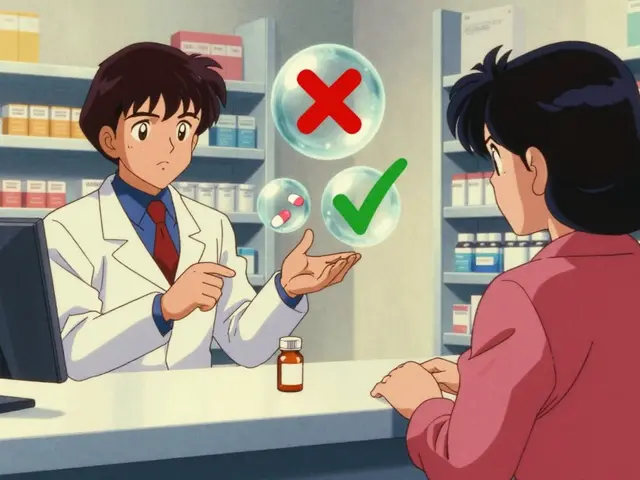
Instead, say: “I’m really struggling with this. I want to keep taking this medicine, but I need help managing the side effects. What can we do?” That’s the difference between quitting and collaborating.

Real Success Stories
Here’s what real people did:
- A woman on a statin for cholesterol had muscle pain. She didn’t quit. She asked if she could switch to a different statin. Her doctor did. The pain vanished.
- A man on diabetes medication got frequent low blood sugar. He started checking his glucose before meals. He began eating a small snack before his pill. His levels stabilized.
- A patient on an SSRI had insomnia. Her doctor suggested moving the dose from morning to afternoon. She slept through the night.
None of them quit. All of them kept their treatment. All of them got better.
What If Nothing Helps?
Not every side effect can be fixed. And that’s okay. You still have options.
If the side effect is severe, persistent, and unmanageable-your doctor can switch you to a different drug in the same class. Or try a completely different treatment. But you need to have this conversation before you quit.
Some medications have alternatives with similar benefits but different side effect profiles. For example:
- If you can’t tolerate metformin for diabetes, there’s GLP-1 agonists.
- If you can’t handle beta-blockers for high blood pressure, ACE inhibitors might work better.
- If SSRIs cause too much nausea, SNRIs might be gentler.
Your provider can’t read your mind. But they can help you find a better fit-if you give them the chance.
Bottom Line: You’re Not Alone
You’re not weak for struggling with side effects. You’re not failing if you feel overwhelmed. Millions of people are right there with you.
The goal isn’t to suffer silently. The goal is to speak up, track your experience, and work with your care team to find a way forward. Medication isn’t a one-size-fits-all fix. It’s a tool-and like any tool, it needs to fit you.
Keep taking your medicine. But don’t stop talking. Because the right conversation can turn a reason to quit into a reason to stay.



Mandy Kowitz
January 4, 2026 AT 12:34Michael Rudge
January 4, 2026 AT 23:59Doreen Pachificus
January 5, 2026 AT 16:48Enrique González
January 6, 2026 AT 08:53Dee Humprey
January 7, 2026 AT 12:27jigisha Patel
January 8, 2026 AT 22:28Roshan Aryal
January 10, 2026 AT 02:25Jack Wernet
January 10, 2026 AT 20:47Charlotte N
January 11, 2026 AT 10:19Catherine HARDY
January 13, 2026 AT 02:08bob bob
January 14, 2026 AT 00:56Mandy Kowitz
January 14, 2026 AT 14:51