

Antidepressant Selection Tool
Find the antidepressant that best fits your needs
Select what matters most to you, and we'll show which new antidepressants may be most appropriate.
Recommended Medication
-
How It Compares
Exxua (gepirone)
Onset: 7-10 days
Sexual side effects: 2-3%
Cost: $2,500-$3,500 per month
Best for: Those prioritizing minimal sexual side effects
Auvelity
Onset: 2-5 days
Weight gain: Minimal
Cost: $1,800-$2,200 per month
Best for: Those needing daily pills with practical use
SPRAVATO
Onset: 24-48 hours
Dissociation: 45-55%
Cost: $880 per dose
Best for: Rapid relief in crisis situations
Zuranolone
Onset: 3-7 days
Dizziness: 25%
Cost: $9,450 for 14 days
Best for: Postpartum depression and short-term treatment
For decades, antidepressants have come with a trade-off: they help lift your mood, but often at a cost. Sexual dysfunction, weight gain, drowsiness, nausea - these aren’t just side notes in the prescribing information. They’re deal-breakers for millions of people. If you’ve ever stopped taking an SSRI because it made you feel numb, sluggish, or like you lost part of yourself, you’re not alone. Now, in 2025, a new wave of antidepressants is changing that equation. These aren’t just tweaked versions of old drugs. They work differently, kick in faster, and - crucially - cause far fewer of the side effects that make people quit.
Why the old antidepressants still fall short
Most people start with SSRIs like sertraline, escitalopram, or fluoxetine. They’re widely prescribed because they’re cheap, well-studied, and generally safe. But here’s what the data shows: between 30% and 70% of users experience sexual problems. About 1 in 10 gain 10 pounds or more in six months. Nearly half report stomach issues. These aren’t rare outliers. They’re the norm. And it’s not just physical. Many people feel emotionally flat - like their feelings have been dialed down, not lifted. That’s not healing. That’s suppression. For someone already struggling with depression, this can feel like trading one kind of pain for another. The problem isn’t that SSRIs don’t work. They do - for some people, eventually. But the wait is long. It takes 4 to 8 weeks to feel any real change. And by then, the side effects have already taken their toll. Many give up before the benefit kicks in.The breakthroughs: How new antidepressants work differently
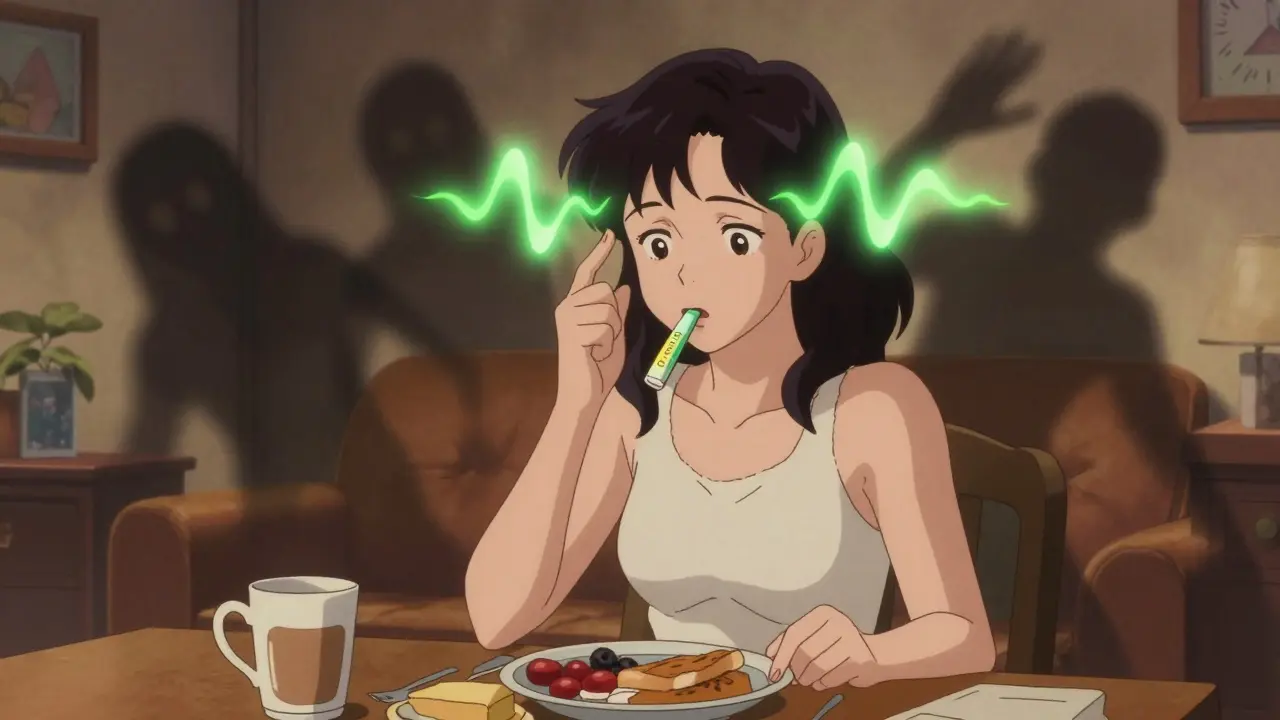
The new generation of antidepressants doesn’t just boost serotonin. It targets other parts of the brain entirely. That’s why they work faster and with fewer side effects. Exxua (gepirone), approved in September 2023, is the first new chemical antidepressant in over a decade. It works on serotonin receptors in a precise way - not flooding the system, but fine-tuning it. The result? A 2-3% rate of sexual side effects, compared to 30-50% with SSRIs. People report feeling more like themselves within 10 days, not months. Auvelity (dextromethorphan/bupropion), approved in 2022, combines two drugs that act on the glutamate system. Glutamate is the brain’s main excitatory chemical. When it’s out of balance, depression takes hold. Auvelity fixes that fast - often within days. It also has lower weight gain risk than older drugs like duloxetine. It’s taken as a pill, no clinic visits needed. SPRAVATO (esketamine), approved in 2019, is a nasal spray derived from ketamine. It works within hours. In one JAMA Psychiatry study, patients saw symptom reduction in 24-48 hours. But it’s not for everyone. About half of users experience dissociation - a feeling of being detached from your body or surroundings. That’s scary for some. And because of safety rules, you have to take it at a certified clinic and stay for two hours after each dose. Only 1,243 clinics in the U.S. offer it as of October 2025. Zuranolone (Zurzuvae), approved in 2023 for postpartum depression and expanded to major depression in October 2025, is a neurosteroid. It calms overactive brain circuits by enhancing GABA, the brain’s natural calming signal. You take it for just 14 days. No daily pills for months. It works in under a week. But it causes dizziness in 25% of users and sleepiness in 20%. You have to take it with food - otherwise, your body absorbs half as much.Side effect comparison: What’s better, and what’s not
| Medication | Sexual Side Effects | Weight Gain | Onset of Action | Key Risks |
|---|---|---|---|---|
| SSRIs (e.g., sertraline, citalopram) | 30-50% | 10-15% average gain | 4-8 weeks | GI upset, insomnia, QT prolongation |
| Exxua (gepirone) | 2-3% | Minimal | 7-10 days | Mild headache, dizziness |
| Auvelity | 15-20% lower than duloxetine | Lower than most SNRIs | 2-5 days | Increased blood pressure (monitor required) |
| SPRAVATO | 10-15% | Minimal | 24-48 hours | Dissociation (45-55%), dizziness |
| Zuranolone | 5-8% | Neutral or slight loss | 3-7 days | Dizziness (25%), somnolence (20%), need food with dose |
| Tricyclics (e.g., amitriptyline) | 40-60% | 48% gain | 4-6 weeks | Heart rhythm issues, dry mouth, sedation |
What stands out? The new drugs aren’t perfect, but they’re better for the people who need them most. Exxua and Zuranolone are the clear winners for avoiding sexual side effects. Auvelity is the most practical for daily use. SPRAVATO works fast but comes with a high cost and logistical burden.
Cost and access: The hidden barriers
These new treatments aren’t just different - they’re expensive. A single dose of SPRAVATO costs about $880. A full 14-day course of Zuranolone runs around $9,450. Insurance often requires prior authorization, and many plans still won’t cover them unless you’ve tried and failed at least two older antidepressants. Meanwhile, generic fluoxetine costs $4 for a 30-day supply. That’s not just a price difference. It’s a justice issue. People without good insurance or those living in rural areas - where certified SPRAVATO clinics are scarce - are left behind. Even when covered, the process is exhausting. For SPRAVATO, you need to take time off work, arrange transportation, sit in a clinic for two hours, and then go home alone. For Zuranolone, you have to remember to take it with food every day for two weeks. No room for error.Who benefits most - and who should be cautious
These new drugs aren’t one-size-fits-all. They’re tools for specific situations.- If you’ve had sexual side effects from SSRIs, Exxua is the top choice.
- If you’re struggling with postpartum depression, Zuranolone has shown a 70% response rate in trials - faster than any other option.
- If you need rapid relief and can handle clinic visits, SPRAVATO works in days.
- If you want daily pills with minimal side effects and no clinic visits, Auvelity is the best fit.
- If you have heart problems or high blood pressure, avoid amitriptyline, venlafaxine, and fluoxetine - they can raise your BP and heart rate. Exxua and Zuranolone are safer here.
- If you’re over 65 or have a history of seizures, SPRAVATO and Auvelity may not be safe. Always talk to your doctor.
Dr. Dervla Kelly, a consultant psychiatrist in London, puts it simply: “The goal isn’t to find the best antidepressant. It’s to find the right one for you.” That means matching the drug to your body, your life, and your priorities.
What’s next? The future of depression treatment
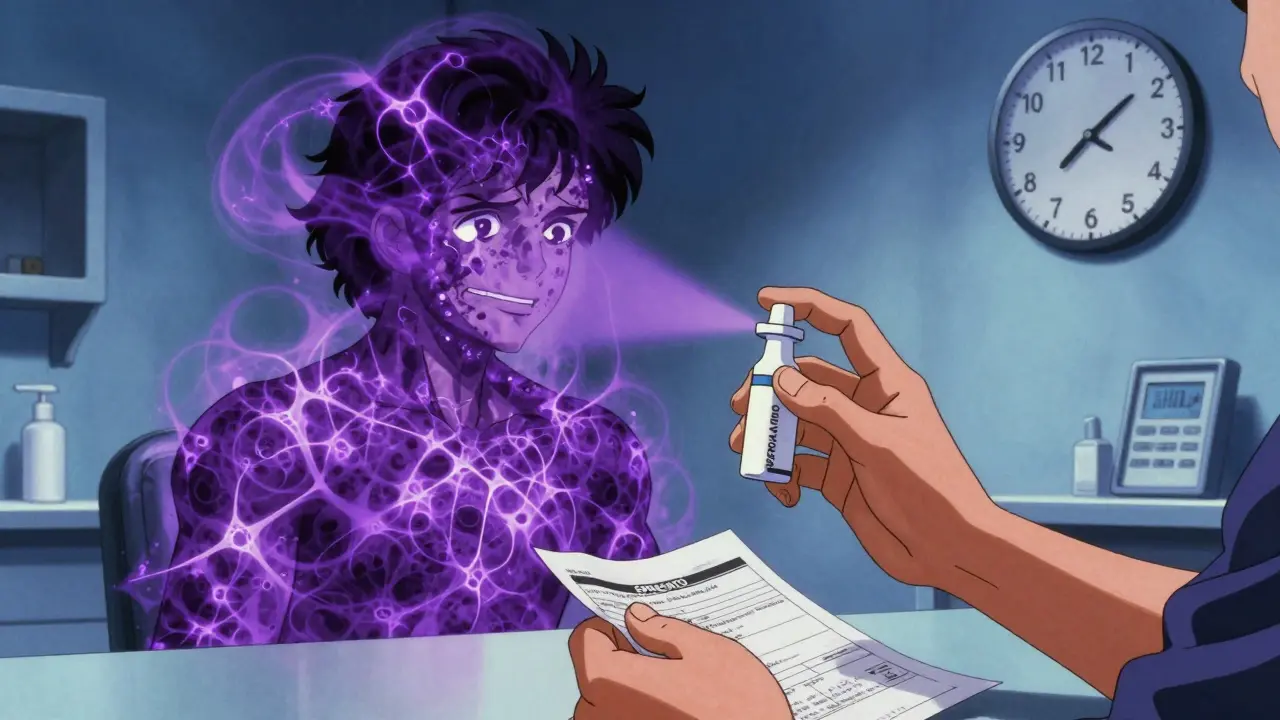
The next wave is already on the horizon. Aticaprant, a drug targeting the brain’s stress system, is in late-stage trials and could be approved by mid-2026. Early results show a 60% response rate in treatment-resistant depression with almost no weight gain. Even more exciting? The NIH is funding research to predict side effects before you even start a drug. A genetic test, still experimental, can now identify with 85% accuracy who’s likely to gain weight or lose libido on a particular antidepressant. Imagine walking into your doctor’s office, getting a quick DNA swab, and walking out with a personalized medication plan - no trial and error. Psilocybin, the compound in magic mushrooms, is also moving toward approval. A 2024 study in the New England Journal of Medicine showed a single dose, combined with therapy, helped patients stay in remission for six months. That’s not a daily pill. That’s a reset.Real stories: What patients are saying
On Reddit, u/AnxietyWarrior2023 wrote: “After 15 years on SSRIs with terrible sexual side effects, switching to Exxua in January 2025 was life-changing - no ED issues and noticeable improvement in mood within 10 days.” Another user, u/DepressedEngineer, shared: “SPRAVATO gave me terrifying dissociation episodes despite working well for depression - had to discontinue after 3 treatments.” Healthgrades reviews for Zuranolone show 3.8 out of 5 stars. Most praise the speed. Many complain about dizziness. But 68% say it worked when nothing else did. These aren’t just clinical trial numbers. These are real lives changing - or being derailed - by the choices we make.What to ask your doctor
If you’re considering a new antidepressant, here’s what to ask:- “Have I tried enough older meds? Am I a candidate for a newer one?”
- “Which side effects am I most sensitive to? Sexual? Weight? Drowsiness?”
- “Can I get this covered by insurance? What’s the prior authorization process?”
- “Do I need to go to a clinic? How often? How will this fit into my life?”
- “Is there a genetic test I can take to predict how I’ll react?”
There’s no shame in asking. The old system assumed you’d just endure the side effects. The new system says: your quality of life matters too.
Are new antidepressants safer than old ones?
Yes - but only in specific ways. Newer drugs like Exxua and Zuranolone have much lower rates of sexual dysfunction and weight gain. But they come with new risks: dissociation (SPRAVATO), dizziness (Zuranolone), and potential blood pressure spikes (Auvelity). Safety depends on your health history. Always discuss your full medical profile with your doctor.
How fast do new antidepressants work?
Traditional SSRIs take 4-8 weeks. Newer ones work much faster: Auvelity in 2-5 days, Zuranolone in 3-7 days, and SPRAVATO in 24-48 hours. This speed is a game-changer for people in crisis or those who’ve given up after months of waiting.
Can I switch from an SSRI to a new antidepressant?
Yes, but not on your own. Stopping an SSRI suddenly can cause withdrawal. Your doctor will likely taper you off slowly while starting the new medication. The transition is safest when managed by someone experienced with both types of drugs.
Why are new antidepressants so expensive?
They’re new, patented, and backed by heavy R&D costs. Companies price them high to recoup investment before generics arrive. Zuranolone costs nearly $10,000 for a 14-day course. Insurance often requires proof that older drugs failed before covering them. Generic SSRIs cost under $5 - that’s why they’re still the default.
Do these new drugs cure depression?
No. None of them do. They manage symptoms. Some, like Zuranolone, are designed for short-term use. Others, like Exxua, are meant for ongoing treatment. Depression is a chronic condition for many. These drugs offer better tools - not a final solution. Therapy, lifestyle changes, and social support still matter.
Is psilocybin an approved antidepressant yet?
No. As of late 2025, psilocybin is still investigational. The FDA granted breakthrough therapy status in 2018, and Phase 3 trials show strong results - including 6-month remission after one dose. But it’s not approved for public use. It’s only available in clinical trials or in places where decriminalized, like Oregon.


christian ebongue
December 27, 2025 AT 15:28Exxua sounds like magic but i bet it costs more than my rent. why do they make life-saving meds so damn expensive??
Ryan Cheng
December 28, 2025 AT 23:29Finally someone’s talking about the real issue: side effects. I was on sertraline for 3 years and felt like a zombie with zero libido. Switched to Exxua last year - no more numbness, no more weight gain, and I actually started enjoying coffee again. It’s not a cure, but it’s the first thing that made me feel human.
Alex Ragen
December 30, 2025 AT 02:11Ah, yes - the pharmaceutical-industrial complex’s latest symphony of profit-driven ‘innovation.’ We’ve replaced the tyranny of SSRIs with the aristocracy of $9,000 neurosteroids… and call it progress? The real breakthrough isn’t in pharmacology - it’s in our collective willingness to pay for bandaids disguised as breakthroughs.
Lori Anne Franklin
December 31, 2025 AT 18:25i just started zuranolone last week and wow. i’m dizzy all the time but my brain feels… lighter? like someone turned down the static. still taking it with food like a good girl 😅
Bryan Woods
January 2, 2026 AT 11:08The data presented here is statistically significant and clinically relevant. However, the accessibility gap between insured and uninsured populations remains a critical public health concern. The disparity in treatment options based on socioeconomic status undermines the ethical foundations of modern medicine.
wendy parrales fong
January 2, 2026 AT 18:58it’s not about finding the perfect pill. it’s about finding the one that lets you live again. i tried everything. spent years feeling broken. zuranolone didn’t fix me - but it gave me back enough to try therapy. that’s worth more than any price tag.
Jeanette Jeffrey
January 4, 2026 AT 18:31so you’re telling me we’re now medicating people with $10k two-week courses instead of teaching them to breathe or get sunlight? this is capitalism’s answer to human suffering. sad. and predictable. you think psilocybin’s the future? nah. it’s the only thing left that hasn’t been corporatized yet.
Shreyash Gupta
January 6, 2026 AT 05:00exxua? 🤔 i tried it. didn't work for me. maybe it's my genes. or maybe i'm just broken. 🤷♂️