For years, pharmacists were seen as the people who handed out pills and checked for drug interactions. But today, in many parts of the U.S., they’re doing far more - prescribing birth control, switching medications without calling the doctor, and even testing for flu or strep throat. This shift isn’t random. It’s the result of decades of state-by-state law changes, growing physician shortages, and a push to make healthcare more accessible, especially in rural areas where people might drive an hour just to refill a prescription.
What Exactly Is Pharmacist Substitution Authority?
Pharmacist substitution authority means a pharmacist is legally allowed to change a prescription - not just fill it - under certain rules. This could mean swapping a brand-name drug for a cheaper generic, switching to another drug in the same class, or even starting or adjusting a medication without waiting for a doctor’s new note. The key word here is authority. It’s not up to the pharmacist to decide on their own. Every change must follow state laws, written protocols, or agreements with prescribers.
Every state has its own rules. Some let pharmacists do very little. Others let them act like mini-clinicians. But one thing is true everywhere: pharmacists can always substitute a generic drug if the prescription doesn’t say “dispense as written.” That’s been the law in all 50 states for decades. It’s the simplest form of substitution - and it saves patients and insurers millions every year.
Therapeutic Interchange: When Pharmacists Can Swap Drugs That Aren’t Identical
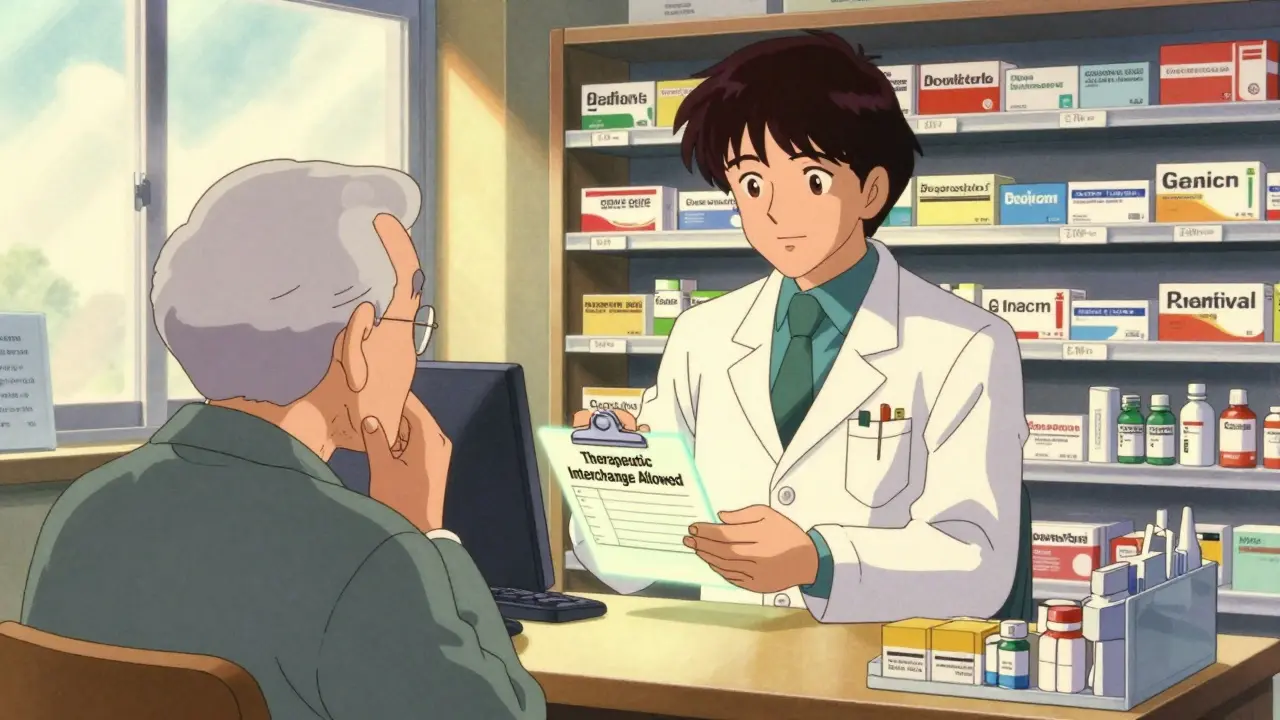
Generic substitution is basic. Therapeutic interchange is advanced. It lets pharmacists switch a prescribed drug for another drug in the same class - like swapping one blood pressure pill for another - even if they’re not chemically identical. This isn’t about cost. It’s about effectiveness, side effects, or insurance coverage.
As of 2025, only three states - Arkansas, Idaho, and Kentucky - have full therapeutic interchange laws. But even there, it’s not automatic. The prescriber must write something like “therapeutic substitution allowed” on the prescription. If they don’t, the pharmacist has to fill it exactly as written.
In Idaho, pharmacists must also explain the change to the patient in plain language and get their consent. The patient can say no. In Kentucky, the pharmacist has to notify the original doctor right after making the swap. These rules exist to protect patients and keep doctors in the loop. It’s not about taking over - it’s about filling gaps.
Collaborative Practice Agreements: The Hidden Backbone of Modern Pharmacy
Most of the big changes in pharmacist authority come through Collaborative Practice Agreements (CPAs). These are written contracts between a pharmacist and one or more doctors. They spell out exactly what the pharmacist can do - which drugs they can prescribe, what tests they can order, when they must refer a patient to a doctor.
All 50 states and D.C. allow CPAs. But how they’re used? That’s where things get messy. In some states, CPAs are rare and tightly controlled. In others - like Minnesota, Oregon, and Washington - pharmacists run entire clinics under these agreements. They manage diabetes, adjust anticoagulants, treat urinary tract infections, and even give flu shots. The pharmacist doesn’t need to call the doctor each time. The protocol already covers it.
These agreements require documentation in shared health records. They also require training. Most states require pharmacists to complete extra certification - like the Board-Certified Pharmacotherapy Specialist (BCPS) credential - before they can enter into a CPA. This isn’t just paperwork. It’s about ensuring pharmacists are qualified to make clinical decisions.
State-by-State Differences: Who Can Prescribe What?
States are experimenting in different ways. Maryland lets pharmacists prescribe birth control to anyone 18 or older. Maine lets them hand out nicotine patches without a doctor’s script. California doesn’t use the word “prescribe” - they say “furnish.” It’s the same thing legally, but the language avoids stirring up medical politics.
New Mexico and Colorado take a different route. Instead of passing new laws for every new service, their Boards of Pharmacy create statewide protocols. That means if a new treatment becomes standard - like naloxone for opioid overdoses - the board can add it to the list without waiting for the legislature. It’s faster, more flexible, and keeps up with science.
By 2025, every state allows pharmacists to prescribe or dispense at least one type of medication under a protocol. That includes emergency contraception, epinephrine for allergies, flu antivirals, and even smoking cessation aids. The trend is clear: pharmacists are being asked to handle routine, low-risk conditions so doctors can focus on complex cases.
Why This Matters: Access, Equity, and the Doctor Shortage
There are 60 million Americans living in areas with too few doctors, according to the Health Resources and Services Administration. In rural towns, the nearest clinic might be 50 miles away. A patient with a UTI or high blood pressure might wait days for an appointment - or just skip care altogether.
Pharmacists are often the most accessible health professionals. There are over 60,000 community pharmacies in the U.S. - more than Starbucks and McDonald’s combined. They’re open evenings and weekends. No appointment needed. That’s why states are turning to them.
Studies show pharmacist-led care improves outcomes. In one 2024 study of 12,000 patients in Ohio, those who got blood pressure management from pharmacists under CPAs had significantly better control than those who only saw their doctors. Another study in Minnesota found pharmacist-administered flu shots led to a 27% increase in vaccination rates in low-income neighborhoods.
It’s not just convenience. It’s equity. People without cars, without insurance, without time - they benefit most from pharmacist-led care.

The Big Hurdle: Insurance Doesn’t Pay
Here’s the catch: just because a pharmacist can prescribe doesn’t mean insurance will pay for it. Most private insurers and Medicare still don’t recognize pharmacists as providers. They’ll pay for the drug - but not for the time, counseling, or monitoring that went with it.
That’s why the federal ECAPS Act - the Ensuring Community Access to Pharmacist Services Act - is so important. If passed, it would require Medicare Part B to reimburse pharmacists for services like disease management, testing, and medication adjustments. That single change could unlock billions in funding and push private insurers to follow.
Right now, pharmacists in states with expanded authority are often working for free. They’re doing clinical work - documenting in EHRs, coordinating with doctors, following up with patients - and getting paid only for the pill they hand over. That’s unsustainable. Without reimbursement, many pharmacists can’t justify the time, even if the law lets them do it.
Opposition and Concerns
Not everyone agrees. The American Medical Association still warns that pharmacists aren’t trained like physicians. They point to differences in medical school length, clinical rotations, and diagnostic training. They worry about fragmentation of care - a patient getting advice from five different providers with no central record.
There’s also concern about corporate influence. Big pharmacy chains like CVS and Walgreens have lobbied hard for expanded scope. Critics say they want pharmacists to do more so they can charge more - and push doctors out of routine care.
But most pharmacists aren’t trying to replace doctors. They’re trying to support them. The goal isn’t to take over. It’s to take on what’s already broken - missed doses, uncontrolled blood pressure, patients skipping refills because they can’t get in to see their doctor.
What’s Next?
In 2025, 211 bills were introduced across 44 states to expand pharmacist authority. Sixteen of them became law. That’s the fastest growth in pharmacy law in history.
Look ahead, and you’ll see more states adopting statewide protocols like New Mexico. More CPAs with less physician oversight. More pharmacists ordering lab tests, managing chronic pain, and prescribing mental health meds under protocol.
The future isn’t about pharmacists becoming doctors. It’s about them becoming essential members of the care team - with clear, legal, and paid roles. The technology, the training, and the public need are all here. What’s missing is consistent reimbursement and better coordination between professions.
For patients, this means less waiting. Fewer missed doses. More people getting help when they need it - not when a doctor has an opening.
For pharmacists, it means their expertise is finally being recognized - not just as dispensers, but as clinicians.
Can a pharmacist change my prescription without telling my doctor?
No. In states that allow therapeutic interchange or prescription adaptation, pharmacists must notify the original prescriber after making any change. In most cases, they’re required to document the change in the shared health record and sometimes even call the doctor. The goal is to keep everyone informed, not to work in secret.
Can I ask my pharmacist to switch my medication to a cheaper one?
Yes - but only if it’s a generic version of the exact same drug. For example, if you’re on Lisinopril and your insurance prefers a different brand, the pharmacist can swap it without asking. But if you want to switch to a different blood pressure pill (like Amlodipine), that’s therapeutic interchange - and only allowed in certain states with the prescriber’s permission.
Do I need to go to a special pharmacy to get pharmacist-prescribed birth control?
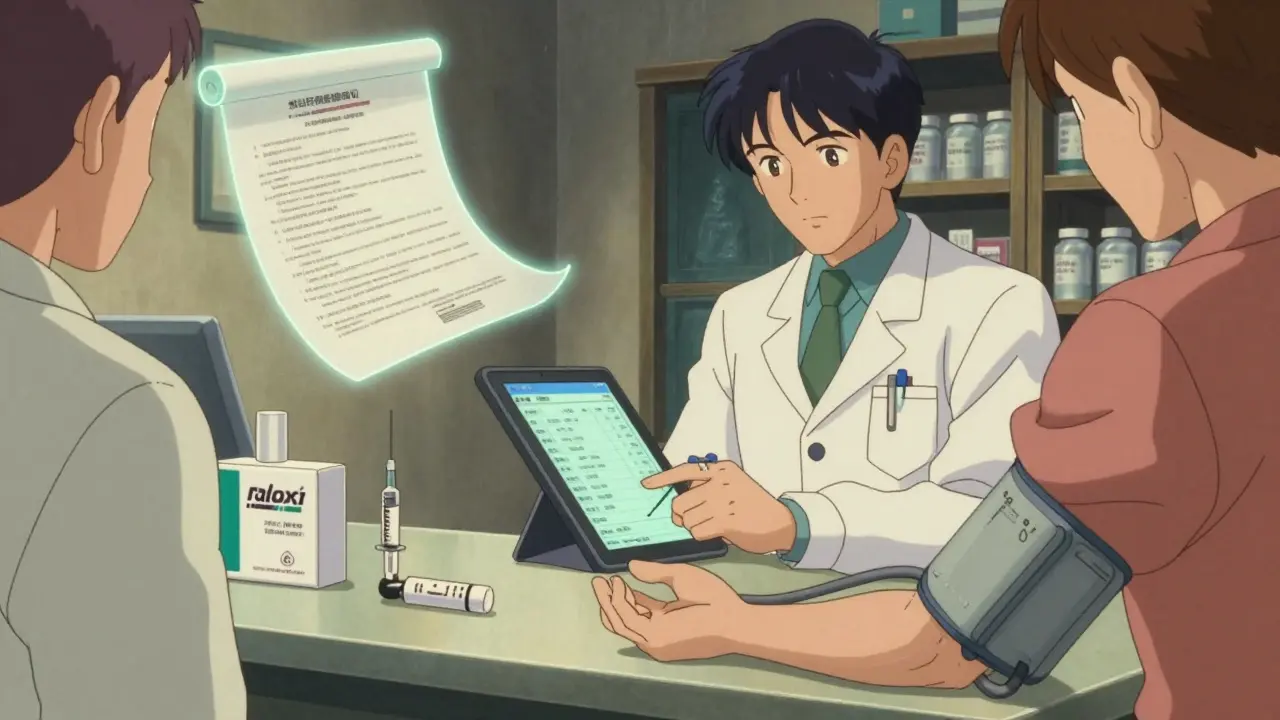
In states like Maryland, California, and Oregon, you can get birth control from any community pharmacy - no doctor’s visit needed. You’ll usually fill out a health screening form, talk to the pharmacist about your medical history, and get your prescription on the spot. Some states require a blood pressure check first. It’s quick, confidential, and available during regular store hours.
Why don’t insurance companies pay pharmacists for their clinical services?
Because most insurance systems still classify pharmacists as dispensers, not providers. They pay for the drug, not the time spent counseling, monitoring, or adjusting treatment. That’s changing slowly. Medicare doesn’t cover these services yet, but the federal ECAPS Act could force that change. Until then, many pharmacists offer these services at no extra charge - as a service to the community.
Can a pharmacist refuse to fill a prescription even if the law allows it?
Yes - but only under very limited circumstances. Most states require pharmacists to fill valid prescriptions unless there’s a safety issue, like a dangerous interaction or an obvious error. Some states allow conscience clauses for religious objections, but those are being phased out. In many places, if a pharmacist refuses, they must transfer the prescription to another pharmacy at no cost to the patient.