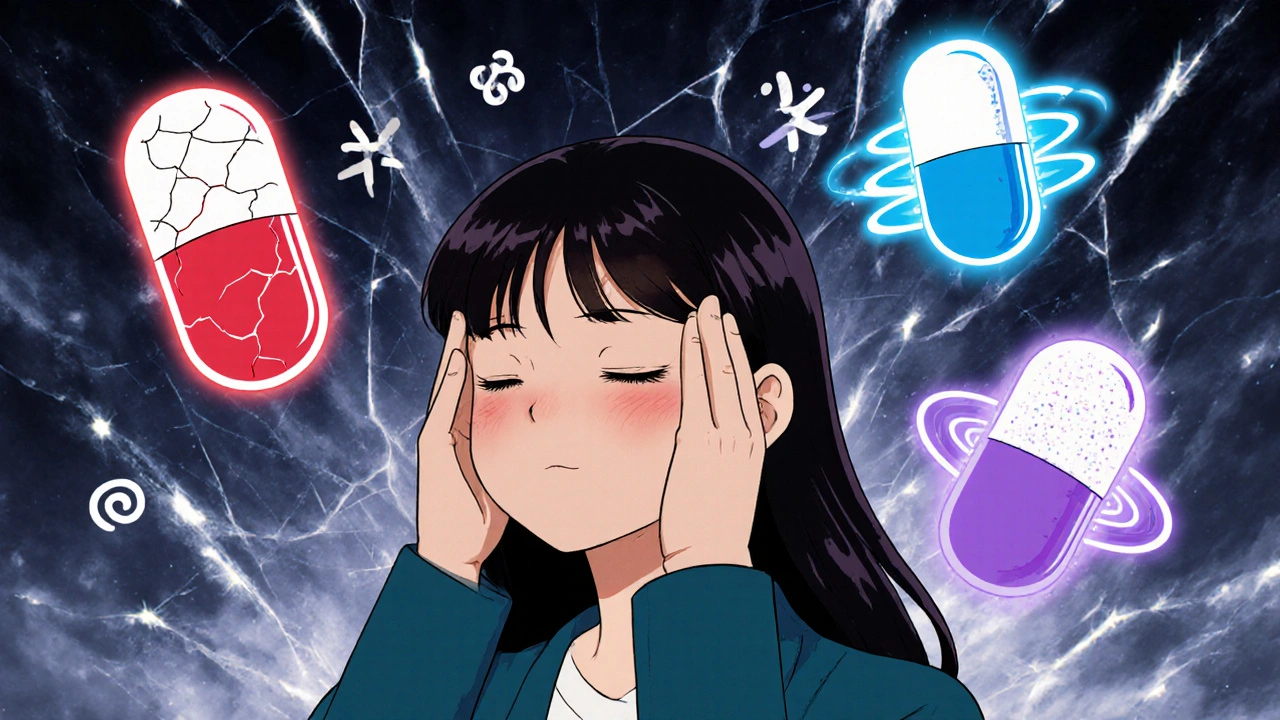
When you’re dealing with migraine attacks that don’t respond to typical pain relievers, lasmiditan, a targeted migraine treatment that works on serotonin receptors in the brain without narrowing blood vessels. It’s designed for people who can’t take triptans due to heart risks or high blood pressure. But like all medications, it comes with side effects you need to be aware of before you take it. The most common ones are dizziness, sleepiness, fatigue, nausea, and a feeling of heaviness or tightness in the chest. These usually show up within an hour of taking the pill and fade within a few hours. But they’re strong enough that doctors warn you not to drive or operate heavy machinery for at least 8 hours after dosing.
More serious, though rare, is the risk of serotonin syndrome, a potentially life-threatening reaction caused by too much serotonin activity in the brain. This can happen if you take lasmiditan with other serotonergic drugs like SSRIs, SNRIs, or even certain supplements like St. John’s wort. Symptoms include confusion, rapid heart rate, high blood pressure, muscle stiffness, and fever. If you notice any of these, seek help right away. Another concern is dizziness, a frequent side effect that can lead to falls, especially in older adults. Studies show about 1 in 5 people experience it, and it’s worse if you’re also taking other meds that cause drowsiness.
It’s not just about the immediate reactions. Some people report feeling unusually tired the next day, or even have trouble concentrating for hours after taking it. That’s why it’s not a daily preventive — it’s meant for acute attacks only. You won’t find it in a long-term treatment plan. And if you’ve had liver problems or are over 65, your doctor might lower your dose or avoid it entirely. The key is knowing your own body and your other meds. Keep a list of everything you take — including vitamins and herbal products — and share it with your pharmacist. They can spot hidden risks you might miss.
What you’ll find in the posts below are real-world insights from people who’ve used lasmiditan, plus deeper dives into how it compares to other migraine drugs, what to do if side effects hit hard, and how to avoid dangerous interactions with common medications like antidepressants or sleep aids. No fluff. Just clear, practical info to help you decide if it’s right for you — and how to use it safely if it is.