
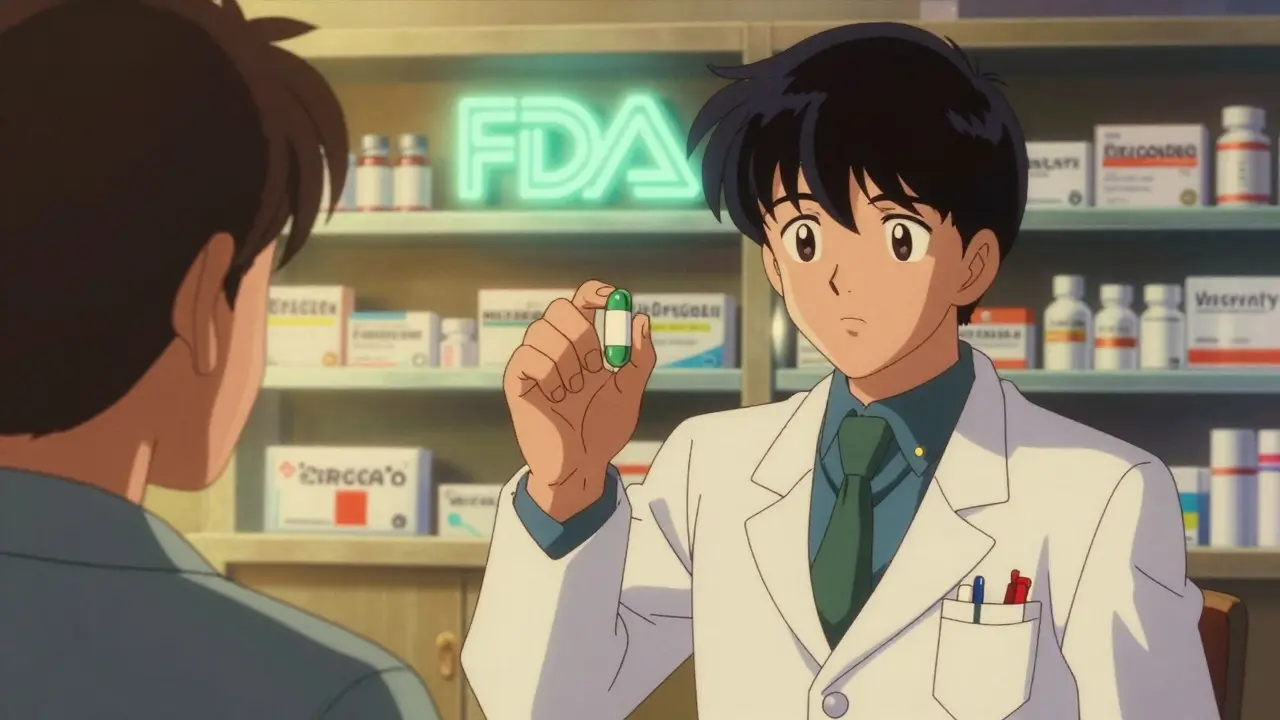
Every day, pharmacists face a simple but critical question: should this patient switch from their brand-name drug to a generic? It’s not just about saving money-it’s about safety, consistency, and trust. And when it comes to generics, not all are created equal. Authorized generics are the hidden gem in generic drug substitution-identical to the brand-name drug in every way, down to the inactive ingredients. Yet most patients, and even many providers, don’t know they exist. Here’s when you should be recommending them.
What Exactly Is an Authorized Generic?
An authorized generic is the exact same medication as the brand-name drug, made by the same company, but sold without the brand name on the label. It’s not a copy. It’s not a lookalike. It’s the real thing-same active ingredient, same fillers, same coating, same everything. The FDA defines it clearly: it’s a listed drug approved under a New Drug Application (NDA) that’s then marketed under a different label, often by the original manufacturer or a licensed partner.
Think of it this way: if you’re taking Lipitor, the brand, and your pharmacist gives you a white, oval pill with the letters “ATV” on it, that’s probably an authorized generic made by Pfizer. Same factory. Same batch process. Same quality control. Just no brand name on the bottle.
Regular generics, on the other hand, are approved through an Abbreviated New Drug Application (ANDA). They must prove bioequivalence-meaning they deliver the same amount of active ingredient into the bloodstream as the brand. But they can-and often do-use different inactive ingredients. That’s where problems can start.
When Patients Need Authorized Generics (And Why)
There are three situations where switching to a regular generic could do more harm than good-and where an authorized generic is the clear, safe choice.
1. Patients With Allergies or Dietary Restrictions
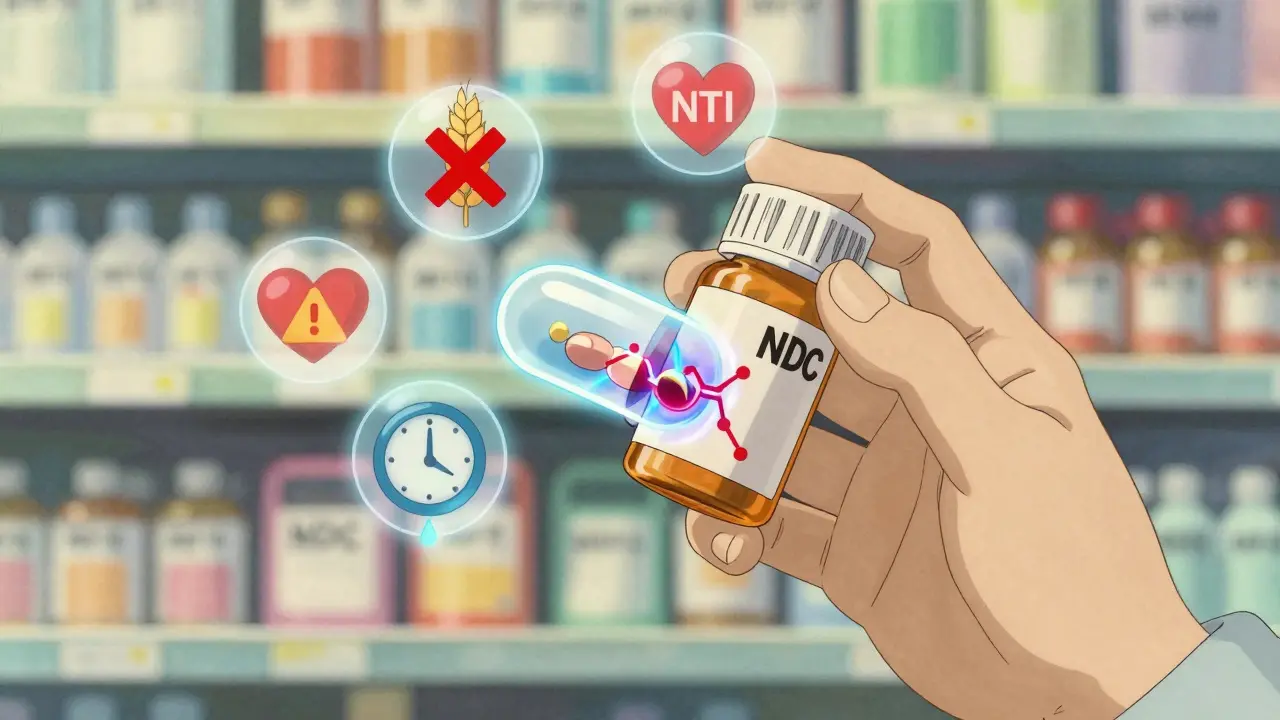
Let’s say a patient has celiac disease. They can’t tolerate gluten. Many regular generics use wheat starch as a filler. The brand-name version? Gluten-free. But if you switch them to a standard generic without checking the inactive ingredients, you’ve just put them at risk.
Same goes for patients avoiding lactose, gelatin, or artificial dyes. A 2021 survey of 1,200 community pharmacists found that 12% of patients reported new side effects or reduced effectiveness after switching to a regular generic. In many cases, it wasn’t the active ingredient-it was the filler.
Authorized generics solve this. Since they’re identical to the brand, they carry the same inactive ingredients. If the patient tolerated the brand, they’ll tolerate the authorized generic. No guesswork. No risk.
2. Narrow Therapeutic Index (NTI) Drugs
Some medications have a razor-thin margin between effective and toxic. Warfarin, levothyroxine, phenytoin, and cyclosporine are classic examples. Even tiny differences in absorption can cause blood levels to swing dangerously.
The FDA has documented cases where patients on levothyroxine experienced palpitations, weight loss, or anxiety after switching to a generic with different fillers that affected dissolution. In some cases, patients had to be hospitalized.
Authorized generics eliminate that variability. They’re not just “close enough.” They’re the same pill. For NTI drugs, that’s not a luxury-it’s a safety requirement.
3. Modified-Release Formulations
Extended-release tablets, delayed-release capsules, and controlled-release patches are complex. Bioequivalence studies for generics often don’t capture how the drug behaves over time in the body. A generic might release the same total amount of drug-but too fast, too slow, or unevenly.
Take OxyContin. When the first generic entered the market, some patients reported breakthrough pain or withdrawal symptoms. The authorized generic? Same formulation. Same release profile. Same results.
When a patient is on a modified-release drug and starts having issues after a switch, the first thing to check isn’t adherence-it’s whether the generic they got is truly equivalent. An authorized generic is the safest bet.
How to Spot an Authorized Generic
You can’t tell by looking at the pill. But you can tell by checking the labeler code.
Every drug has a National Drug Code (NDC). The first part is the labeler code-this tells you who makes it. If the labeler code matches the brand-name manufacturer (like Pfizer, Merck, or AbbVie), you’re likely looking at an authorized generic.
Or it might be made by a company like Prasco or Greenstone, which have licenses to produce the brand’s exact formulation. These companies don’t make their own versions-they replicate the brand’s recipe under contract.
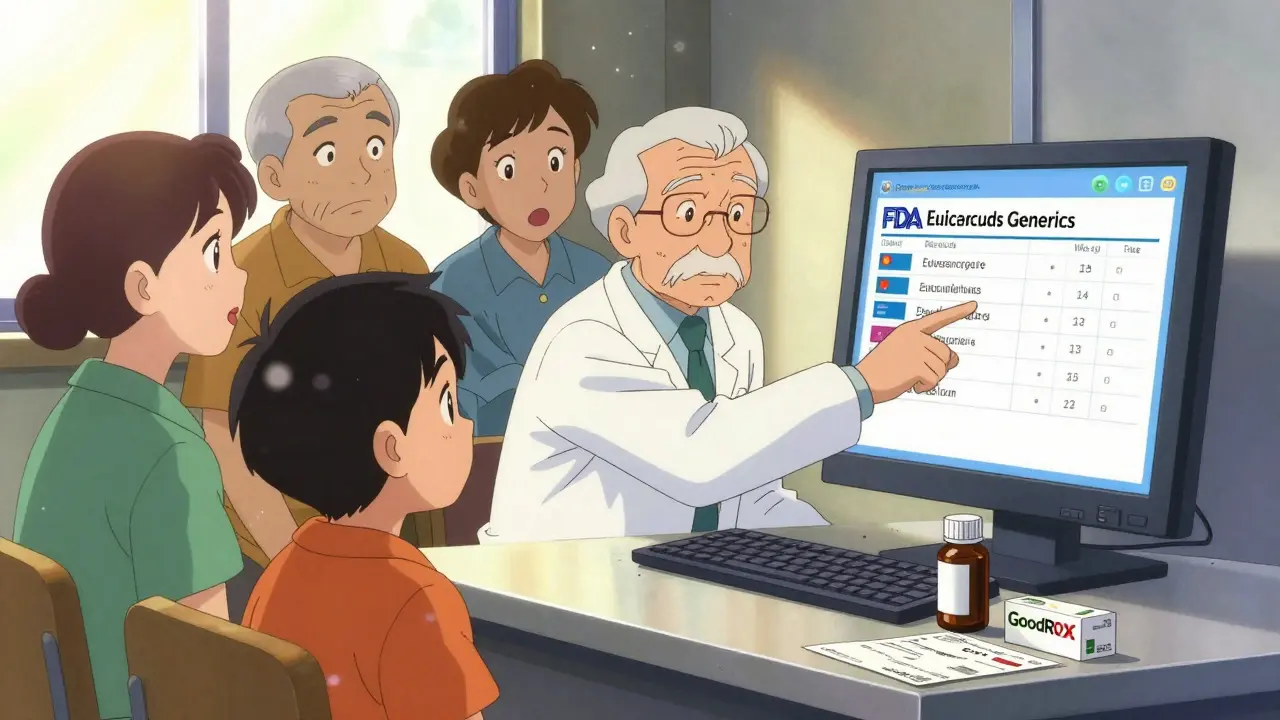
The FDA publishes a quarterly list of all authorized generics. As of September 2023, there were 257 on the list-about 5% of all brand-name drugs with generic alternatives. Most are oral tablets or capsules. You can find the list at fda.gov/drugs/drug-approvals-and-databases/authorized-generic-drugs.
Don’t rely on your pharmacy software alone. Some systems mislabel authorized generics as “regular generics.” Always cross-check with the NDC or the FDA list when in doubt.
Insurance and Cost: What Patients Need to Know
Authorized generics are cheaper than brand-name drugs-often by 20% to 80%. But here’s the catch: many pharmacy benefit managers (PBMs) treat them as brand-name drugs for billing purposes.
A 2022 study found that 63% of PBMs put authorized generics in the brand-tier formulary. That means patients pay higher copays-even though the drug is identical to the brand and cheaper to produce.
That’s why you need to explain this to patients. Say it plainly: “This pill is the same as your brand, but the insurance company treats it like the brand. So your copay might be higher than you expect. But you’re still saving money overall.”
Some patients will be confused if the pill looks different. A 2022 study in the Journal of Managed Care & Specialty Pharmacy found that 27% of patients stopped taking their medication after seeing a different-looking pill-unless they were told why. Always explain: “The color and shape changed because it’s a different label, but the medicine inside is exactly the same.”
Legal and Documentation Requirements
In 42 states, pharmacists can substitute a brand-name drug for an authorized generic without prescriber approval-as long as the prescription doesn’t say “dispense as written.” That’s the same rule as for regular generics.
But 18 states require you to notify the prescriber anytime you make a substitution, even if it’s an authorized generic. Check your state’s pharmacy board rules. Always document the substitution in your system using the correct modifier code-usually “DA” for drug substitution.
And if the patient is on a high-risk medication? Don’t assume. Call the prescriber. Better safe than sorry.
What’s Changing in 2025?
Authorized generics are growing. From 2010 to 2019, their numbers increased by 18% per year. More manufacturers are launching them-often right after the first generic hits the market-to compete on price without sacrificing quality.
Consumer awareness is rising too. GoodRx reports a 47% jump in searches for “authorized generics” between 2021 and 2022. Patients are asking about them. You need to be ready.
The American Pharmacists Association is updating its Medication Use Safety guidelines in 2024, with new recommendations specifically for authorized generics. Expect more formal guidance soon.
Legislation like the Affordable Insulin Now Act of 2023 could expand access to authorized generics for high-cost drugs. That means more patients will benefit-and more pharmacists will need to know how to recommend them.
Bottom Line: Be the Expert
Most pharmacists know about generics. Few know about authorized generics. But you can change that.
Next time a patient asks why their pill looks different, or complains about side effects after a switch, don’t just refill it. Ask: “Have you tried the authorized generic?”
It’s not just a cost-saving trick. It’s a clinical decision. For patients with allergies, NTI drugs, or complex formulations, it’s the only safe option. And for everyone else? It’s still a smarter, more consistent choice than a regular generic with unknown fillers.
You’re not just filling prescriptions. You’re preventing adverse events. You’re building trust. And you’re helping patients get the right medicine-not just a cheaper one.



Anu radha
December 17, 2025 AT 10:32I never knew generics could have gluten. My mom has celiac and she switched pills last month and got sick. Now I get why.
Joe Bartlett
December 18, 2025 AT 10:30UK does this better. We get branded generics all the time. No drama.
Sachin Bhorde
December 18, 2025 AT 18:08Authorized generics are the real MVPs. Most docs don't even know the term. Pharmacist = unsung hero. NDC check is key. Too many bots in the system missin' this.
Erik J
December 20, 2025 AT 08:47Interesting. So if the labeler code matches Pfizer, it’s literally the same pill as Lipitor, just unlabeled? What about batch-to-batch consistency? Is that monitored the same way?
Peter Ronai
December 20, 2025 AT 11:19Oh wow, another pharmacist pretending they’re the only one who knows anything. Newsflash: every pharmacy student learns this in week 3. And no, not all authorized generics are perfect-some have different coatings that still cause GI issues. You’re overselling this like it’s magic.
Also, the FDA list? Half of it’s outdated. I checked last week-three entries were discontinued but still listed. Don’t trust the database, trust your supplier’s COA.
And let’s not pretend PBMs are the villains here. They’re just following the law. The real problem? Pharma companies deliberately delay authorized generics to keep brand prices high. That’s the scam.
Oh and ‘authorized generic’ isn’t even the right term. It’s ‘same manufacturer generic.’ The FDA calls it a ‘listed drug under NDA.’ You’re just using marketing speak to sound smart.
And before you say ‘but it’s safer!’-tell me how many patients died from generic levothyroxine? Zero. But how many sued because they got a pill that looked different? Thousands. It’s psychology, not pharmacology.
Stop acting like you’re saving lives. You’re just managing customer expectations. And if your patient can’t handle a different pill shape, maybe they need therapy, not a new drug label.
Jane Wei
December 20, 2025 AT 19:38so like… if my pill looks different but says the same thing, it’s still the same? weird. but okay.
Linda Caldwell
December 21, 2025 AT 13:17YES. This is the info we need to share. You’re not just filling scripts-you’re protecting people. Keep speaking up. The system’s broken but you’re the fix.
Every time you take a second to explain the difference, you save someone from panic, confusion, or worse. You’re a rockstar.
Kaylee Esdale
December 22, 2025 AT 20:02my grandma switched to an authorized generic for her blood pressure med and said it felt like her old pill again. She cried. Said she felt like herself again. That’s the real win right there.
Not savings. Not labels. Feeling normal again.
Meghan O'Shaughnessy
December 24, 2025 AT 05:44Love how this breaks down the science without jargon. But I wonder-how many rural pharmacies even have access to NDC lookup tools? Or the time to check? This is great… for urban clinics. What about the rest?
Steven Lavoie
December 25, 2025 AT 06:54As someone who grew up in India and now works in a U.S. pharmacy, I’ve seen both systems. In India, generics are the norm, and patients trust them-because they’re used to it. Here, it’s all about the brand. This article bridges that gap beautifully.
Also, the point about modified-release? Spot on. I had a patient on extended-release metformin who kept vomiting. Switched to the authorized generic-no more nausea. Same exact formula. Just no fancy packaging.
BETH VON KAUFFMANN
December 25, 2025 AT 16:33Another ‘pharmacist knows best’ manifesto. Let me guess-you also think patients should be told the exact ppm of lactose in their pills? We’re not running a chemistry lab. We’re filling prescriptions.
And you want us to cross-check NDCs for every substitution? Good luck with that when you’re doing 80 scripts an hour. This isn’t a TED Talk-it’s a grind.
Let the PBMs handle the formulary. Let the doctors decide. You just hand out the pills. That’s your job.
Brooks Beveridge
December 25, 2025 AT 19:09Thank you for writing this. Seriously. So many of us feel like we’re shouting into the void when we try to explain this to patients or even other providers.
You’re not just giving advice-you’re giving people back their peace of mind. That’s worth more than a few dollars saved.
Keep doing this work. The world needs more people who care about the little things.
💙
Anna Giakoumakatou
December 25, 2025 AT 23:25Oh, so now we’re supposed to be pharmaceutical detectives? Next you’ll tell me we should memorize the molecular weight of every filler. How quaint.
Let me guess-your ideal pharmacy is a temple of precision, where every pill is blessed by the FDA and the patient signs a waiver before swallowing?
Meanwhile, the rest of us are just trying to get people to take their meds without turning the counter into a biochemistry lecture hall.
Jody Patrick
December 27, 2025 AT 18:31USA leads the world in drug innovation. Stop letting foreign generics ruin our standards.