
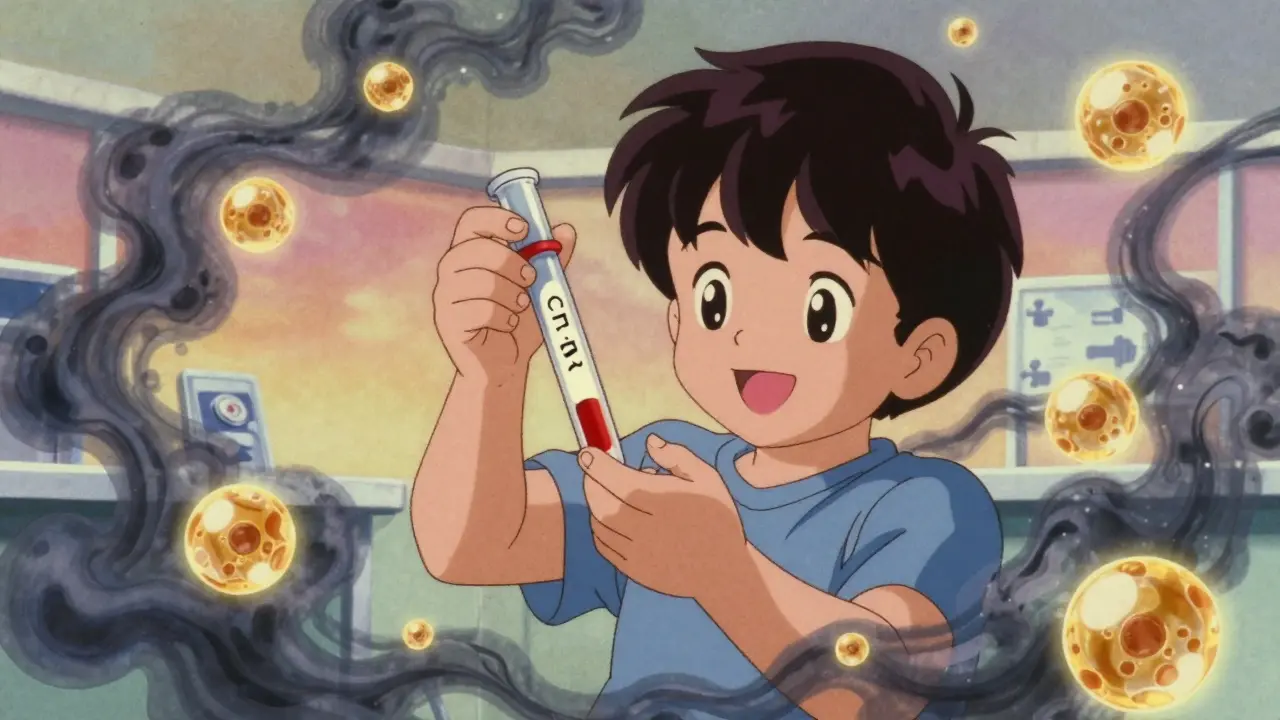
Before 1989, doctors knew cystic fibrosis (CF) killed most children by their teens. They saw the cough, the salty skin, the failing lungs-but they didn’t know why. Then, scientists found the culprit: a single faulty gene, cystic fibrosis, on chromosome 7. That discovery didn’t just explain the disease. It opened the door to something no one thought possible: treatments that fix the root cause, not just the symptoms.
What Cystic Fibrosis Really Does to Your Body
CF isn’t just a lung disease. It’s a full-body glitch. The CFTR gene makes a protein that acts like a gate for salt and water in and out of cells. When it breaks, your mucus turns thick and sticky-like glue instead of slippery fluid. That gunk clogs your lungs, your pancreas, your liver, even your reproductive system.
In the lungs, that thick mucus traps bacteria. Pseudomonas and Staphylococcus don’t stand a chance-they thrive there. Infections become constant. Inflammation builds. Over time, the airways stretch and scar, turning into permanent damage called bronchiectasis. For most people with CF, this is what kills them-about 85% of deaths are from lung failure.
In the pancreas, the same thick mucus blocks the tubes that carry digestive enzymes to the intestines. Without those enzymes, you can’t break down food. Eighty-five percent of people with CF need to take pancreatic enzyme pills with every meal-sometimes 12 at a time. Malnutrition is common. Weight loss is a daily battle.
And then there’s the sweat test. It’s the gold standard for diagnosis. People with CF have sweat with more than 60 mmol/L of chloride. That’s why a baby’s skin tastes salty. It’s not a myth. It’s science.
The Genetic Puzzle: Why Some Get It and Others Don’t
CF is recessive. That means you need two broken copies of the CFTR gene-one from each parent-to have the disease. If you have just one, you’re a carrier. You feel fine. But you can pass it on.
There are over 2,000 known CFTR mutations. The most common one, F508del, shows up in about 70% of cases worldwide. But that number shifts by ethnicity. It’s less common in Hispanic and Asian populations. Some mutations are rare-so rare that drugs made for the big ones don’t work for them.
That’s why newborn screening matters. All 50 U.S. states test for CF at birth now. Catching it early means starting treatments before organs are damaged. It’s not a cure, but it’s the best shot at a longer, healthier life.
The Game Changer: CFTR Modulators
Before 2012, CF treatment was all about cleanup. Chest physiotherapy. Antibiotics. Nebulizers. Enzymes. It took hours a day. And it didn’t stop the disease from progressing.
Then came ivacaftor (Kalydeco). It was the first drug that didn’t just mask symptoms-it fixed the broken CFTR protein. It worked for people with the G551D mutation. In trials, lung function jumped by over 10%. That was huge.
But F508del was the real target. It was everywhere. So scientists kept working. In 2019, Trikafta (elexacaftor/tezacaftor/ivacaftor) hit the market. It’s a triple combo that fixes the most common mutation in 90% of people with CF. In clinical trials, it boosted lung function by 13.8% and cut lung flare-ups by 63%. People started sleeping better. Gaining weight. Going back to work. Some cut their daily airway clearance from 90 minutes to 20.
By 2023, 90% of people with CF in the U.S. had access to at least one modulator. The median life expectancy jumped from 14 years in 1960 to 50.9 years today. That’s not progress. That’s a revolution.

The Dark Side of Breakthroughs
But not everyone benefits.
About 10% of people have mutations that current modulators can’t fix. These are the Class I mutations-nonsense mutations that stop the protein from being made at all. For them, there’s still no targeted therapy. They’re stuck with the old regimen: hours of breathing treatments, antibiotics, and hope.
And then there’s the cost. Trikafta runs about $300,000 a year in the U.S. Even with insurance, many families pay $1,200 a month out of pocket. A 2022 survey found 42% of modulator users felt financial strain. Globally, only 35% of people with CF have access to these drugs. In low-income countries, it’s often less than 10%.
Side effects aren’t rare either. Liver enzyme spikes happen in about 3.2% of users. Some need to stop treatment. Others report headaches, dizziness, or joint pain. It’s not perfect-but for most, the trade-off is worth it.
What’s Next? The Pipeline for the 10%
The Cystic Fibrosis Foundation is pouring $100 million into a program called “Path to a Cure” to help the 10% left behind. Here’s what’s coming:
- mRNA therapies-like PTC Therapeutics’ Ataluren-aim to trick cells into making functional CFTR protein despite a premature stop signal.
- Gene editing with CRISPR is in early trials. The goal? Cut out the bad gene and replace it with a working copy.
- New anti-infectives like Liposomal Ciprofloxacin are being tested to target stubborn Pseudomonas strains that resist standard antibiotics.
And pediatric approvals keep expanding. In January 2023, Trikafta got FDA approval for kids as young as 2. That means more children are starting treatment before their lungs are damaged. Early intervention could mean a life without chronic infections.
Living with CF Today
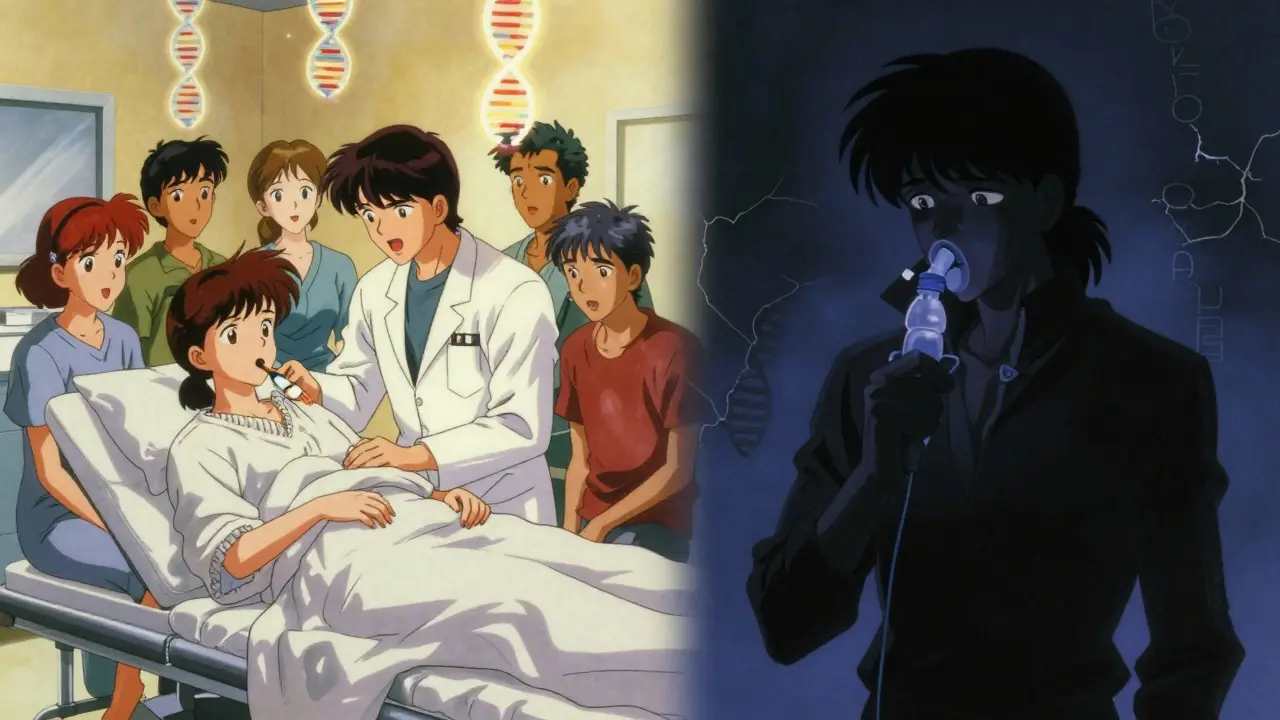
Life with CF still requires discipline. Even with modulators, daily routines don’t vanish. You still need airway clearance. You still need enzymes. You still need to watch your diet. But now, you have more energy. Fewer hospital visits. More days where you feel normal.
Adults with CF now make up over half the population. In 1990, only 27% were adults. Today, many are going to college, starting families, working full-time. Fertility is still a hurdle-97% of men with CF are infertile due to missing vas deferens-but assisted reproductive tech helps.
Support networks matter. The Cystic Fibrosis Foundation runs 260 accredited care centers in the U.S. There are online communities like CF Buddy Connect with 12,500 active users. Annual conferences bring together patients, doctors, and researchers. You’re not alone.
The Bigger Picture: Who Gets Left Behind?
Vertex Pharmaceuticals holds 95% of the CFTR modulator market. Their success came from a bold move: the Cystic Fibrosis Foundation invested $150 million in early research back in 2000. That venture philanthropy model turned a rare disease into a profitable market. It worked.
But it also created a global divide. In the U.S. and Western Europe, 85% of eligible patients get modulators. In low-income countries, it’s less than 10%. The WHO says 75% of CF deaths now happen in places without access to these drugs. That’s not a medical failure. It’s a moral one.
CF is now the poster child for precision medicine. It’s proof that fixing a single gene can change a life. But it also shows how far we still have to go. Science can move fast. Equity doesn’t.




Marian Gilan
January 26, 2026 AT 02:29Conor Murphy
January 26, 2026 AT 15:26Conor Flannelly
January 28, 2026 AT 01:23Patrick Merrell
January 28, 2026 AT 21:21Faisal Mohamed
January 29, 2026 AT 22:09Sally Dalton
January 30, 2026 AT 16:18Betty Bomber
January 31, 2026 AT 09:18Curtis Younker
February 2, 2026 AT 01:01Nicholas Miter
February 2, 2026 AT 16:12Skye Kooyman
February 3, 2026 AT 04:11James Nicoll
February 4, 2026 AT 18:07Uche Okoro
February 5, 2026 AT 07:11Ashley Porter
February 5, 2026 AT 20:12Aurelie L.
February 6, 2026 AT 12:20Allie Lehto
February 7, 2026 AT 00:36