MAOI Tyramine Risk Checker
This tool helps you determine if common foods contain dangerous levels of tyramine when taking MAOI antidepressants. Tyramine can cause a life-threatening hypertensive crisis. When in doubt, avoid the food.
Search for any food item to check its tyramine risk level when taking MAOIs.
When you're on an MAOI antidepressant, the food you eat isn't just about taste-it can be a matter of life or death. Most people know to avoid aged cheese. But what about miso soup? Soy sauce? Pickled cabbage? Draft beer? These aren't just side dishes-they're silent triggers that can send your blood pressure skyrocketing into dangerous territory. If you're taking phenelzine, tranylcypromine, or any other monoamine oxidase inhibitor, your diet needs a complete rewrite-not because you're being overly cautious, but because the science is clear: tyramine buildup can cause a hypertensive crisis with systolic pressure over 180 mmHg, requiring emergency care.
Why Tyramine Is Dangerous with MAOIs
MAOIs work by blocking the enzyme that breaks down neurotransmitters like serotonin, dopamine, and norepinephrine. That’s how they help with depression. But that same enzyme also clears tyramine from your bloodstream. Tyramine is a naturally occurring compound formed when proteins in food break down during aging or fermentation. When MAOIs are active in your body, tyramine isn’t broken down. It builds up, forcing your body to release massive amounts of norepinephrine. That’s what causes the sudden, dangerous spike in blood pressure.It’s not theoretical. In 2022, a study in the Journal of Clinical Psychiatry tracked 347 MAOI users. Nearly 70% admitted to accidentally eating a high-tyramine food within their first six months. Over a third of those cases involved something other than cheese. One patient ended up in the ER after eating a bowl of miso soup. Another had a crisis after a slice of pepperoni pizza. These aren’t rare outliers-they’re predictable outcomes of incomplete education.
Hidden Sources of Tyramine in Everyday Foods
Cheese is just the tip of the iceberg. Here’s what actually carries dangerous levels of tyramine, based on lab-tested concentrations from the USDA, EFSA, and peer-reviewed food science journals:- Dry-aged salami: 95-115 mg/kg
- Pepperoni: 80-100 mg/kg
- Smoked fish: 75-90 mg/kg
- Miso paste: 60-85 mg/kg
- Soy sauce: 45-70 mg/kg
- Sauerkraut: 50-75 mg/kg
- Kimchi: 40-65 mg/kg
- Fish sauce: 35-55 mg/kg
- Worcestershire sauce: 25-45 mg/kg
- Tomato paste: 20-35 mg/kg
- Sherry: 35-55 mg/L
- Draft beer: 15-30 mg/L
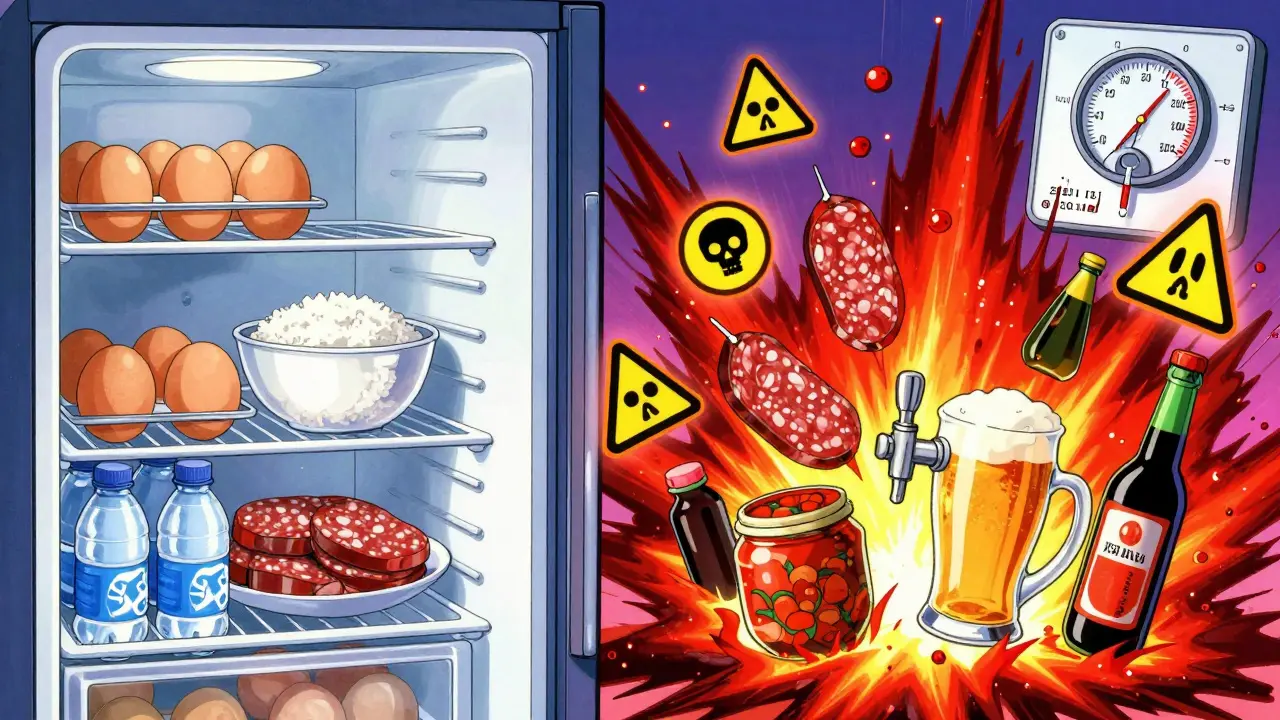
It’s not just what’s on the label-it’s how the food is made and stored. A block of tofu might start with only 5 mg/kg of tyramine. But after three days in your fridge, that number can jump to 25 mg/kg. Refrigeration slows tyramine growth, but it doesn’t stop it. And if you leave leftovers out for more than a few hours? You’re creating a time bomb.
Why Restaurants Are a Minefield
You might think you’re safe if you cook at home. But dining out? That’s where most crises happen. A 2023 investigation checked 10 popular chain restaurants. Seven couldn’t tell you whether their menu items contained soy sauce, Worcestershire sauce, or fermented ingredients-even when asked directly.One patient, who goes by NeurotransmitterNancy on Reddit, described her ER visit after eating miso soup at a Japanese restaurant. "I didn’t even know miso was fermented," she wrote. "The server said it was just a broth. My blood pressure hit 210/115. I thought I was having a stroke."
Even "healthy" dishes are risky. A stir-fry with tamari instead of soy sauce? Still dangerous. A salad with balsamic vinaigrette? Some brands use fermented grape must and contain trace tyramine. A burger with pickled onions? That’s sauerkraut-level exposure. Most menus don’t list fermentation methods. And most servers aren’t trained to answer questions about biogenic amines.
What You Can Actually Eat
You don’t have to give up flavor or variety. But you do need to know what’s safe. Here’s what’s generally low-risk:- Fresh meats, poultry, and fish (never cured, smoked, or aged)
- Fresh eggs and dairy (pasteurized milk, cottage cheese, ricotta)
- Fresh fruits and vegetables (avoid overripe bananas, avocados, or figs)
- Most grains (rice, pasta, bread-check labels for yeast extracts)
- Non-fermented condiments like ketchup, mustard, and mayonnaise
- Bottled beer and wine (draft is riskier due to air exposure)
- Decaf coffee and tea
There’s a big difference between "can I have a little?" and "is this safe?" Some sources suggest small amounts of soy sauce (one tablespoon) might be tolerable for some people. But that’s not a rule-it’s an anecdote. The American Psychiatric Association’s 2023 guidelines say: avoid all high-tyramine foods during treatment and for 14 days after stopping MAOIs. No exceptions. No "maybe."
How to Navigate This Without Losing Your Mind
The hardest part isn’t the food-it’s the isolation. A 2022 survey found that 41% of MAOI users canceled social events because they didn’t want to explain their diet. That’s why practical tools matter.Carry a MAOI dietary warning card. Emergency rooms report that 87% of doctors prefer patients to have one. These cards clearly state: "I am on an MAOI. Avoid tyramine-rich foods. My blood pressure can spike dangerously." You can download free versions from the MAOI Support Network or print one from Mayo Clinic’s website.
Learn to read labels. Look for words like: fermented, aged, cured, smoked, yeast extract, soy sauce, miso, fish sauce, Worcestershire, pickled, overripe, spoiled. If you don’t recognize it, don’t eat it.
Use the MAOI Support Network’s Facebook group. With over 12,000 members, it’s a real-time resource for checking restaurant menus, finding safe recipes, and sharing tips. Someone there has probably already asked about the exact dish you’re considering.
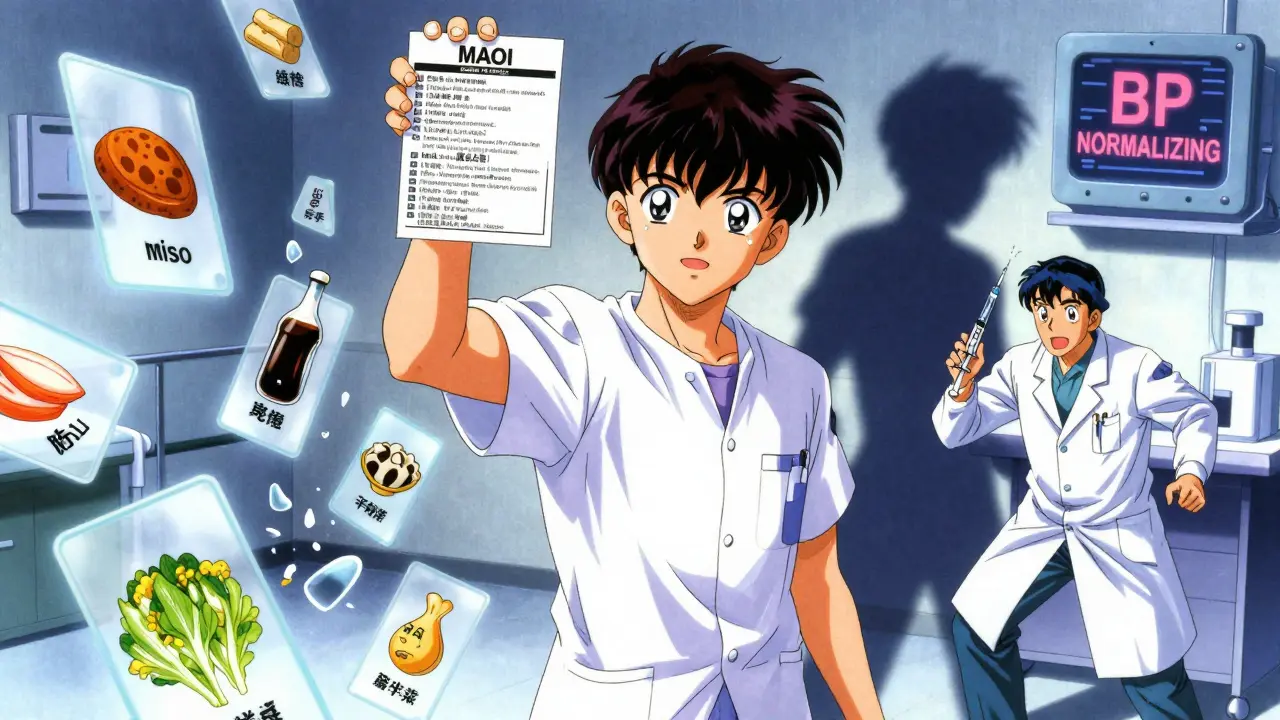
New Hope on the Horizon
There’s progress. In 2023, the FDA approved a new enzyme supplement called TyraZyme that reduces tyramine absorption by 58% in clinical trials. It’s not a green light to eat whatever you want-but it could give some people breathing room.Also, the transdermal patch version of selegiline (Emsam) allows up to 10 grams of tyramine daily at the lowest dose. That’s a game-changer. You can still eat some fermented foods safely-though you still need to avoid aged cheese and cured meats.
And research is moving toward personalized diets. Scientists at Massachusetts General Hospital are testing genetic markers to see who naturally breaks down tyramine faster. That could one day mean tailored diets instead of blanket restrictions.
It’s Not Perfect-But It Works
MAOIs aren’t the first-line treatment anymore. But for 15-20% of people with treatment-resistant depression, they’re the only thing that works. In the STAR*D trial follow-up, MAOIs showed 65-70% effectiveness where SSRIs failed.And despite the restrictions, 78% of users in the Depression Alliance survey said the dietary changes were worth it. They got their lives back. Their mood stabilized. They slept better. They stopped crying all the time.
Yes, you’ll miss out on some meals. You’ll have to say no to sushi night. You’ll need to call ahead to restaurants. You’ll get tired of explaining yourself.
But you won’t end up in the ER. You won’t lose your vision. You won’t have a stroke.
That’s the trade-off. And for many, it’s one they’re glad to make.
Can I have a little bit of cheese if I’m on an MAOI?
No. Even small amounts of aged cheese-like cheddar, blue, or parmesan-can trigger a hypertensive crisis. Tyramine levels in these cheeses can exceed 200 mg/kg, and even a single bite can be enough to raise your blood pressure dangerously. There’s no safe threshold. Avoid all aged, fermented, or mold-ripened cheeses completely.
Is soy sauce always dangerous on MAOIs?
Yes, soy sauce is consistently high in tyramine-45 to 70 mg per kg. Even "low-sodium" versions aren’t safer. Some experts suggest tiny amounts (like one teaspoon) might be tolerable for some people, but this is based on limited observations, not clinical evidence. The official recommendation from the American Psychiatric Association is complete avoidance. Don’t risk it.
What about pickled vegetables like sauerkraut or kimchi?
Both sauerkraut and kimchi are high-risk. Sauerkraut contains 50-75 mg/kg tyramine; kimchi has 40-65 mg/kg. These levels are comparable to aged cheese. Fermentation and storage time increase tyramine, so even homemade versions aren’t safe. Avoid all fermented vegetables during MAOI therapy.
Can I drink beer on MAOIs?
Draft beer is risky-it contains 15-30 mg/L tyramine and is exposed to air during dispensing, which increases tyramine formation. Bottled beer is lower risk but still not safe. Some brands use yeast strains that produce more tyramine. The safest choice is to avoid all beer. If you must drink, opt for non-fermented alternatives like sparkling water or juice.
How long do I need to avoid these foods after stopping MAOIs?
You must avoid high-tyramine foods for at least 14 days after your last dose. MAOIs stay active in your system for up to two weeks. Even if you feel fine, your body is still vulnerable. Jumping back into your old diet too soon can trigger a delayed hypertensive crisis. Wait the full 14 days-even if your doctor says it’s "probably fine."
What should I do if I accidentally eat something high in tyramine?
If you feel a sudden headache, chest pain, rapid heartbeat, or blurred vision, check your blood pressure immediately. If it’s above 180/110, call 911. Don’t wait. Bring your MAOI warning card. Tell emergency staff you’re on an MAOI and ate a high-tyramine food. They’ll know what to do. Most hospitals have protocols to reverse the crisis with fast-acting medications like nifedipine or chlorpromazine.
Are there any safe fermented foods I can eat?
There are no fermented foods that are reliably safe on MAOIs. Even yogurt, kefir, and kombucha can contain trace tyramine. While some newer commercial products use starter cultures that reduce tyramine, there’s no way to know without lab testing. The only safe approach is to avoid all fermented foods entirely during treatment.
Can I eat overripe fruit?
Avoid overripe bananas, avocados, figs, and raisins. As fruits ripen beyond peak freshness, tyramine levels rise. A ripe banana is fine. A banana with brown spots and a strong smell? That’s a trigger. Stick to fresh, firm fruit. When in doubt, throw it out.