
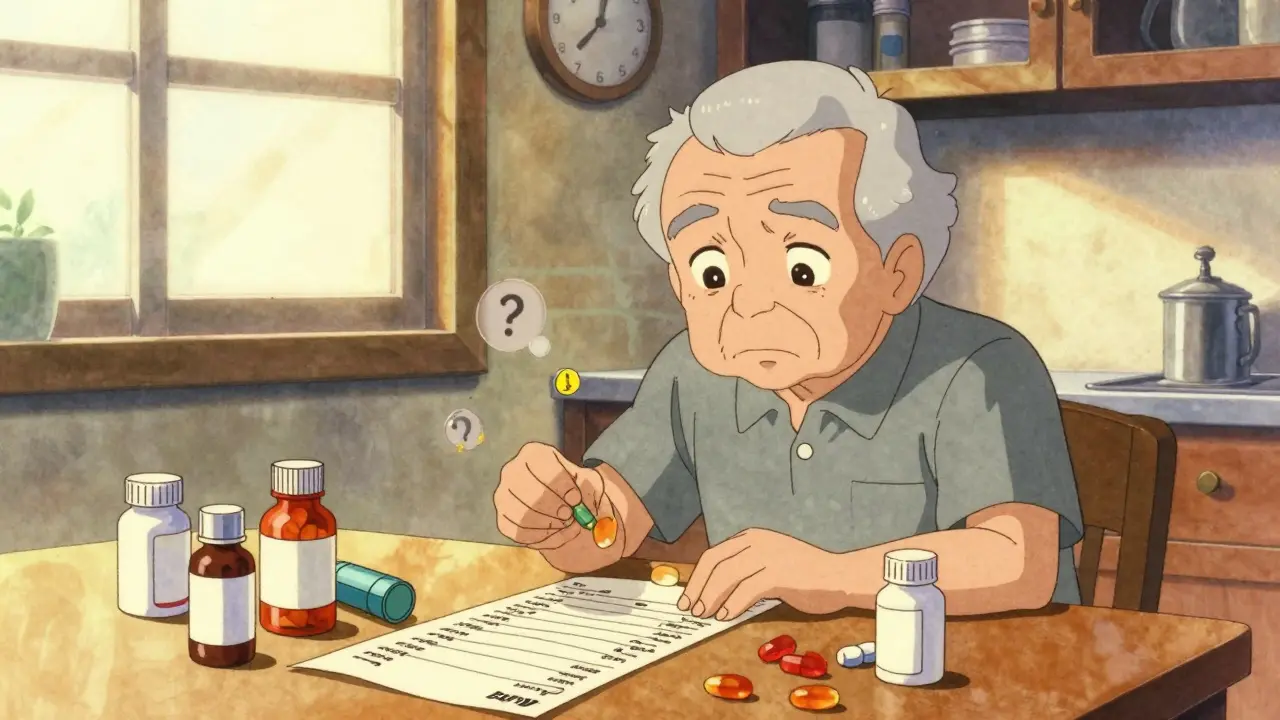
Why a Medication Review Matters
You’re on five or more medications. Maybe you take pills for high blood pressure, diabetes, arthritis, and sleep. You also grab ibuprofen when your knee acts up, a daily vitamin, and that herbal tea your cousin swears by. Sounds familiar? That’s not unusual-but it’s risky. When you take multiple medicines, the chance of bad interactions, wrong doses, or side effects you didn’t expect goes up. A medication review isn’t just a check-in-it’s a safety net. It’s when your doctor or pharmacist sits down with you to look at every single thing you’re taking, not just the prescriptions. This isn’t optional anymore. In many clinics, if you skip your review, they’ll stop refilling your meds until you do.
What You Need to Bring
Don’t just show up with a list. Bring the actual bottles. Every single one. That means prescription pills, inhalers, eye drops, patches, creams, even the gummy vitamins from the grocery store. The Northern Health and Social Services Board says it clearly: "By medicines we mean anything you take including tablets, liquids, inhalers, creams and ointments." If you can’t bring the bottles, bring photos of the labels. But real bottles are best. Why? Because labels can be wrong. Caps can be swapped. Your pharmacist needs to see the exact strength and expiration date.
Include over-the-counter stuff. People forget this. Tylenol, cold medicine, antacids, fish oil-these all interact with prescriptions. One patient in Michigan ended up with dangerously low blood pressure because his blood pressure pill and a common cold syrup both lowered it. He didn’t realize the syrup counted as a "medicine."
Make a Detailed Medication List
Create a written list with six key pieces of info for each medicine:
- Name (brand and generic if you know it)
- Dosage (e.g., 10 mg, 5 mL, one puff twice daily)
- Why you take it (e.g., "for high blood pressure," "for joint pain")
- When you take it (e.g., "with breakfast," "at bedtime")
- Who prescribed it (doctor’s name or clinic)
- Side effects you’ve noticed (dizziness, dry mouth, nausea, rash, sleepiness)
Don’t guess. If you don’t know why you’re taking something, write "Don’t know"-that’s useful info too. For Parkinson’s patients, timing matters even more. Some meds need to be taken within 30 minutes of each other. Write down exact times: "Levodopa at 7:00 AM, 11:00 AM, 3:00 PM, 7:00 PM." If you’re doing a video call, this list becomes your eyes.
Write Down Your Questions and Concerns
It’s easy to walk out of an appointment and realize you forgot to ask something. Don’t let that happen. Write your questions before you go. Here are some to consider:
- Is there a medicine here I don’t really need anymore?
- Are any of these causing my fatigue or dizziness?
- Can any of these be switched to a cheaper version?
- What happens if I stop taking one of these?
- Are there new treatments I should know about?
- Do any of these interact with my diet or other health conditions?
Don’t be shy. Your pharmacist or doctor has seen this a hundred times. They want you to ask. In fact, the Health Innovation Network says asking questions is part of a "person-centered" review. This isn’t just about checking boxes-it’s about your life.
Know What Kind of Review You’re Having
Not all medication reviews are the same. There are three main types:
- Prescription review: Checks if your prescriptions are written correctly-dose, frequency, refills.
- Concordance review: Looks at whether you’re actually taking your meds as directed. Are you skipping doses? Running out early?
- Clinical medication review: The big one. Looks at your whole health picture. Are these meds helping your condition? Are they causing more harm than good?
Most appointments are clinical reviews, especially if you’re on five or more drugs. The Health Innovation Network says patients taking five or more medications are at high risk for adverse events. That’s why these reviews are now standard for older adults and those with chronic conditions.
Telehealth? Prepare Differently
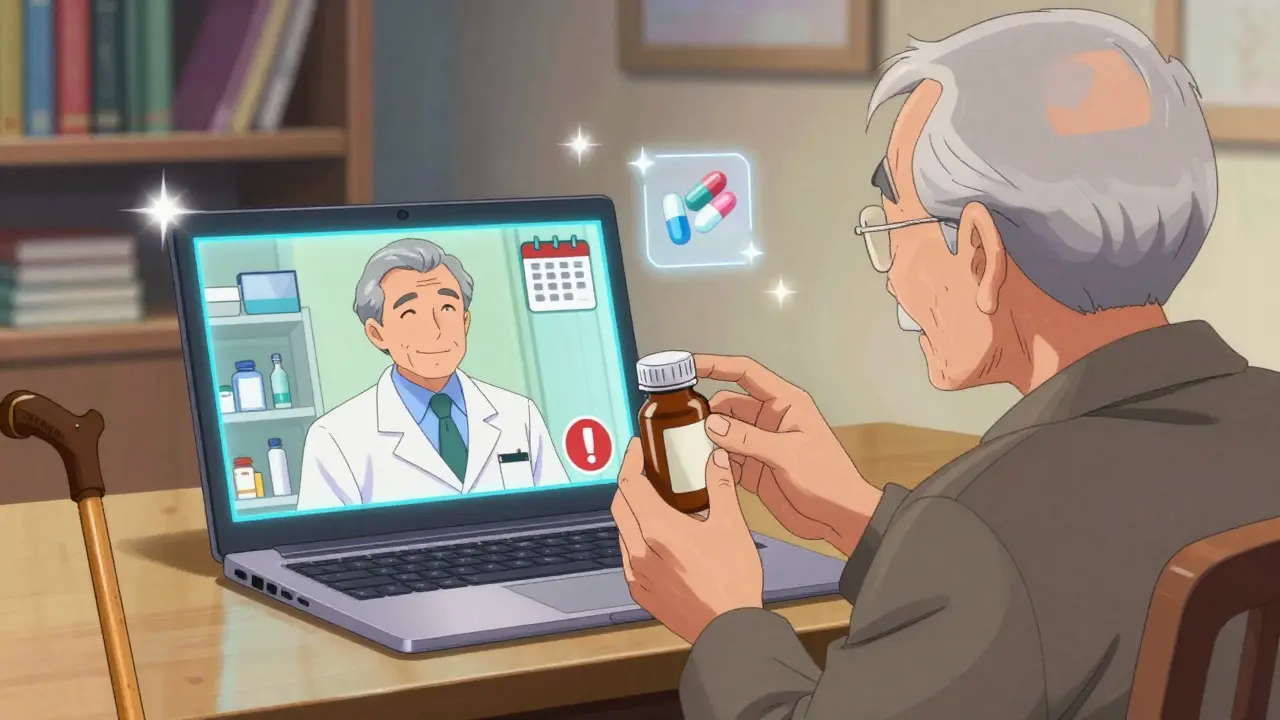
If your appointment is over the phone or video, you need to be even more prepared. No one can look at your pills. That means your list and your bottles need to be perfect. Before the call:
- Line up all your meds on a table so you can hold them up to the camera.
- Have your list printed out and ready to read from.
- Test your video app ahead of time. Make sure your camera and mic work.
- Have a quiet space. Background noise makes it hard to hear instructions.
Parkinson’s UK says this is especially critical for telehealth. A missed dose of levodopa can lead to a sudden loss of movement. Your pharmacist needs to know exactly when you take it.
What Happens During the Appointment
The review usually takes 20 to 45 minutes. The provider will:
- Ask about your symptoms and how you’re feeling overall.
- Look at your list and bottles side by side.
- Check for duplicate meds or dangerous combinations.
- Ask if you’ve had side effects you haven’t reported.
- Discuss whether any meds can be stopped, lowered, or switched.
- Explain what you should watch for in the coming weeks.
You’ll walk away with a new, updated list. Sometimes you’ll get a new prescription. Sometimes you’ll be told to stop something. Don’t be surprised if they suggest cutting a pill you’ve been taking for years. That’s the whole point.
What Happens If You Don’t Show Up
Some clinics don’t wait. The Godiva Group Practice in the UK sends out three monthly reminders. If you don’t respond, they reduce your prescription quantity. After that? No more refills. Period. They don’t want to give you meds that could hurt you because you haven’t had a safety check. It’s not punishment-it’s protection. If you’ve missed a review, call your clinic immediately. Don’t wait until you run out.
What to Do After the Appointment
Don’t just file the new list and forget it. Do three things:
- Update your phone or wallet card with the new list.
- Set a reminder for your next review (usually in 12 months).
- Watch for changes. If you feel worse, dizzy, or confused in the next week, call your provider. That’s not normal.
Keep the old list too. Sometimes you need to remember what you were on before. You might need it if you go to the ER or see a new doctor.
Who Can Help If You’re Overwhelmed
If organizing meds feels impossible, ask for help. Many clinics offer free medication management services. Pharmacists can help you sort pills into daily containers. Some community centers have volunteers who drive seniors to appointments. If you have trouble traveling, ask about home visits. The Northern Health and Social Services Board says you can request this when booking. Don’t assume it’s not available-ask.
Final Tip: Make It a Habit
Think of your medication review like a car check-up. You don’t wait until the engine dies. You don’t skip it because you feel fine. You do it because it keeps you safe. Keep your list updated. Bring your bottles. Ask your questions. You’re not just a patient-you’re the most important person in the room. Your health depends on it.



Paul Adler
January 31, 2026 AT 00:49It's amazing how many people overlook the simple stuff-like bringing the actual pill bottles. I had a friend who showed up with a handwritten list and got scolded because the pharmacist spotted a mismatched bottle label. Turns out, he’d been taking his wife’s blood pressure meds by accident for three months. This guide is spot-on: details save lives.
Doug Gray
February 1, 2026 AT 14:38One must contemplate the ontological weight of pharmaceutical compliance within the neoliberal healthcare apparatus. The pharmacopoeia has become a performative ritual-a liturgy of compliance where the patient is both subject and object of biopolitical governance. Do we truly control our meds, or do they control us? The label is a signifier of power. The expiration date, a temporal constraint imposed by capital.
Kristie Horst
February 3, 2026 AT 09:12Oh wow, what a revolutionary idea-bring your meds to the doctor. 🙃 I’m sure no one’s ever thought of that before. Maybe next they’ll suggest you wear shoes when you go to the dentist? Honestly, if you can’t keep track of your own pills, maybe you shouldn’t be trusted with them at all. Just saying.
rajaneesh s rajan
February 3, 2026 AT 11:34Bro, I’m from India and we don’t even have proper pharmacies half the time. People buy meds from street vendors, mix them in tea, take them with chai. This whole checklist thing? Beautiful. But in rural areas, it’s a luxury. Someone needs to make a simple app where you snap a pic of the bottle and it auto-generates the list. And maybe translate it into 10 languages. We need tech for the real world, not just for folks with insurance.
paul walker
February 4, 2026 AT 12:25This is sooo helpful!! I just had my review last week and I didn’t bring my gummies 😅 but now I know to bring EVERYTHING-even the ‘natural’ stuff. My doc actually cut my melatonin and I didn’t even realize it was interacting with my antidepressant. THANK YOU for this!!
Alex Flores Gomez
February 6, 2026 AT 02:14Wow, a whole guide on not being dumb with meds? Groundbreaking. I’m sure the 78-year-old widow who’s been on 12 pills since 2012 didn’t already know this. Also, ‘herbal tea your cousin swears by’? That’s not a thing, that’s a meme. Real medicine doesn’t come in teabags unless it’s chamomile and you’re trying to sleep, not cure atrial fibrillation.
Frank Declemij
February 6, 2026 AT 23:15Bring all medications including OTCs and supplements. Create a detailed list with name, dosage, indication, timing, prescriber, and side effects. Update after each appointment. Confirm next review date. Document old list. These steps are non-negotiable for safety. Simple. Effective. Done.
Pawan Kumar
February 8, 2026 AT 12:15Have you considered that this entire system is designed to keep you dependent? The pharmaceutical industry funds these reviews. They want you to believe you need constant monitoring. What if your symptoms are caused by the meds themselves? What if the ‘review’ is just a way to upsell you on newer, pricier drugs? I stopped all my prescriptions after reading this. Now I’m healed with lemon water and breathwork. You’re being manipulated.