
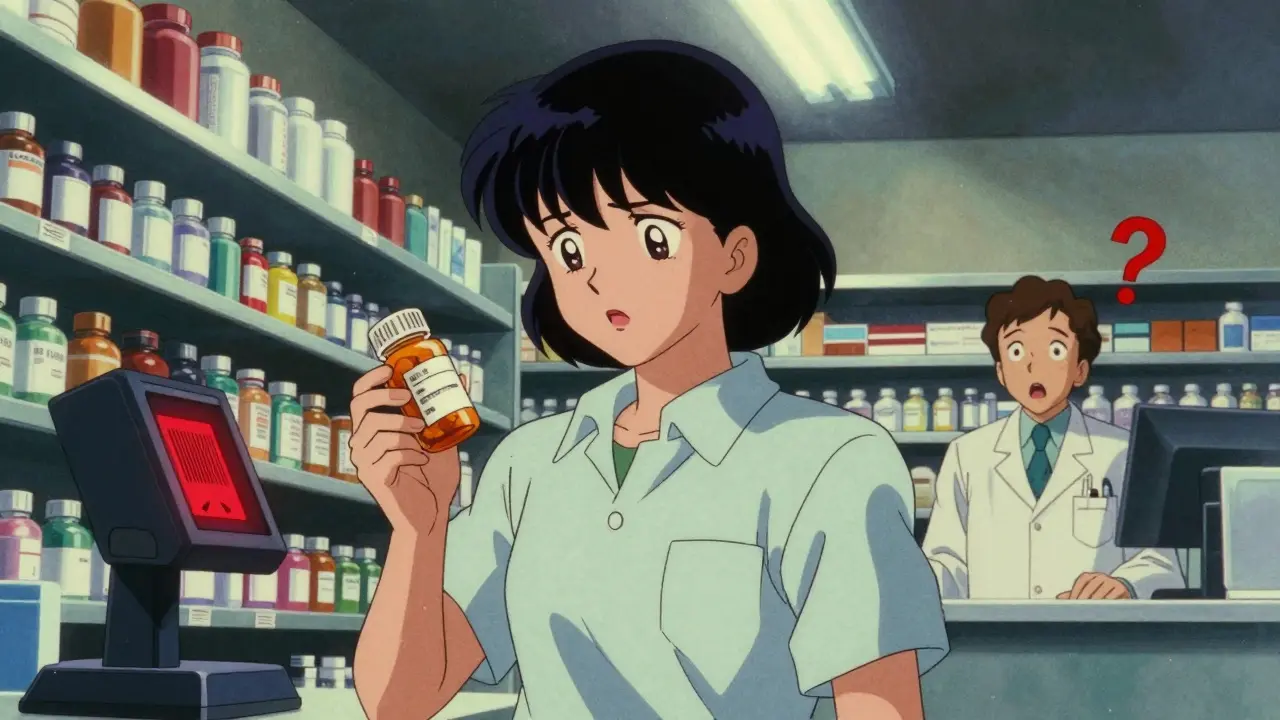
Getting the wrong medication or the wrong dose from your pharmacy isn’t just a mistake-it’s a safety risk. Maybe you picked up a pill that looks different than usual. Or your pharmacist didn’t catch that the dosage was ten times higher than it should be. Maybe the label says “take twice daily” when it should be “once daily.” These aren’t rare. In the U.S., medication errors harm at least 1.5 million people every year, according to the Institute of Medicine. And many of them go unreported-not because people don’t care, but because they don’t know how.
What Counts as a Pharmacy Error?
A pharmacy error isn’t just about getting the wrong drug. It includes:- Wrong medication (e.g., you got hydrocodone instead of hydralazine)
- Wrong dosage (e.g., 10 mg instead of 1 mg)
- Wrong instructions (e.g., “take with food” missing, or “take at bedtime” misprinted)
- Wrong patient (your prescription given to someone else)
- Missing or incorrect labeling
- Failure to warn about dangerous interactions (e.g., mixing blood thinners with NSAIDs)
- Not checking your allergies or other meds
Even if no harm happened, it still counts. A near-miss-like catching the error before taking the pill-is just as important to report. These are the moments that reveal flaws in the system before someone gets hurt.
Why Reporting Matters
You might think, “It was just one mistake. It won’t happen again.” But here’s the truth: if no one reports it, the pharmacy has no way of knowing there’s a problem. Maybe the same pharmacist keeps making the same error. Maybe the barcode scanner is glitching. Maybe the packaging looks too similar. Without reports, those issues stay hidden.Reporting isn’t about blaming someone. It’s about fixing systems. The Institute for Safe Medication Practices (ISMP) says the goal isn’t to punish the pharmacist-it’s to redesign how prescriptions are filled. In fact, 85% of medication errors happen because of process failures, not human laziness or carelessness. One report can prevent ten more.
Where to Report a Pharmacy Error
You have several options, depending on where you live and what kind of error you experienced.1. Report to the State Board of Pharmacy
Every state has a board that licenses and oversees pharmacies. This is often the fastest and most direct route.In California, for example, you can file a complaint online at www.pharmacy.ca.gov or download a PDF form. You’ll need:
- A copy of the prescription
- The original medication container (if you still have it)
- Proof of purchase (receipt)
- Your contact info
California’s Board received over 1,800 complaints in 2021. About 200 led to disciplinary actions. The board is required to acknowledge your report within 14 days. Since August 2022, you can track your case status online.
Not all states are this organized. Only 18 states require pharmacies to report errors internally. But you can still file a complaint in every state-even if they don’t require reporting, they still accept consumer complaints.
2. Report to the FDA’s MedWatch Program
If the error caused serious harm-or could have-you should also report it to the U.S. Food and Drug Administration. Their MedWatch system collects reports on dangerous drugs and medication mistakes.You can file online at the FDA Safety Information and Adverse Event Reporting Program, call 1-800-FDA-1088, or mail Form 3500B. Consumers use Form 3500. Healthcare workers use 3500B.
MedWatch gets over 1.3 million reports a year. But here’s the catch: only about 10% of medication errors are ever reported. The FDA admits they miss most of them. That’s why your report matters-even if it feels small.
3. Report to the Institute for Safe Medication Practices (ISMP)
ISMP runs the National Medication Error Reporting Program (MERP), one of the most trusted systems in the country. It’s confidential, free, and designed specifically to uncover root causes.Go to www.ismp.org or call 1-800-233-7767. You don’t need to give your name. But if you do, they might follow up to get more details.
ISMP doesn’t punish pharmacies. They analyze patterns. Did this happen because the pharmacist was rushed? Was the drug name similar to another? Was the software glitching? Their reports have led to changes in drug packaging, labeling rules, and pharmacy workflows nationwide.
4. Report to the Pharmacy Chain (If Applicable)
If the error happened at CVS, Walgreens, Walmart, or another chain, you can also report it directly to corporate customer service. Sometimes they’ll offer a refund or discount. But don’t stop there. Chains don’t always report internally to regulators. Your report to the state or FDA ensures it’s officially recorded.Some chains, like CVS, report tens of thousands of internal errors each year. But they don’t say how many lead to real changes. So while talking to them is helpful, it’s not enough.
What Happens After You Report
You might expect a phone call, an apology, or even a lawsuit. But here’s what usually happens:- State Board: They’ll review your report. If it’s serious, they may inspect the pharmacy. They might require staff retraining, issue a warning, or suspend a license. You’ll get a letter explaining their findings. It can take 60 to 120 days.
- MedWatch: The FDA reviews your report and adds it to their database. They rarely contact you. But if multiple reports point to the same drug or pharmacy, they may issue a safety alert.
- ISMP: They may call you for more details. Their team will analyze your report alongside others. If they find a trend-say, 10 reports about the same drug being mislabeled-they’ll push for a national change.
- Pharmacy Chain: They might apologize, offer a gift card, or say they’ll “review the process.” That’s good-but don’t assume it means the system changed.
Most people don’t get a follow-up. In fact, 71% of people who report to MedWatch say they never heard back. But 83% of them still believe their report helped prevent future errors. That’s the real win.
What You Can Do to Help
You’re not powerless. Here’s how to protect yourself and others:- Check your prescription before you leave. Compare the pill to the description on the label. Look up the drug name and dosage online if you’re unsure.
- Ask questions. “Is this the same as last time?” “Why is the color different?” “What’s this for?” Pharmacists are trained to answer.
- Keep records. Save your receipts, labels, and prescriptions. If something goes wrong, you’ll need proof.
- Report near-misses. If you caught the error before taking the pill, report it anyway. That’s how systems improve.
- Don’t be afraid. Fear of retaliation is real-but 98% of reports are anonymous. You won’t get in trouble. The pharmacy won’t know who reported it unless you give your name.
What’s Changing in 2026
The system is slowly getting better. The FDA is launching a new mobile app for MedWatch in spring 2024, making reporting faster. California now lets you track complaints online. ISMP launched a simpler consumer portal in March 2023. And Congress is considering a bill that would create a national mandatory reporting system for serious errors.Meanwhile, pharmacies are starting to use AI to catch mistakes before they leave the counter. One study predicts AI could reduce errors by 25-30% by 2027. But tech alone won’t fix everything. Human oversight, clear labeling, and reporting culture still matter.
Common Questions About Reporting
Do I need proof to report a pharmacy error?
You don’t absolutely need proof, but having it makes your report much stronger. Save your receipt, the pill bottle, and the prescription. Even a photo of the label helps. If you don’t have these, your report still counts-but it’s harder for investigators to verify.
Will the pharmacy know I reported them?
Not unless you give your name. State boards and the FDA keep reports confidential. ISMP allows anonymous reporting. Even if the pharmacy finds out, they’re legally barred from retaliating. If they do, you can file a separate complaint for retaliation.
How long does it take to get a response?
It varies. State boards usually respond within 60-120 days. ISMP may contact you within a few weeks if they need more info. The FDA rarely responds to individual reports. Don’t expect a phone call. But your report becomes part of a larger safety database that helps protect everyone.
What if the error caused harm? Can I sue?
Yes, you can pursue legal action, but reporting to a regulatory body is still essential. Legal cases focus on compensation. Regulatory reports focus on preventing future harm. Do both. Report to your state board and ISMP first. Then consult a lawyer if you suffered injury, hospitalization, or long-term effects.
I’m not sure if it was an error. Should I still report it?
Yes. If you’re unsure, report it anyway. Pharmacists and regulators are trained to spot what’s normal and what’s not. Your doubt might be the first sign of a bigger problem. Better to report and be wrong than to stay silent and risk someone else getting hurt.


pradnya paramita
February 4, 2026 AT 22:37Pharmacy error reporting hinges on systemic vulnerability mapping. The ISMP's MERP framework is the gold standard because it leverages root cause analysis (RCA) over punitive measures. When a barcode mismatch occurs between hydrocodone and hydralazine, it's not a human error-it's a failure in the human-machine interface design. The FDA's MedWatch data, when aggregated, reveals clustering patterns: e.g., look-alike/sound-alike (LASA) drugs account for 42% of near-misses. Reporting isn't just ethical-it's epidemiological.
Jesse Naidoo
February 5, 2026 AT 20:06You people are so naive. They don't care about your report. The pharmacy chain just fires the tech and hires another one. The system is rigged. I’ve seen it. They cover it up. They don’t want you to know how many people die from this stuff. You think they’ll change? They’ll just tweak the software and laugh.
Zachary French
February 5, 2026 AT 21:18OMG I CANNOT BELIEVE THIS POST IS SO WELL WRITTEN. Like, I had a near-miss last week where I got 10x the dose of levothyroxine-100mcg instead of 10mcg-and I didn’t even realize until I took it and my heart started racing. I reported it to ISMP. They called me back within 48 HOURS. They’re like detectives for medication chaos. And guess what? The SAME PHARMACY had 7 OTHER REPORTS that month. It’s not a mistake. It’s a pattern. WE NEED TO BURN THE SYSTEM DOWN. OR AT LEAST MAKE THEM USE DIFFERENT COLOR CAPS.
Daz Leonheart
February 7, 2026 AT 16:00I want to say thank you for writing this. I used to think reporting was pointless-until my mom almost took the wrong blood thinner. We caught it, but we didn’t report it. We should have. Now I make sure to check every script, ask questions, and save every receipt. It’s not about being paranoid. It’s about being prepared. You’re not alone in this. And your voice matters-even if no one replies.
Samuel Bradway
February 7, 2026 AT 21:24My sister got the wrong meds last year. She didn’t say anything because she was scared of ‘making trouble.’ I’m telling you-don’t be that person. Reporting doesn’t make you a tattletale. It makes you a protector. I’ve reported two near-misses. Neither got a response. But I sleep better knowing someone out there saw it. That’s enough for me.
Caleb Sutton
February 9, 2026 AT 13:14Big Pharma owns the FDA. The state boards are bought off. The whole thing’s a scam. They want you to report so they can say they’re ‘transparent’ while quietly changing labels to look even more confusing. I’ve got documents. I’ve got emails. They’re using AI not to prevent errors-but to automate cover-ups. You think your report matters? It’s just another data point in their marketing campaign.
Jamillah Rodriguez
February 11, 2026 AT 11:15YAS QUEEN. This is the most important thing I’ve read all year. I reported my error and got a $5 gift card. That’s it. No apology. No explanation. Just ‘we’re sorry for the inconvenience.’ Like I’m some kind of customer service ticket. I’m not. I’m a human who almost died. And now I’m screaming into the void. But I’m screaming LOUDER.
Susheel Sharma
February 12, 2026 AT 23:43The structural inefficiencies within community pharmacy workflows are endemic. The pressure to dispense 120+ prescriptions per shift, coupled with inadequate double-check protocols, creates a perfect storm for error propagation. Furthermore, the absence of mandatory error disclosure statutes across 82% of U.S. jurisdictions perpetuates institutional opacity. A national, interoperable reporting database-standardized under HIPAA-compliant protocols-is not merely advisable; it is a bioethical imperative.
Roshan Gudhe
February 13, 2026 AT 13:01There’s a quiet dignity in speaking up when no one else will. We live in a world that tells us to stay quiet, to not make waves. But what if the wave is the only thing that saves someone else? Reporting isn’t about anger. It’s about love-for your future self, for strangers who might get your meds next. We are all just one mistake away from disaster. This post? It’s a lifeline. Thank you.
Rachel Kipps
February 15, 2026 AT 04:13Just wanted to say I reported a near-miss last month. I didn’t even know where to start. I went to the state board website. Took me 15 minutes. No form needed. Just a dropdown menu and a text box. I got an auto-reply within 2 hours. It felt good. I didn’t expect anything. But I did it. And now I tell everyone I know. Just… do it. It’s easier than you think.
Katherine Urbahn
February 16, 2026 AT 12:47Let me be clear: if you do not report a medication error, you are complicit in systemic negligence. You are enabling institutional malfeasance. You are prioritizing convenience over human life. The fact that 90% of errors go unreported is not an accident-it is a policy failure of monumental proportions. Your silence is not neutrality. It is endorsement. Act. Now.
Alex LaVey
February 17, 2026 AT 20:58I’m from India, and I’ve seen pharmacies here that don’t even have digital records. We don’t have state boards like the U.S. But guess what? We still report. We call the pharmacist. We show them the label. We say, ‘This isn’t right.’ It’s messy. It’s not perfect. But it’s human. And that’s how change starts. You don’t need a system to be brave. You just need to care.
caroline hernandez
February 17, 2026 AT 22:49As a clinical pharmacist, I’ve seen the inner workings. The barcode system fails 1 in 500 scans. The techs are overworked. The AI tools are great, but they’re trained on flawed data. Reporting isn’t just helpful-it’s data collection. Every report feeds into predictive models that reduce future errors. I’ve personally reviewed 12 reports that led to workflow redesigns. Your voice is part of the algorithm now.
Jhoantan Moreira
February 18, 2026 AT 06:37Thank you for this. It’s rare to see something so clear and kind. I reported my error last year. No one replied. But I still feel proud. I didn’t just protect myself-I helped make the system better for someone else. And that’s enough. We’re all just trying to get through life without getting hurt by something meant to help us. You’re doing the right thing. Keep going.
Justin Fauth
February 19, 2026 AT 08:59Why are we even talking about reporting? The real issue is that Big Pharma pushes dangerous drugs and pharmacies are just the delivery system. This whole thing is a capitalist nightmare. You think your report changes anything? Nah. The system’s designed to keep you quiet. Wake up. They’re not here to help you. They’re here to profit.