
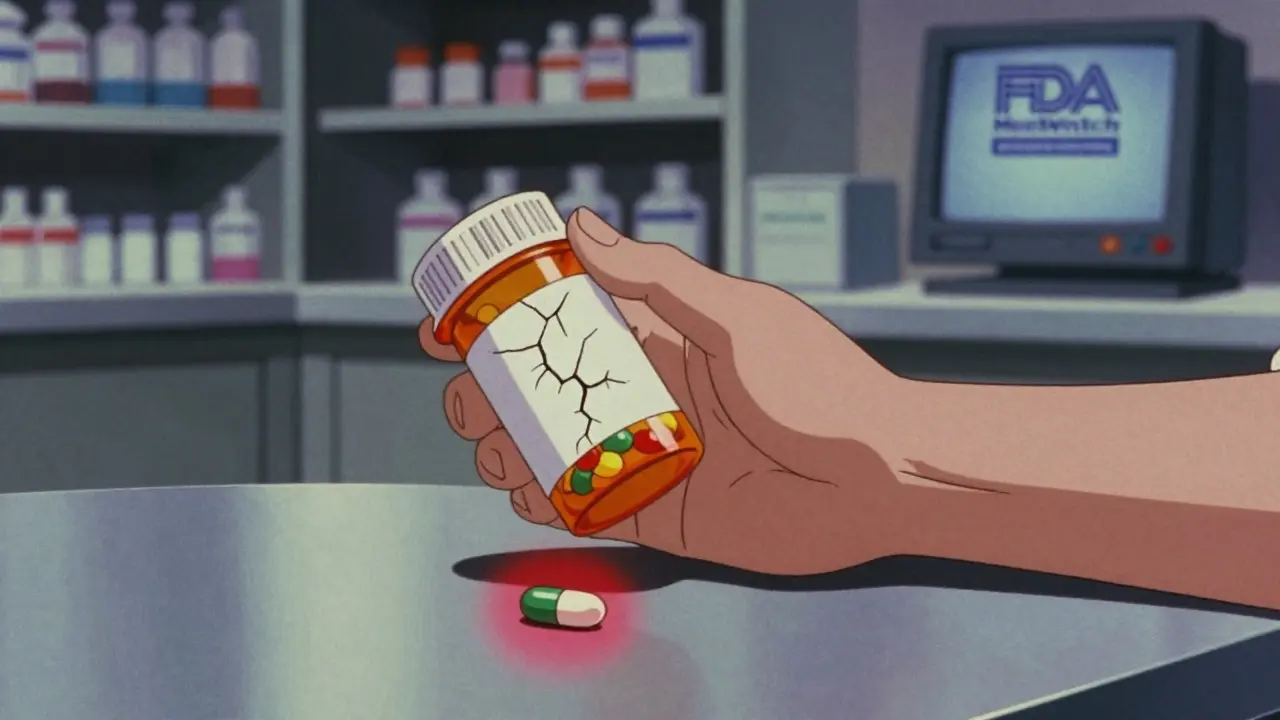
Spotting a fake pill can be terrifying. You take your medicine every day. It’s supposed to keep you alive. But what if the bottle you bought at the pharmacy, or ordered online, wasn’t real? What if the pills were made in a basement, with chalk, dye, or worse? You’re not alone. Every year, millions of counterfeit drugs enter circulation - some sold in pharmacies, others through shady websites. The fake medication problem isn’t just a global issue. It’s happening in your neighborhood, in your medicine cabinet.
The good news? You don’t have to just live with it. Reporting counterfeit or tampered medications isn’t just a good idea - it’s a lifesaving act. When you report a suspicious pill, you help regulators pull dangerous products off the shelves before they hurt someone else. The FDA removed over 2,300 fake drug products from U.S. markets between 2015 and 2022 - mostly because people like you spoke up.
What Counts as Counterfeit or Tampered Medication?
Not every weird-looking pill is fake. But some signs are red flags you can’t ignore:
- Packaging looks off - misspelled words, blurry logos, different colors than usual
- Pills look different - wrong shape, color, size, or markings compared to what you’ve taken before
- Smell or taste is strange - a chemical odor or bitter aftertaste that doesn’t match
- Expiration date is missing, faded, or looks stamped on
- Prescription bottle has a different pharmacy label, or no label at all
- Online purchase from a site that doesn’t ask for a prescription
These aren’t just cosmetic issues. A counterfeit diabetes pill might contain no insulin. A fake blood pressure pill might have too much active ingredient - or none at all. Either way, the result can be hospitalization… or death.
What to Do Right Away
If you suspect a medication is fake, don’t take it. Don’t flush it. Don’t throw it in the trash. Here’s what to do:
- Keep everything. Don’t touch the pills more than you have to. Keep the bottle, the pills, the box, the receipt, and any packaging materials. These are evidence.
- Take photos. Get clear, well-lit pictures of the packaging, the pills, the lot number, the expiration date, and any unusual markings. Use your phone’s camera - no need for fancy equipment.
- Don’t use it. Even if it looks like it worked before, fake meds can be inconsistent. One pill might be strong, the next might be empty. It’s not worth the risk.
These steps might seem simple, but they’re critical. Experts say reports with photos and batch numbers are 68% more likely to lead to a successful investigation. That’s because regulators need those details to trace where the fake product came from - and who made it.
How to Report in the U.S.: The FDA’s MedWatch System
In the United States, the FDA’s MedWatch program is your main tool. It’s not a hotline you call and forget. It’s a formal reporting system that feeds directly into federal drug safety investigations.
You can report in two ways:
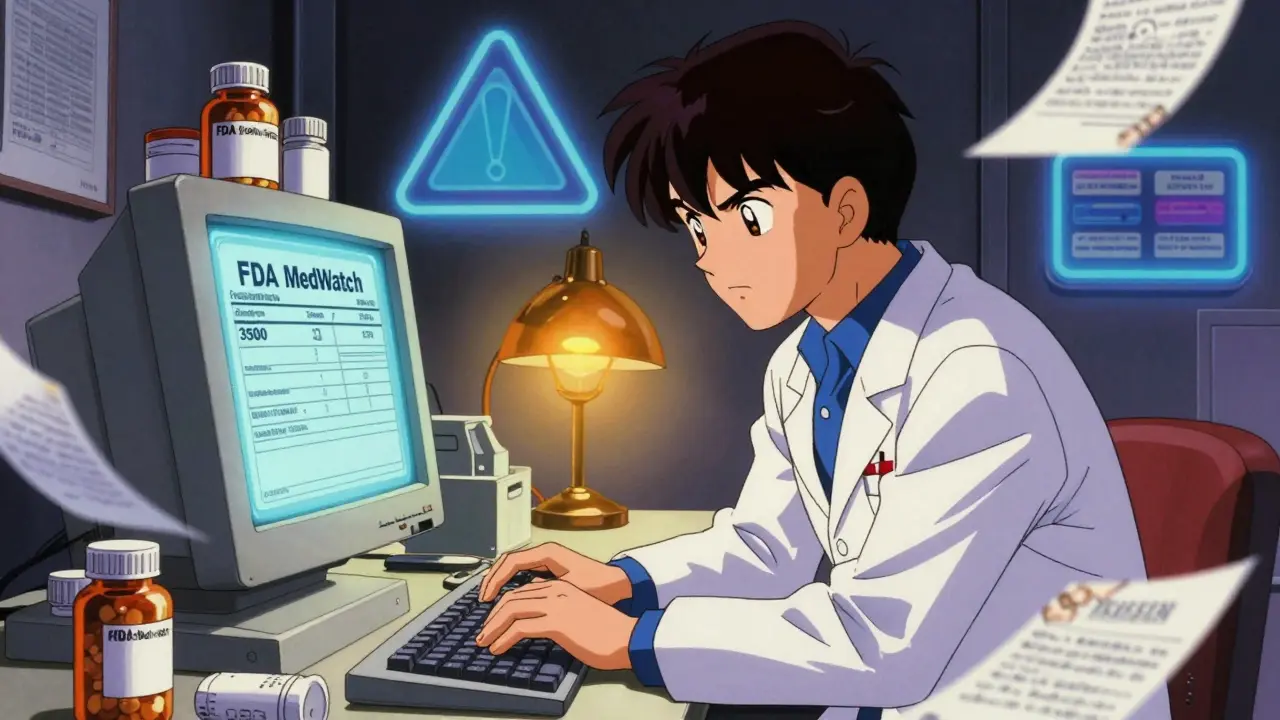
- Online: Go to fda.gov/medwatch and fill out Form 3500. This is the fastest and most detailed method. You’ll need to enter the drug name, manufacturer, batch number, where you bought it, and a description of what looked wrong.
- By phone: Call 1-800-FDA-1088. A representative will guide you through the report. This is helpful if you’re not comfortable online.
Healthcare providers - pharmacists, doctors, nurses - have an extra responsibility. They’re required to report suspected counterfeit drugs immediately. But patients? You’re just as important. In fact, 73% of successful drug investigations in San Diego between 2018 and 2020 started with a patient report.
What If You Bought It Online?
Online pharmacies are the biggest source of fake drugs. The National Association of Boards of Pharmacy found that 96% of online pharmacies they checked in 2022 were breaking U.S. laws. Many look real - they have logos, contact info, even fake certifications.
Here’s how to handle it:
- If it’s Amazon, eBay, or another major marketplace: Use their official counterfeits reporting tool. Amazon alone received over 7,800 pharmaceutical reports in 2022.
- If it’s a standalone website: Report it to the FDA through MedWatch. Include the website URL. The FDA works with the FTC to shut down illegal sites.
- If you paid with a credit card: Contact your bank. You may be eligible for a chargeback - and your bank can help trace the seller.
Never buy medication online without a prescription - and never from a site that doesn’t require one. Legitimate pharmacies will always ask for your doctor’s authorization.
Other Reporting Channels
While MedWatch is your primary tool, other systems can help:
- DEA RxAbuse Tip Line: If you suspect illegal distribution - like someone selling pills without a prescription, or stealing controlled substances - call (571) 324-6499 or report online at dea.gov. This is especially useful for opioids or stimulants like Adderall.
- Manufacturer hotlines: Companies like Eli Lilly, Novo Nordisk, and Pfizer have direct anti-counterfeiting lines. If you know the brand, look up their website. Many have a "Report a Counterfeit" button. They track these reports globally.
- Local pharmacy: If you bought it from a local pharmacy, tell them. They’re required to report suspicious products to the FDA. And if they don’t, you should.
What Happens After You Report?
Once you submit your report, the FDA doesn’t just file it away. They analyze it. If multiple people report the same batch number, they act fast. The FDA says reports filed within 24 hours of discovery lead to product removal 4.2 times faster than reports filed after 72 hours.
But here’s the truth: Not every report gets a reply. A 2022 FDA survey found that 67% of consumers who reported fake drugs never heard back. That doesn’t mean your report didn’t matter. It means the system is overloaded. But every report adds to the pattern. One report might not trigger an investigation. Ten reports from different states? That’s a red flag.
Some people have had success. One pharmacist in Seattle reported a counterfeit insulin product in March 2023. Within 11 days, the FDA traced 142 affected lots. Others waited weeks with no response. It’s frustrating. But if you don’t report, no one else will.
International Reporting
If you’re outside the U.S., you still have options:
- Canada: Report to Health Canada’s Office of Controlled Substances. Pharmacists must report forged prescriptions to provincial programs like Ontario’s ODB.
- Europe: Contact your national medicines agency. The EU has a centralized reporting portal through the European Medicines Agency (EMA).
- Global: The World Health Organization’s Global Surveillance and Monitoring System accepts reports from any country. You can find the reporting form at who.int.
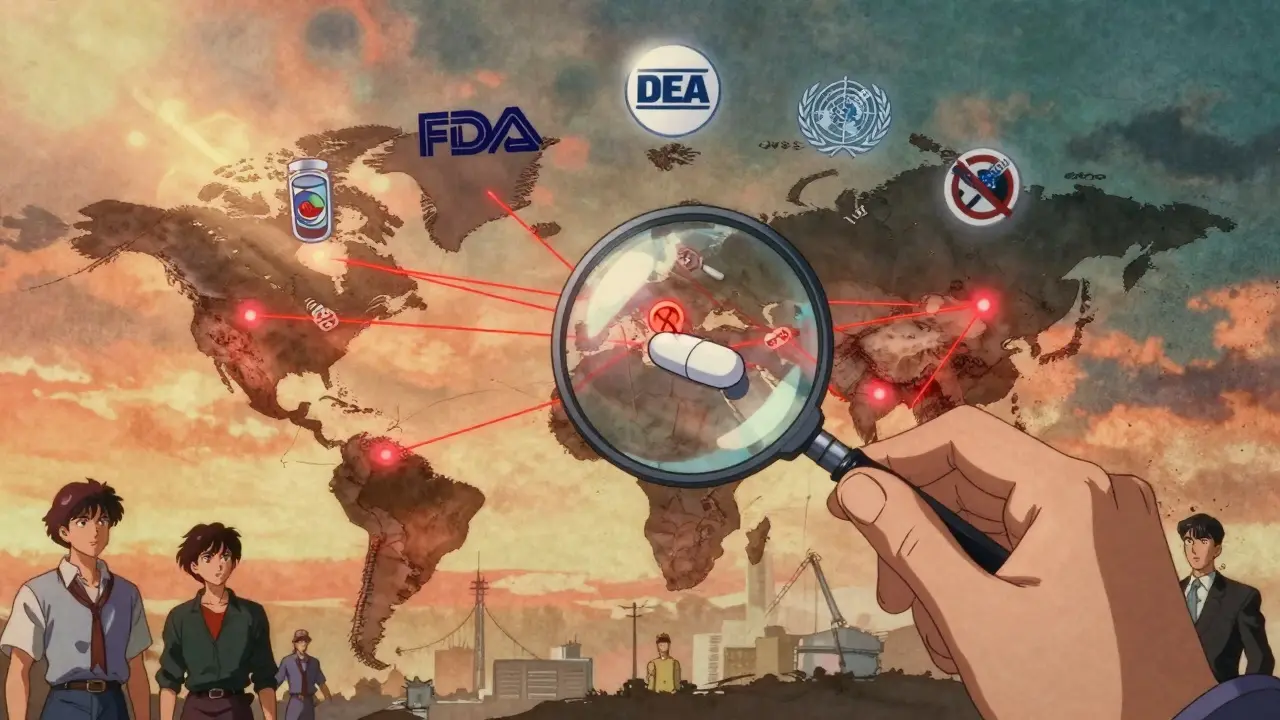
Even if you’re not in the U.S., your report matters. Counterfeit drugs cross borders. A fake pill made in India might end up in a pharmacy in Chicago. Your report helps connect those dots.
Why This Matters - Real Consequences
Think fake drugs are harmless? Think again.
In 2021, a man in Ohio died after taking a fake version of the blood thinner warfarin. The counterfeit pills contained no active ingredient. He had a stroke. In 2020, a batch of fake antibiotics sold in Nigeria killed 14 children. In 2022, the WHO confirmed 1,500 cases of falsified medicines in 141 countries - and that’s just what got reported.
The global market for fake drugs is worth $205 billion. That’s more than the GDP of 60 countries. And it’s growing. Online sales are the fastest channel. That’s why your report matters more than ever.
What You Can Do Going Forward
Protect yourself and others:
- Always get prescriptions filled at licensed pharmacies - not online unless you’ve verified them.
- Check your pills. Compare them to online images from the manufacturer’s site.
- Keep your receipts. If something goes wrong, you’ll need proof of purchase.
- Talk to your pharmacist. Ask them how they verify their supply chain.
- Report every time. Even if you’re not sure. Better to report and be wrong than to stay silent and risk someone’s life.
Counterfeit drugs don’t just hurt patients - they undermine trust in medicine. Every time you report, you help rebuild that trust. You’re not just protecting yourself. You’re protecting someone’s parent, child, or friend.
What if I don’t have the original packaging?
Even without the packaging, you can still report. The FDA accepts reports based on pill appearance, pharmacy name, and purchase date. Take clear photos of the pills themselves and write down everything you remember - where you bought it, when, and what it looked like. Your report still helps build a pattern.
Can I report anonymously?
Yes. The FDA’s MedWatch system allows anonymous reporting. The DEA’s tip line is also fully anonymous. You don’t need to give your name, phone number, or address. But if you leave contact info, you might get updates on what happened - and that can be reassuring.
What if the pharmacy refuses to take responsibility?
Pharmacies are required by law to report suspected counterfeit drugs to the FDA. If they refuse, report directly to the FDA yourself. Include the pharmacy’s name and location. The FDA can investigate the pharmacy’s supply chain. You’re not overstepping - you’re doing your part.
Are online pharmacies ever safe?
Only if they’re verified. Look for the VIPPS seal (Verified Internet Pharmacy Practice Sites) on the website. It’s issued by the National Association of Boards of Pharmacy. If you don’t see it, assume it’s unsafe. Never buy from sites that don’t require a prescription - even if they claim to be "international."
How long does it take for a report to lead to action?
It varies. Some reports trigger investigations within days - especially if multiple people report the same batch. Others take weeks. The FDA says reports filed within 24 hours lead to 4.2 times faster removal. But even delayed reports contribute to long-term tracking. Don’t wait - report as soon as you suspect a problem.


Lisandra Lautert
February 23, 2026 AT 06:32Found a fake blood pressure pill last month. Looked identical-same color, same markings. But the taste? Like chalk mixed with motor oil. I took a photo, called the pharmacy, and filed a MedWatch report within an hour. No reply. Didn’t matter. Someone else’s kid might be alive because I didn’t wait.
David McKie
February 24, 2026 AT 05:41Let me just say this: the FDA is a bureaucratic graveyard for reports like this. I reported a counterfeit insulin batch in 2021. Took 11 weeks. No update. No closure. Meanwhile, people are dying on waiting lists while the system plays whack-a-mole with counterfeiters who just rebrand and come back. This isn’t safety-it’s performance theater. You think your report matters? It’s a drop in a poisoned ocean.
Southern Indiana Paleontology Institute
February 24, 2026 AT 05:51Y’all need to stop buying crap off the internet. If you ain’t got a prescription from a real doc and you ain’t gettin’ it from a brick-and-mortar pharmacy? You’re askin’ for trouble. I seen a guy in Indiana OD on fake Adderall last year. Turned out it was laced with fentanyl. He didn’t even know he was buyin’ pills from a site that looked like a Walmart ad. Common sense ain’t common anymore.
Anil bhardwaj
February 26, 2026 AT 04:50I live in India and we see this all the time. Fake diabetes meds sold as ‘German quality’-but the packaging has Hindi spelling errors. I always keep the bottle and take pics. Last month, I reported one through WHO’s portal. A week later, the local clinic got a warning. Small things matter. Keep doing it.
lela izzani
February 26, 2026 AT 16:32I’m a pharmacist in rural Oregon. We get counterfeit meds every few months. The ones from online pharmacies? Always the same-wrong tablet imprints, wrong coating, wrong size. We keep a log and report immediately. But here’s what no one says: if you’re buying meds online without a prescription, you’re not just risking your health-you’re funding criminal networks. This isn’t just about pills. It’s about human trafficking. Report. Always.
Stephen Archbold
February 28, 2026 AT 04:24Just want to say thanks for this guide. My mum’s on warfarin. We checked her last refill and the pills were a shade lighter. I didn’t know what to do-until I read this. Took pics, called the pharmacy, filed the report. They were shocked-said they’d never seen that batch before. Turned out it was from a supplier that got hacked. We’re lucky. Thank you for making it easy to act.
Nick Hamby
March 1, 2026 AT 10:15There’s a profound moral dimension here that rarely gets discussed. Medication isn’t just a commodity-it’s a covenant between patient and healer. When counterfeit drugs enter that space, they don’t just fail chemically-they fracture trust in the entire medical ecosystem. Your report isn’t a bureaucratic form. It’s an act of solidarity. It says: ‘I see you. I value your life. I will not let indifference win.’ That’s the quiet revolution we need.
Shalini Gautam
March 2, 2026 AT 04:31Why do we even have to report this? Shouldn’t the government be doing this already? I mean, come on. We pay taxes for this. We pay for drug inspections. We pay for pharmacists. And now we’re supposed to be the eyes and ears of the FDA? This is just lazy governance dressed up as empowerment. Someone’s got to be held accountable here-not just the patient who got scammed.
Erin Pinheiro
March 3, 2026 AT 07:56Ugh. I reported a fake metformin last year. Sent pics. Lot number. Receipt. NOTHING. Not even an auto-reply. Meanwhile, my neighbor’s dad died from fake clonazepam. He bought it off a Facebook ad. The FDA doesn’t care. They’re too busy chasing TikTok influencers. Why do they even have a reporting system if they’re just gonna bury it? It’s a joke.
Brandice Valentino
March 5, 2026 AT 01:28OMG. I just realized my Zoloft pills are different. Like, totally. I thought it was just my imagination. But now I’m like-wait, did I buy fake meds?? I’m so traumatized. I’m going to cry. I’ve been on this for 8 years. What if I took bad ones? I need to know if I’m going to die. Someone please tell me what to do. I’m so scared.
Larry Zerpa
March 6, 2026 AT 12:35Let’s be real. The FDA doesn’t care about pills. They care about liability. If a fake drug kills someone, they get sued. So they wait for 15+ reports before acting. That’s not safety-it’s damage control. And don’t get me started on the ‘anonymous reporting’ myth. They track IP addresses. They know who you are. This whole thing is a PR stunt to make you feel empowered while they do nothing.
Gwen Vincent
March 8, 2026 AT 04:30I’ve been thinking about this a lot. What if the real problem isn’t the counterfeiters? What if it’s how we’ve normalized buying meds online? We treat pharmacy like Amazon. One-click. No questions. No verification. We’ve outsourced trust. And now we’re shocked when it breaks. Maybe the solution isn’t better reporting-it’s rebuilding the relationship between patient, provider, and pharmacy. Slowly. Carefully. With intention.
Nandini Wagh
March 9, 2026 AT 23:07Wow. So you’re telling me I’m supposed to take photos of my pills and send them to the government… because I bought them from a site that looked like a legit pharmacy? Yeah, right. Next time I’ll just Google ‘how to spot a fake pill’ and then go buy from a guy on Instagram who says he’s got ‘pharma-grade’ stuff. 😘
Holley T
March 10, 2026 AT 01:52Okay, so I read this whole thing. And honestly? I’m not convinced. First, how do we know the FDA isn’t just using these reports to justify their budget? Second, what if the fake meds are coming from inside the supply chain? Like, what if the pharmacy itself is in on it? Third, if the system is so broken, why are we being told to report instead of demanding systemic reform? Fourth, I’ve seen reports go nowhere for years. Fifth, I’ve seen people who reported get no follow-up. Sixth, I’ve seen the same batch numbers pop up in 3 different states. Seventh, the FDA doesn’t have enough staff. Eighth, they prioritize brand-name drugs over generics. Ninth, the whistleblower protections are a joke. Tenth, I’m tired of being told to be the hero while the system fails. Eleventh, why aren’t we suing the manufacturers who outsource to unregulated labs? Twelfth, why aren’t we holding Amazon accountable for hosting these sellers? Thirteenth, why does every solution end with ‘report it’? Fourteenth, because it’s easier than fixing the system. Fifteenth, I’m not reporting. I’m boycotting online pharmacies. And I’m telling everyone I know. That’s my action.