
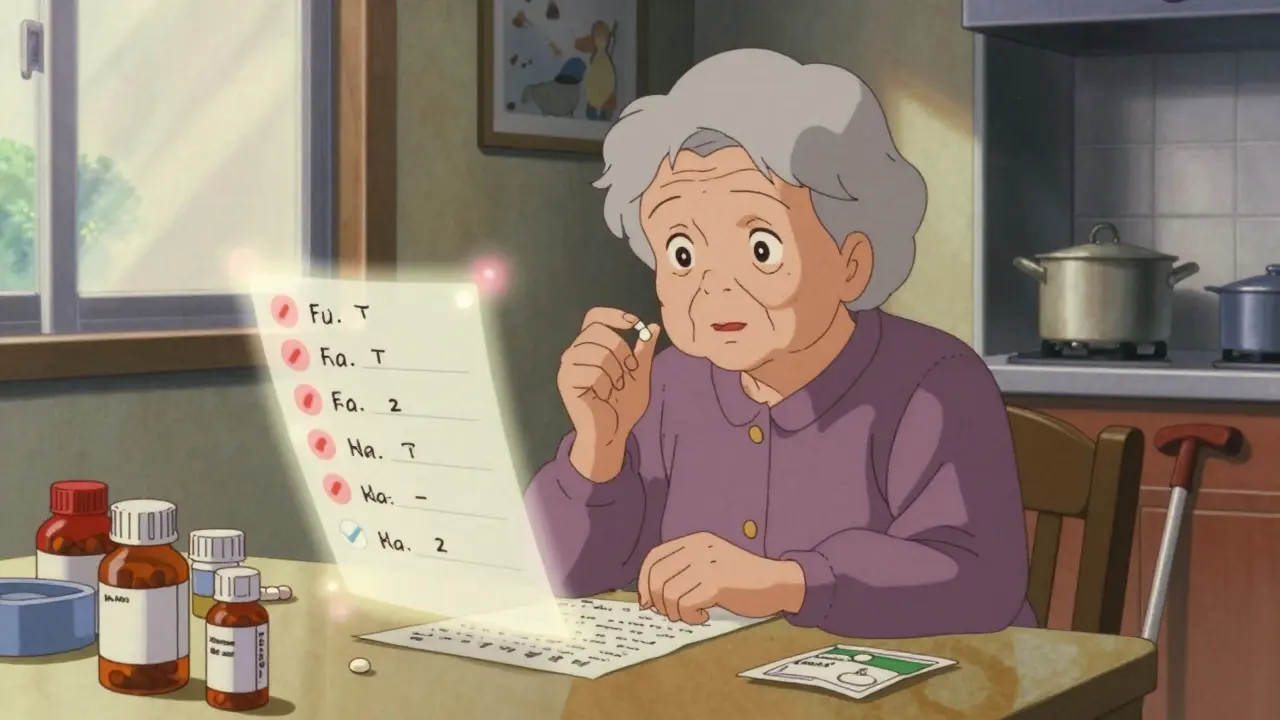
Every year, millions of older adults in the U.S. take more medications than they need. Some of these pills were prescribed years ago for conditions that have since changed-or disappeared. Others were meant to prevent future problems, but now they’re doing more harm than good. This isn’t just a minor oversight. It’s a silent crisis. Deprescribing-the careful, planned process of stopping or reducing medicines that no longer help-isn’t optional. It’s essential.
Why Seniors End Up on Too Many Medications
It starts simply. A senior sees a doctor for high blood pressure. A few months later, they get a new diagnosis: acid reflux. Then arthritis. Then sleep trouble. Each visit brings a new prescription. Over time, the medicine cabinet fills up. A 70-year-old might end up taking eight, ten, even twelve different pills a day. That’s not rare. In 1994, just 14% of older Americans took five or more medications. By 2014, that number jumped to 42%. Today, it’s even higher. The problem isn’t that doctors are careless. It’s that the system wasn’t built for long-term care. Most visits focus on one issue at a time. No one asks, “What happens if we stop this one?” Or, “Is this still helping after all these years?” And then there’s the fear. Patients don’t want to seem like they’re questioning their doctor. Doctors don’t want to seem like they’re admitting they made a mistake. So the pills keep coming. And the risks keep growing.What Is Deprescribing-and Why It’s Not Just Stopping Pills
Deprescribing isn’t about cutting pills just to cut them. It’s not about saving money. It’s not about making life simpler for caregivers. It’s about reducing harm. The term was first defined in 2003 by Australian clinician Michael Woodward. Since then, it’s been refined by experts across North America and Europe. The American Geriatrics Society calls it “a deliberate, patient-centered process” that weighs the risks of a drug against its benefits-especially when those benefits no longer match the person’s current health goals. Think of it this way: if a 90-year-old with advanced dementia is still taking a statin to lower cholesterol, what’s the point? That drug takes years to show benefit. But it can cause muscle pain, liver stress, and memory issues. At this stage, the risk outweighs the reward. Stopping it isn’t giving up. It’s choosing comfort over a hypothetical future.When to Consider Stopping a Medication
There are four clear moments when a medication review should turn into a deprescribing conversation:- New symptoms appear-like dizziness, confusion, falls, or stomach bleeding. These aren’t just “old age.” They’re often signs of a drug reaction. A 2022 study found that nearly 40% of falls in seniors were linked to medications like benzodiazepines, antihistamines, or blood pressure pills.
- Health has changed significantly-if someone is now in late-stage dementia, has a terminal illness, or can no longer feed or bathe themselves, preventive drugs (like aspirin for heart disease or vaccines for shingles) usually don’t make sense anymore. The goal shifts from prevention to comfort.
- High-risk drugs are still being taken-some medications are simply too dangerous for older bodies. The Beers Criteria, updated annually by the American Geriatrics Society, lists these. Examples include long-term use of proton pump inhibitors (PPIs) for heartburn (which can lead to bone fractures and kidney damage), antipsychotics for behavioral issues in dementia (which increase stroke risk), and sleeping pills like zolpidem (which double fall risk).
- Preventive drugs have no short-term benefit-if someone has a life expectancy under two years, taking a daily aspirin to prevent a heart attack five years from now isn’t helpful. It’s just another pill with side effects.
How Deprescribing Works in Practice
You can’t just stop a pill cold turkey. Some medications need to be tapered. Others need monitoring. Here’s how it’s done right:- One drug at a time. If you stop three meds at once and the person feels worse, you won’t know which one caused the problem. Slow and steady wins the race.
- Track symptoms. Keep a simple log: “Day 3: slept better. Day 5: less dizziness. Day 7: no more stomach upset.” This helps doctors see what’s changing.
- Involve the patient. Ask: “What matters most to you now?” Is it walking without help? Sleeping through the night? Avoiding hospital trips? That’s the goal-not just fewer pills.
- Use trusted tools. The STOPP criteria and Beers Criteria aren’t just for doctors. Many are now available as free apps and printable checklists at deprescribing.org. These tools help identify which drugs are most likely to cause harm.
Who Should Be Involved?
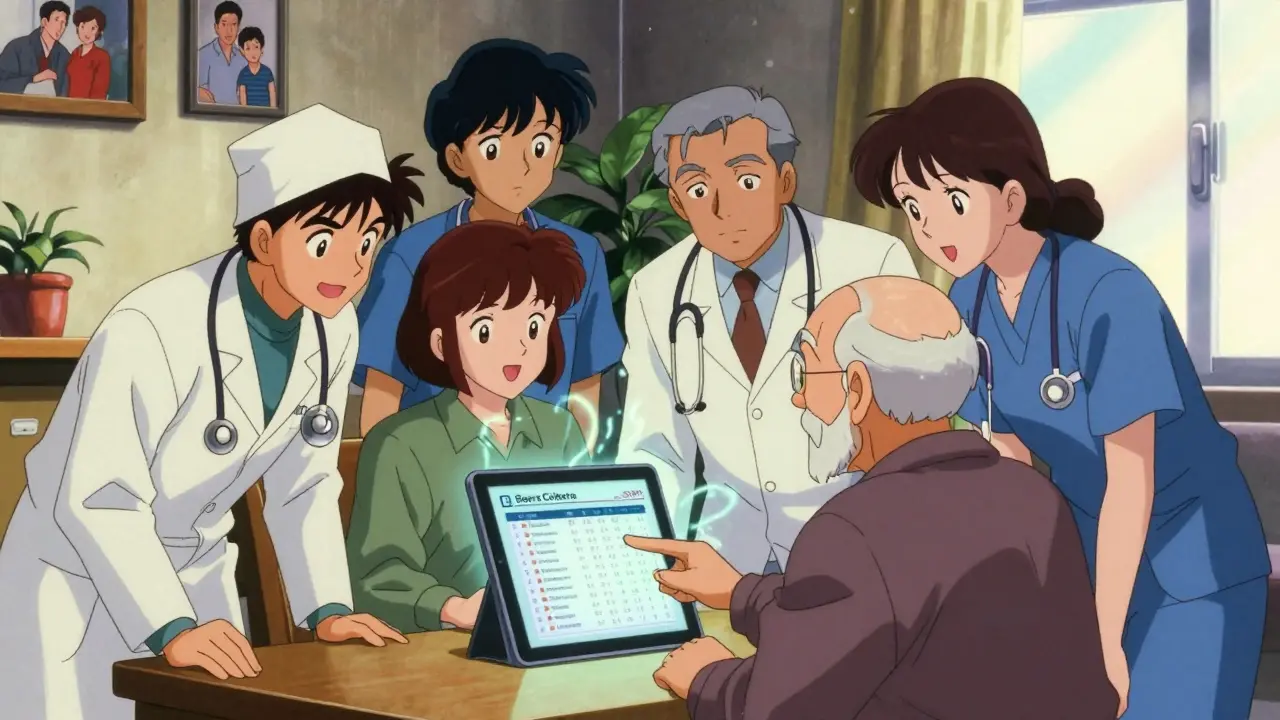
Deprescribing isn’t a one-person job. It needs teamwork:- Clinical pharmacists are often the unsung heroes. They review all medications, spot overlaps, and suggest alternatives. A 2023 JAMA study found that pharmacist-led reviews reduced inappropriate medications by 25% in just three months.
- Primary care doctors need to shift their mindset. Instead of “refill this,” they should ask, “Should we keep this?”
- Families and caregivers often notice changes before doctors do. A daughter might say, “Mom’s been more confused since we started that new pill.” That’s valuable data.
- The patient themselves must be part of the decision. No one else knows how the pills make them feel.
What Happens When You Stop a Medication?
People worry. “What if my blood pressure goes up?” “What if my pain comes back worse?” The truth? Most of the time, things get better. A 2022 review in Frontiers in Drug Safety found that when seniors stopped inappropriate medications:- Adverse drug events dropped by 17-30%
- Hospital readmissions fell by 12-25%
- Quality of life improved-without worsening chronic conditions
Why This Isn’t Happening More Often
Despite the evidence, deprescribing is still rare. One reason? Guidelines tell doctors how to start drugs-but almost never how to stop them. A 2019 study in American Family Physician found that 92% of prescribing guidelines lack clear instructions for discontinuation. Another reason? Fear. Doctors worry about backlash. Patients fear being told they’re “too old” for treatment. Families think stopping meds means giving up. And then there’s the system. Electronic health records don’t flag “medications to stop.” Insurance doesn’t pay for medication reviews unless they’re tied to a new diagnosis. And most Medicare visits are 15 minutes long.What You Can Do Today
You don’t need to wait for a doctor’s appointment. Start now:- Make a list. Write down every pill, supplement, and over-the-counter drug. Include dosages and why you’re taking them.
- Ask the question. “Is this still helping me? Are there risks I should know about?”
- Bring the list to your next visit. Don’t just hand it over-talk about it. Say: “I want to make sure I’m not taking anything I don’t need.”
- Use deprescribing.org. Download their free guides for PPIs, statins, sleeping pills, and more. They include checklists and conversation starters.
Final Thought: It’s Not About Fewer Pills. It’s About Better Living.
Deprescribing isn’t about cutting corners. It’s about cutting clutter. It’s about making space for what really matters: sleep, movement, connection, comfort. Older adults aren’t failing because they take too many pills. The system is failing because it doesn’t know when to stop. The right question isn’t “Can we keep giving this drug?” It’s: “Is this still helping you?”What is deprescribing?
Deprescribing is the planned, careful process of stopping or reducing medications that are no longer helpful or are causing more harm than good. It’s not about cutting pills randomly-it’s a patient-centered strategy that weighs risks, benefits, and personal goals, especially for older adults.
Are all seniors on too many medications?
Not all, but many are. In the U.S., over 40% of adults over 65 take five or more medications daily. That’s triple the rate from just 30 years ago. Not every one of those pills is necessary-some are outdated, redundant, or risky for older bodies.
Can stopping a medication make things worse?
Sometimes, yes-but only if done carelessly. Stopping certain drugs like antidepressants or blood pressure meds too quickly can cause withdrawal symptoms or rebound effects. That’s why deprescribing is done slowly, one drug at a time, with close monitoring. Most people feel better after stopping unnecessary meds, not worse.
Is deprescribing only for people in nursing homes?
No. Most older adults live at home, not in nursing facilities. That’s where the biggest risk lies-people managing complex medication routines alone, without regular reviews. Deprescribing works best in community settings, where patients and families are involved.
Can I stop a medication on my own?
Never. Even if a pill seems harmless, stopping it without medical guidance can be dangerous. Always talk to your doctor or pharmacist first. But you can-and should-start the conversation. Bring your pill list, ask questions, and ask for a review.
What tools can help with deprescribing?
The Beers Criteria and STOPP guidelines are widely used by clinicians to identify risky medications. The website deprescribing.org offers free, evidence-based tools-including printable checklists, patient guides, and mobile apps-for common drugs like PPIs, statins, and sleeping pills. These are designed for use by patients, families, and providers together.
Does deprescribing save money?
Yes, but that’s not the main goal. In the U.S., adverse drug events in older adults cost about $30 billion a year. Many of those are preventable through deprescribing. While reducing pills lowers out-of-pocket costs, the bigger win is fewer hospital visits, fewer falls, and better quality of life.

cara s
March 17, 2026 AT 20:45Look, I get it-meds are a thing. But have you ever tried untangling a 70-year-old’s medicine cabinet? It’s like a pharmaceutical archaeology dig. I helped my mom go from 11 pills to 4. She stopped taking that statin after 18 years-no cholesterol spike, no heart attack, just better sleep and zero dizziness. Turns out, her ‘heart health’ was just a ghost from 2006. The doctor was shocked. I was just relieved. We didn’t need more pills. We needed less clutter.
Amadi Kenneth
March 19, 2026 AT 18:56Wait-so you’re saying the government, the pharma giants, and the doctors are ALL in on this? They’re keeping seniors on pills not because it helps-but because it PROFITS? I’ve seen this before. In Nigeria, they push antibiotics like candy. Same playbook. Pills = revenue. Health = afterthought. They don’t care if you fall, get dementia, or bleed internally. They care if you keep buying. This isn’t medicine. It’s a racket. And they’re laughing all the way to the bank. #DeprescribeOrDie
Michelle Jackson
March 20, 2026 AT 06:33Oh, so now we’re just going to stop meds because it’s ‘convenient’? Let me guess-next we’ll stop insulin because ‘it’s not helping anymore.’ You’re romanticizing neglect. My aunt had a stroke because her doctor ‘thought she was too old’ for blood thinners. Now she’s in a wheelchair. Deprescribing sounds noble until someone dies because you thought ‘comfort’ was more important than survival. Not all risks are equal. Some meds are lifelines. And you’re just… tossing them aside like yesterday’s mail.
becca roberts
March 21, 2026 AT 09:41Wow. A whole article about stopping pills… and not one mention of how much this costs the healthcare system? No, wait-here it is: $30 billion a year in avoidable hospital visits. And yet, Medicare won’t pay for a review unless it’s tied to a new diagnosis. So we’re paying more to keep people on pills than to take them off. That’s not a system. That’s a punchline. And the punchline is: we’re all being scammed. By the system. By the fear. By the silence.
Andrew Muchmore
March 21, 2026 AT 21:45One pill at a time. Track symptoms. Involve the patient. These are the only rules that matter. I’ve seen it work. My dad was on five meds for ‘prevention.’ He couldn’t climb stairs. After we tapered two, he walked to the store again. No drama. No crisis. Just better living. The system’s broken, but the solution is simple: ask the question. And listen.
Paul Ratliff
March 23, 2026 AT 13:46My grandma took 12 pills. We cut it to 3. She’s 91. Still walks. Still makes pie. Still argues with the TV. The meds weren’t helping. The fear was. Stop overthinking it. Talk to your doc. Bring the list. Done.
SNEHA GUPTA
March 24, 2026 AT 07:30It is fascinating how Western medicine has become obsessed with intervention without reflection. In Indian tradition, we speak of ‘ahara’-food, yes, but also what we internalize, including pharmaceuticals. Long-term polypharmacy is not healing; it is accumulation without wisdom. The true question is not whether a drug is necessary, but whether the soul still needs it. When the body is weary, the medicine should bow. Not the other way around.
Gaurav Kumar
March 25, 2026 AT 14:08USA thinks it’s smart because it has fancy guidelines? In India, we don’t need a 30-page PDF to know that giving old people 8 pills is insane. We just… stop. We talk. We watch. We care. Your system is broken because you outsource humanity to algorithms and checklists. We don’t need ‘Beers Criteria’-we need grandparents who are still loved enough to be listened to. Your ‘deprescribing’ is just capitalism with a new label.
David Robinson
March 27, 2026 AT 01:56Let’s be real. Most doctors don’t care. They’re paid per visit, not per outcome. They refill because it’s faster. They don’t want to deal with the paperwork, the liability, the ‘what ifs.’ And patients? They’re too scared to ask. So we’re stuck in this loop where everyone’s pretending the meds are working. Meanwhile, Grandma’s falling again. And nobody’s fixing it. Because it’s easier to write a prescription than to have a hard conversation.
gemeika hernandez
March 27, 2026 AT 22:04I’m 68 and I take 7 pills. I don’t want to stop any of them. I’m scared. What if I die? What if I wake up and can’t breathe? You people are so calm about this. Like it’s a lifestyle hack. But I’m not a lab rat. I’m a person who’s scared of dying alone. So don’t tell me to ‘just ask my doctor.’ I did. He shrugged. Now what?
Nicole Blain
March 28, 2026 AT 10:39My dad stopped his PPI. Now he eats pizza again 😌 No more bloating. No more ‘meds for meds.’ Just… life. I wish more people knew this was possible. It’s not magic. It’s just… common sense. 🙏
Kathy Underhill
March 29, 2026 AT 21:06The most powerful thing in deprescribing isn’t the checklist. It’s the pause. The moment you stop and ask: ‘What is this for?’ Too often, we keep doing things because we’ve always done them. Not because they still serve us. Healing isn’t always adding. Sometimes, it’s removing. With care. With respect. With time.
Stephen Habegger
March 31, 2026 AT 15:18Just started this conversation with my mom. She’s 84. Took 9 pills. Now down to 5. She says she feels like herself again. Not ‘old.’ Just… her. It’s not about stopping meds. It’s about starting a better life.