
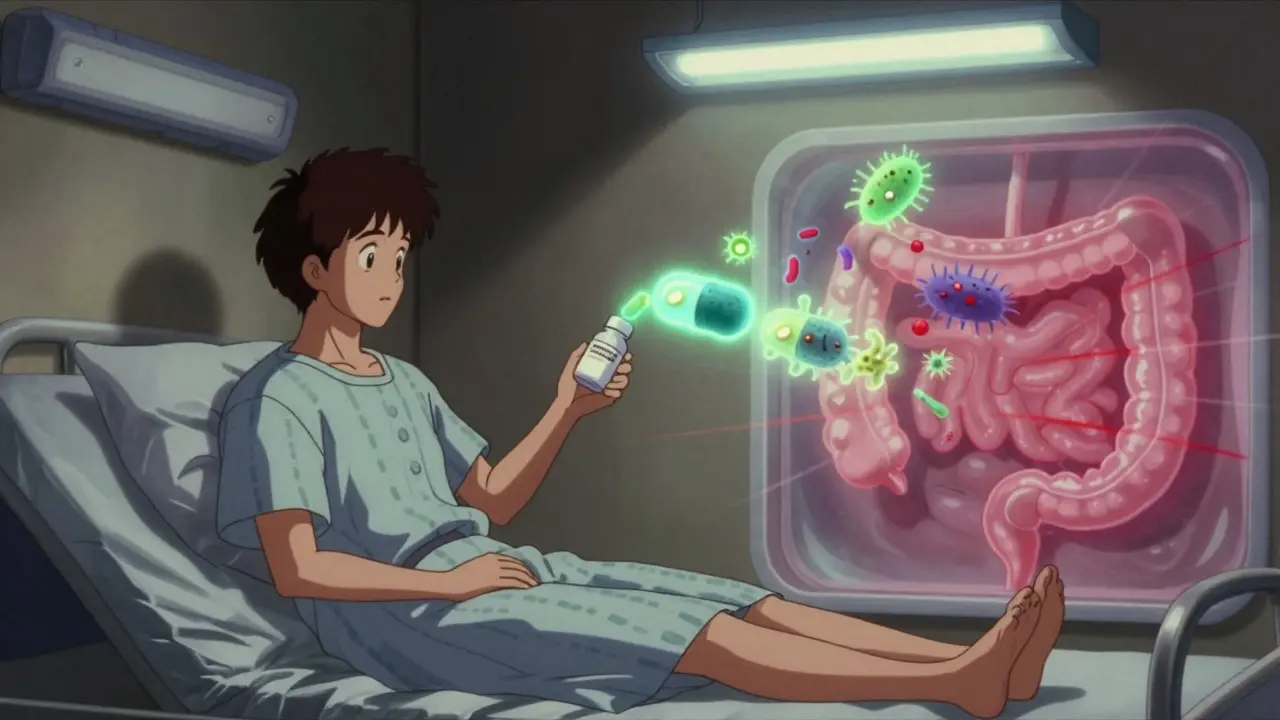
Probiotic Safety Risk Calculator
When you're on immunosuppressants-whether after a transplant, for lupus, rheumatoid arthritis, or cancer treatment-your body’s defenses are turned down. That’s why you’re taking the meds. But what happens when you add a probiotic? It sounds harmless. After all, probiotics are good bacteria, right? Not always. In people with weakened immune systems, even the "good" microbes can turn dangerous.
Why Probiotics Can Be Risky When You’re Immunosuppressed
Probiotics are live microbes-bacteria or yeast-that are meant to support gut health. Common strains include Lactobacillus a genus of bacteria found in 73% of commercial probiotic products, often used to prevent diarrhea, Bifidobacterium a gut-dwelling bacterium present in 68% of probiotics, linked to improved digestion, and Saccharomyces boulardii a yeast strain in 32% of products, used for traveler’s diarrhea and C. diff prevention. These microbes work by crowding out bad bacteria, strengthening the gut lining, and calming immune overreactions.But in someone on immunosuppressants like cyclosporine a calcineurin inhibitor used in organ transplant patients to prevent rejection, tacrolimus another calcineurin inhibitor, commonly prescribed for kidney and liver transplants, or mycophenolate mofetil an antimetabolite used for autoimmune diseases and transplant patients, the immune system can’t fight back if these microbes escape the gut.
That’s the real danger: translocation. The microbes slip through the intestinal wall into the bloodstream. Once there, they can cause sepsis, endocarditis, or fungemia. A 2021 review in Frontiers in Cellular and Infection Microbiology found bloodstream infections from probiotics occur in 0.01% to 0.1% of immunosuppressed patients. That sounds tiny-but when you’re already fragile, even 1 in 1,000 can be deadly.
Who’s at the Highest Risk?
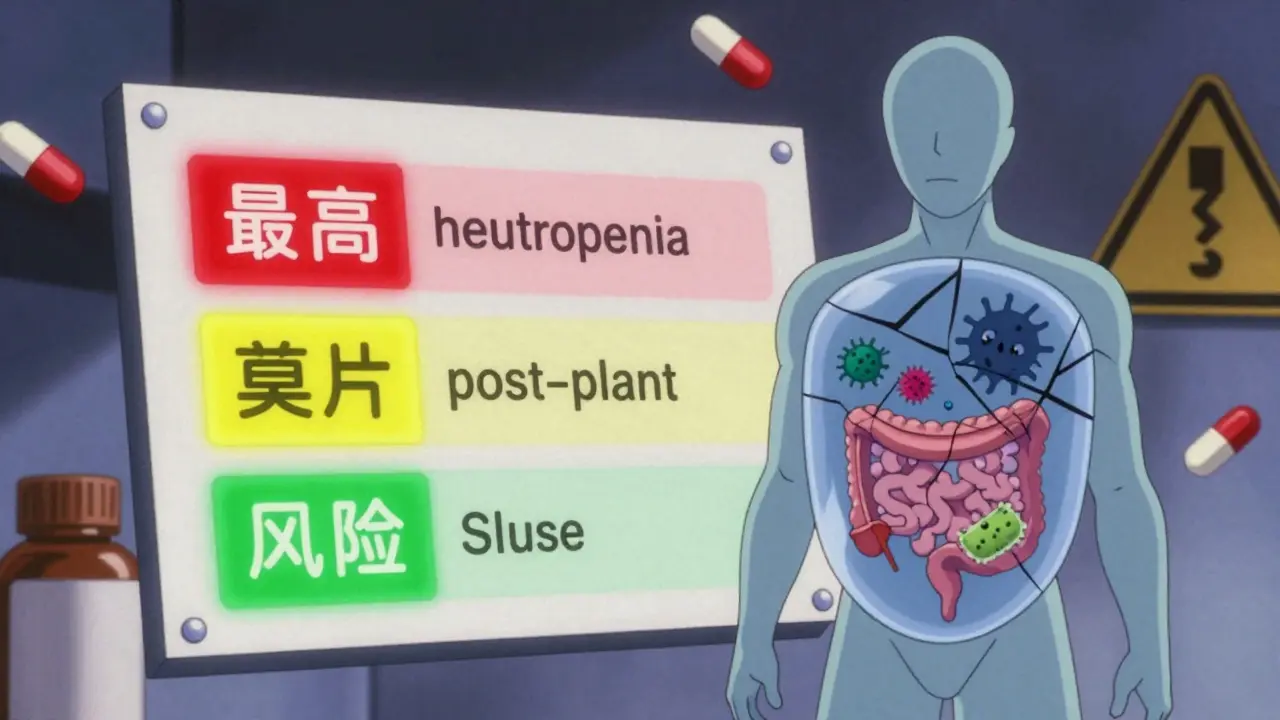
Not everyone on immunosuppressants is equally at risk. Your danger level depends on what you’re taking, how strong your immune system is, and what kind of probiotic you’re using.**Highest risk (absolute contraindication):**
- Neutropenia (absolute neutrophil count below 500 cells/µL)
- Recent stem cell or bone marrow transplant (first 3-6 months)
- Central venous catheters (PICC lines, ports, central lines)
- Severe HIV with CD4 count under 100 cells/µL
For these groups, probiotics aren’t just risky-they’re dangerous. A 2019 study in JAMA Internal Medicine found Saccharomyces boulardii increased catheter-related bloodstream infections by 27%. In another study, 22% of patients who developed Saccharomyces fungemia died. That’s why 87% of U.S. cancer centers ban probiotics during chemotherapy-induced neutropenia.
**Moderate risk (use only with doctor approval):**
- Recent solid organ transplant (liver, kidney, heart-first 3 months)
- Autoimmune disease on two or more immunosuppressants
- CD4 count between 100-200 cells/µL
Here, the risk isn’t zero. A 2020 study in Blood Advances showed bone marrow transplant patients on probiotics had a 4.2-fold higher risk of bacteremia. But for liver transplant patients, a 2022 meta-analysis found probiotics actually reduced infections by 34%-with no increase in serious side effects. So context matters.
**Lower risk (selective use may be okay):**
- Stable autoimmune disease on one medication (like methotrexate or low-dose prednisone)
- CD4 count above 200 cells/µL
- On biologics like rituximab but no recent infection or hospitalization
Some people in this group use probiotics safely for years. But even then, strain matters. Lactobacillus rhamnosus GG has been linked to 28 of the 47 documented probiotic infection cases between 2000 and 2020, according to PMC8706842. That’s more than any other strain.
Which Probiotics Are Most Dangerous?
Not all probiotics are created equal. The yeast Saccharomyces boulardii is the biggest red flag. It’s not a bacterium-it’s a fungus. And fungi are harder for the immune system to kill, especially if you’re immunosuppressed.Multi-strain products are riskier than single-strain ones. A 2022 study in Clinical Microbiology and Infection showed single-strain probiotics had 63% less chance of translocating than blends. Why? More strains mean more chances for one to slip through the gut barrier.
Here’s what to avoid:
- Saccharomyces boulardii if you have a central line
- Multi-strain probiotics (like VSL#3, Culturelle Daily, or Garden of Life) if you’re neutropenic or post-transplant
- Any probiotic labeled "for immune support"-these are often high-dose and untested in immunocompromised people
Even "medical-grade" probiotics like VSL#3, which is used for pouchitis, aren’t automatically safe. Medicare only covers it for one specific condition. For others, it’s a gamble.
What Do Experts Really Say?
There’s no universal rule. Guidelines vary by country and specialty.The European Society for Clinical Nutrition and Metabolism (ESPEN) an international body that sets nutrition standards for hospitalized patients says: avoid probiotics entirely in critically ill immunocompromised patients. Strong recommendation. Moderate evidence.
The American Gastroenterological Association (AGA) a leading U.S. professional society for digestive disease specialists says: maybe use specific strains for hepatic encephalopathy in cirrhosis. Weak recommendation. Low evidence.
Dr. V Stadlbauer from Austria says probiotics are safe in HIV patients and after major surgery-but not for transplant or bone marrow patients. Meanwhile, Optibac Probiotics, a major supplement brand, says: "We do not recommend that individuals who are immunosuppressed take live cultures supplements, due to a lack of clinical evidence."
Here’s the problem: most probiotics aren’t drugs. They’re sold as dietary supplements. The FDA doesn’t require them to prove safety before hitting shelves. That’s why you’ll see probiotics marketed to "boost immunity"-but no warning that they could cause sepsis in someone on tacrolimus.
In July 2023, the FDA issued a safety alert requiring Saccharomyces boulardii products to carry a warning label for immunocompromised users. That’s new. And overdue.
What Should You Do?
If you’re on immunosuppressants and thinking about probiotics, here’s your action plan:- Don’t start without talking to your doctor or infectious disease specialist. Even if your rheumatologist says it’s fine, they might not know the latest transplant data.
- Know your risk level. Are you neutropenic? Do you have a central line? When was your transplant? These details change everything.
- If approved, use only single-strain, low-dose products. Avoid blends. Avoid yeast. Look for strains with published safety data, like Lactobacillus rhamnosus GG ATCC 53103.
- Monitor for fever. If you develop a temperature above 101°F, stop the probiotic immediately and get blood cultures. Probiotic infections can mimic other illnesses.
- Document the exact product. Write down the brand, strain, and CFU count. If you get sick, that info could save your life.
Some people swear by probiotics. A 2022 survey of 1,247 autoimmune patients found 68% said they felt better digestively. But surveys don’t prove safety. Case reports do. And there are plenty: three patients with autoimmune disease developed Lactobacillus bacteremia after probiotics. Two ended up in the ICU.
One Reddit user wrote: "Probiotics gave me sepsis after my kidney transplant in 2021-don’t risk it." Another said: "My rheumatologist approved specific strains and I’ve had no issues in 3 years on methotrexate." Both are true. But one is a warning. The other is an exception.
What’s Coming Next?
Science is catching up. The PROTECT registry a national U.S. study tracking 5,000 immunosuppressed patients using probiotics, launched in 2023 is gathering real-world data from 47 hospitals. Results are expected in 2025.Meanwhile, researchers are testing "postbiotics"-inactivated microbial parts and their metabolic byproducts. These don’t contain live microbes, so they can’t cause infection. A phase 2 trial showed a 40% drop in C. diff infections in immunocompromised patients-with zero adverse events.
And in January 2024, pediatric guidelines were updated to warn that 78% of probiotic infections in kids happened in those with inflammatory bowel disease on biologics. Children aren’t immune either.
The bottom line: probiotics aren’t inherently bad. But when your immune system is turned down, the rules change. What’s helpful for a healthy person can be deadly for you. The safest choice? Wait for evidence. Ask your specialist. And never assume "natural" means "safe."
What Are the Alternatives?
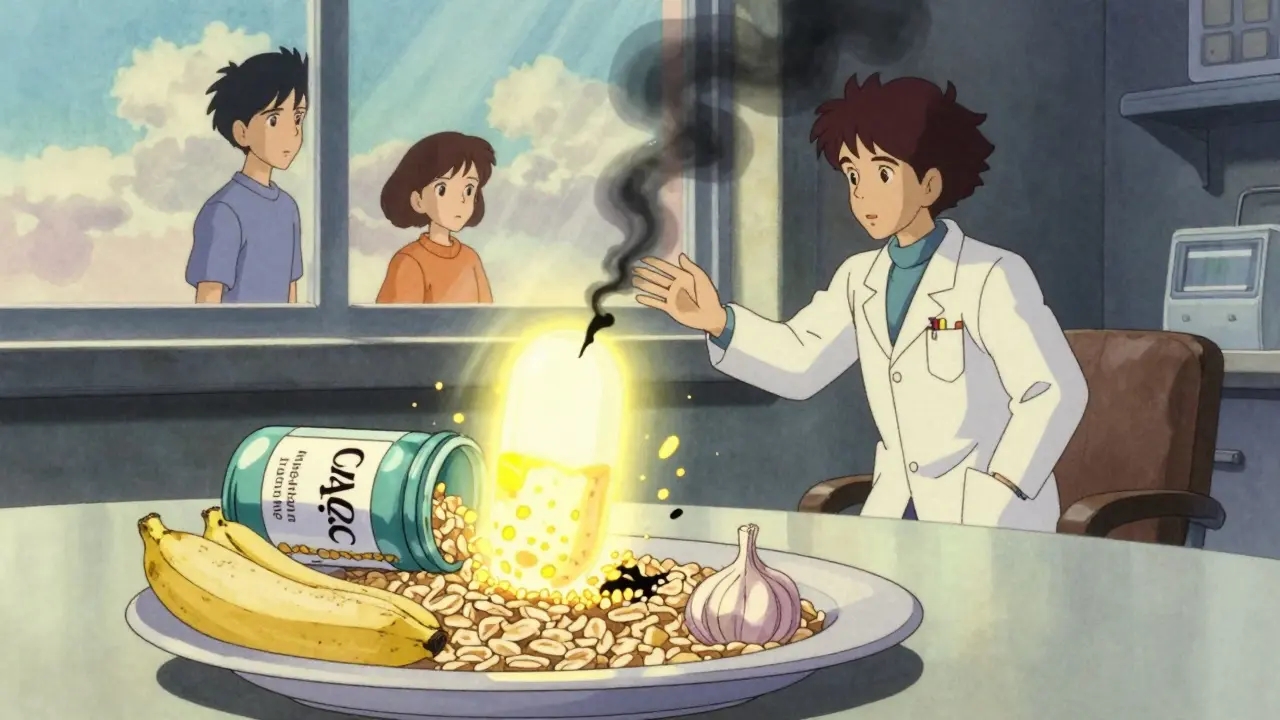
If you need gut support but can’t take probiotics, here are safer options:- Prebiotics: Fiber-rich foods like oats, bananas, garlic, and onions feed your existing good bacteria-no live microbes involved.
- Postbiotics: Emerging supplements with inactivated bacterial components. Still new, but no infection risk.
- Dietary changes: A diverse, plant-rich diet supports gut health naturally. No supplements needed.
- Hydration and movement: Simple, proven ways to improve digestion without risk.
Don’t rush to replace probiotics with another supplement. Focus on food, movement, and sleep. They’re the foundation-and they’re safe.

Henry Sy
January 14, 2026 AT 16:19Probiotics are just Big Pharma’s way of selling you bacteria as medicine. They don’t even test this stuff properly. I took some after my chemo and ended up in the ER with a fever - turned out it was Lactobacillus in my blood. No one warned me. The label just said ‘supports immunity.’ Yeah, right. Like my immune system needed help dying faster.
Sarah Triphahn
January 15, 2026 AT 01:43Wow. So now we’re blaming supplements for people who can’t follow basic medical advice? If you’re immunosuppressed and you take a random probiotic off Amazon without asking your doctor, you’re not a victim - you’re just careless. Stop playing victim and start taking responsibility. Natural doesn’t mean safe. But neither does being stupid.
Vicky Zhang
January 16, 2026 AT 07:00I just want to say - if you’re reading this and you’re on immunosuppressants, please don’t panic. I’ve been on methotrexate for 8 years and I take a single-strain L. rhamnosus GG every morning. My doctor approved it. I track my temps. I avoid anything with yeast. I eat tons of fiber. I feel better. It’s not about fear. It’s about smart choices. You can still care for your gut without risking your life. Talk to your specialist. Get the right strain. And don’t let fear-mongers scare you into doing nothing.
Sarah -Jane Vincent
January 18, 2026 AT 01:04Let me guess - the FDA only acted because someone died and the media got involved. Probiotics have been quietly killing people for decades. You think VSL#3 is ‘medical-grade’? It’s not regulated like a drug. It’s sold in the same aisle as gummy vitamins. The whole system is broken. And don’t even get me started on how the supplement industry bribes influencers to push ‘immune boosters’ on transplant patients. This isn’t negligence - it’s corporate murder with a smiley face on the label.
Jason Yan
January 19, 2026 AT 05:20It’s funny how we treat microbes like villains when they’re just doing what they’ve always done - surviving. The real issue isn’t probiotics. It’s that we’ve created a world where our bodies are so out of balance, we think we need to inject foreign bacteria to fix it. Maybe the problem isn’t the lack of good bugs, but the lack of good food, sleep, and stress management. Probiotics are a band-aid on a bullet wound. We’re treating symptoms instead of systems. And until we fix that, we’re just swapping one risk for another.
shiv singh
January 20, 2026 AT 10:02People like you think you’re smart because you read a study. But you don’t know what’s really going on. My cousin died after a transplant because he took probiotics. The hospital didn’t warn him. The doctor didn’t care. Now you’re sitting there like some expert telling people what to do? Wake up. The system is rigged. They don’t care if you live or die - as long as they get paid. Stop trusting doctors. Stop trusting FDA. Stop trusting supplements. Trust your gut. Literally.
Robert Way
January 21, 2026 AT 02:56so i took probiotics after my kidney transplant and i was fine for 2 years then one day i got sick and they said it was from the lactobacillus but my doc said it was probaly not related so now im confused i just want to know if i should keep taking them or not
Anna Hunger
January 22, 2026 AT 21:20While the anecdotal evidence presented is compelling, the empirical data cited in peer-reviewed journals - including the 2021 Frontiers in Cellular and Infection Microbiology review and the 2022 Clinical Microbiology and Infection study - provides a more reliable framework for clinical decision-making. The risk-benefit ratio must be evaluated on an individualized basis, considering factors such as neutrophil count, presence of indwelling catheters, and specific immunosuppressive regimen. It is imperative that patients consult with both their primary care provider and an infectious disease specialist prior to initiating any live microbial supplement. The absence of regulatory oversight for dietary supplements remains a significant public health concern.
Allison Deming
January 23, 2026 AT 21:44I find it appalling that people are still being sold probiotics as if they’re harmless. This isn’t just about one person’s choice - it’s about a culture that normalizes risk without informed consent. The fact that Saccharomyces boulardii wasn’t labeled with a warning until 2023 is a scandal. And now we’re supposed to trust companies that market ‘immune support’ products to people who are literally dying from immune suppression? We need real regulation. Not warnings. Not ‘maybe consult your doctor.’ We need bans. On multi-strain products. On yeast-based probiotics. On anything sold without a prescription to immunocompromised individuals. This isn’t health care. It’s a marketplace of death.
Susie Deer
January 25, 2026 AT 09:58USA is soft. Other countries don’t let people kill themselves with supplements. We let anyone sell anything. That’s why people die. Stop being weak. Ban probiotics for transplant patients. Full stop. No debate. No ‘maybe.’ Just ban it.
TooAfraid ToSay
January 26, 2026 AT 08:11You think this is about probiotics? Nah. This is about control. The system wants you scared. Wants you dependent. Wants you taking pills you don’t need. But what if the real solution is just eating real food? No supplements. No pills. Just garlic. Kimchi. Sauerkraut. Fermented things your grandma knew about. The science is just a cover. They don’t want you healing naturally. They want you buying their products. Wake up.