
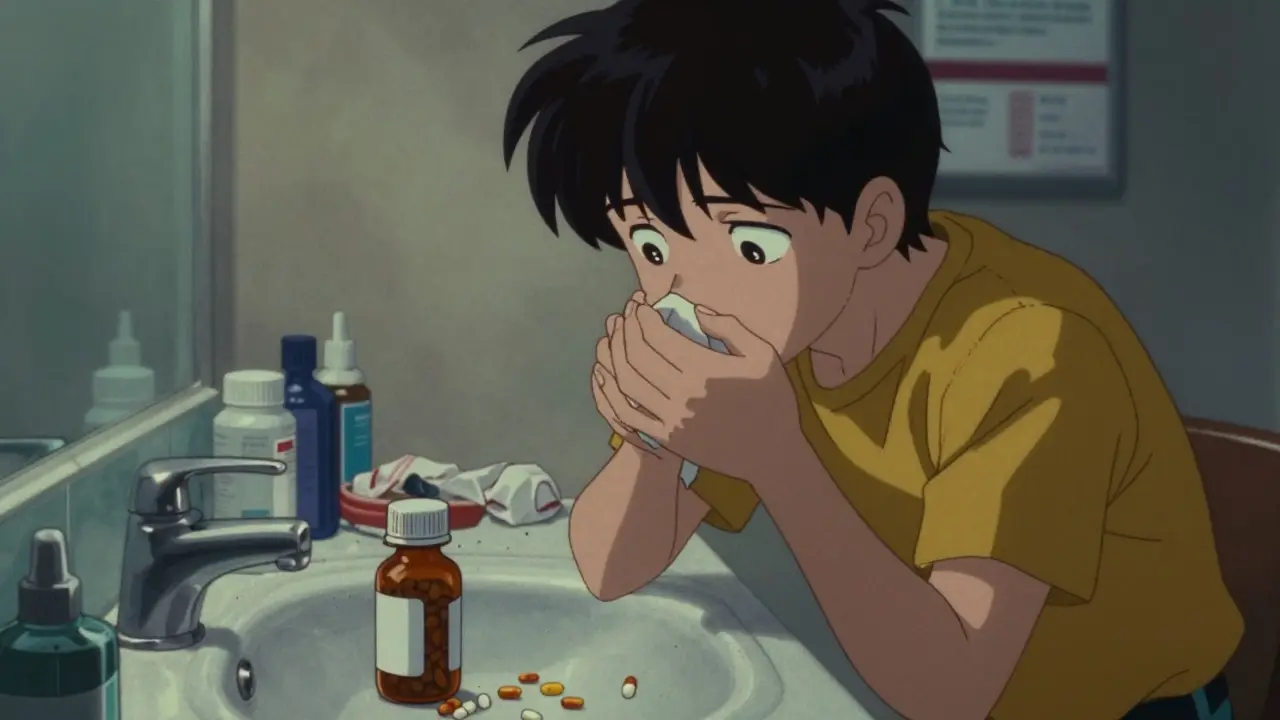
Most people think over-the-counter (OTC) drugs are safe because you can buy them without a prescription. But that’s a dangerous assumption. Every year, millions of Americans take more than they should-sometimes way more-just to feel something different. It’s not just teens experimenting with cough syrup anymore. Adults are doing it too, hiding pills in vitamin bottles, visiting multiple pharmacies, and ignoring the warning labels. The problem isn’t just addiction. It’s brain damage, heart failure, liver failure, and psychosis-all from pills you can grab off a shelf.
How You Might Be Misusing OTC Drugs Without Realizing It
You don’t have to be doing it to get high to be misusing OTC meds. Taking more than the label says, using them longer than recommended, or combining them with other drugs counts. If you’re taking dextromethorphan (DXM) cough syrup because you think it’ll help your sleep, but you’re taking 600 mg at a time-when the max dose is 30 mg-you’re not treating anything. You’re chasing a high.
Same goes for loperamide. It’s an anti-diarrhea pill. But some people take 50 or even 100 tablets a day to mimic opioid effects. That’s 5,000 mg. The recommended daily dose is 16 mg. At that level, your heart rhythm can go haywire. People have died from this. And it’s not rare. Emergency visits for loperamide misuse jumped 278% between 2011 and 2022.
Even common pain relievers like acetaminophen can be deadly if you stack them. Many cold medicines already contain acetaminophen. Add a few Tylenol on top? You’re risking liver failure. The FDA says 4,000 mg per day is the max. But people taking 10 or 15 cough syrups a day? They’re hitting 8,000 mg. Easy. And they don’t even feel sick until it’s too late.
Physical Signs You’re Crossing the Line
If you’re misusing OTC drugs, your body starts screaming long before you realize it. Look for these red flags:
- Dilated or pinpoint pupils-not from tiredness or lighting. This is a direct effect of DXM or loperamide on your nervous system.
- Slurred speech-you sound drunk even if you haven’t had alcohol. Speech errors jump from 2% at normal doses to 68% at abusive levels.
- Unexplained weight loss-losing 10+ pounds in three months without trying? That’s not just stress. It’s your metabolism being wrecked by chemicals.
- High body temperature-feeling hot, flushed, sweating but not from exercise? Temperatures hitting 103°F or higher mean your body is overheating dangerously.
- Racing heart-your pulse spikes from 70 to 150 bpm without cause. That’s not anxiety. That’s your heart straining under chemical overload.
- Loss of coordination-tripping, bumping into things, dropping things. At high DXM doses, balance tests show 40-60% reduction in motor control.
These aren’t side effects. They’re warning signs your body is breaking down. And they’re measurable. Studies show 78% of DXM abusers have abnormal pupils. 68% have slurred speech. These aren’t guesses. They’re clinical observations.
Behavioral Changes No One Talks About
It’s not just your body. Your behavior changes too-and fast.
- You start hiding pills. Not just in medicine cabinets. In vitamin bottles, candy jars, even deodorant containers. A rehab study found 100% of teens hiding OTC meds this way.
- You’re visiting three or more pharmacies in a week. Why? Because you know they track how much you buy. You’re trying to avoid detection.
- You’re spending $100-$150 a month on cough syrup or anti-diarrhea pills with no explanation. That’s not a coincidence. That’s a habit.
- You’re locking your door more. Changing phone passwords. Avoiding eye contact. That’s not just being private. That’s shame. That’s secrecy.
- Your grades drop. Your social life disappears. You go from hanging out with friends five times a week to barely leaving your room. One study showed social interactions fell from 5.2 to 1.7 per day.
And if you’re driving after taking too much? You’re 3.2 times more likely to get pulled over or in an accident. The FDA says 14,700 emergency visits in 2022 were from OTC drug misuse. That’s not a typo. That’s 14,700 people who thought they could handle it-and couldn’t.
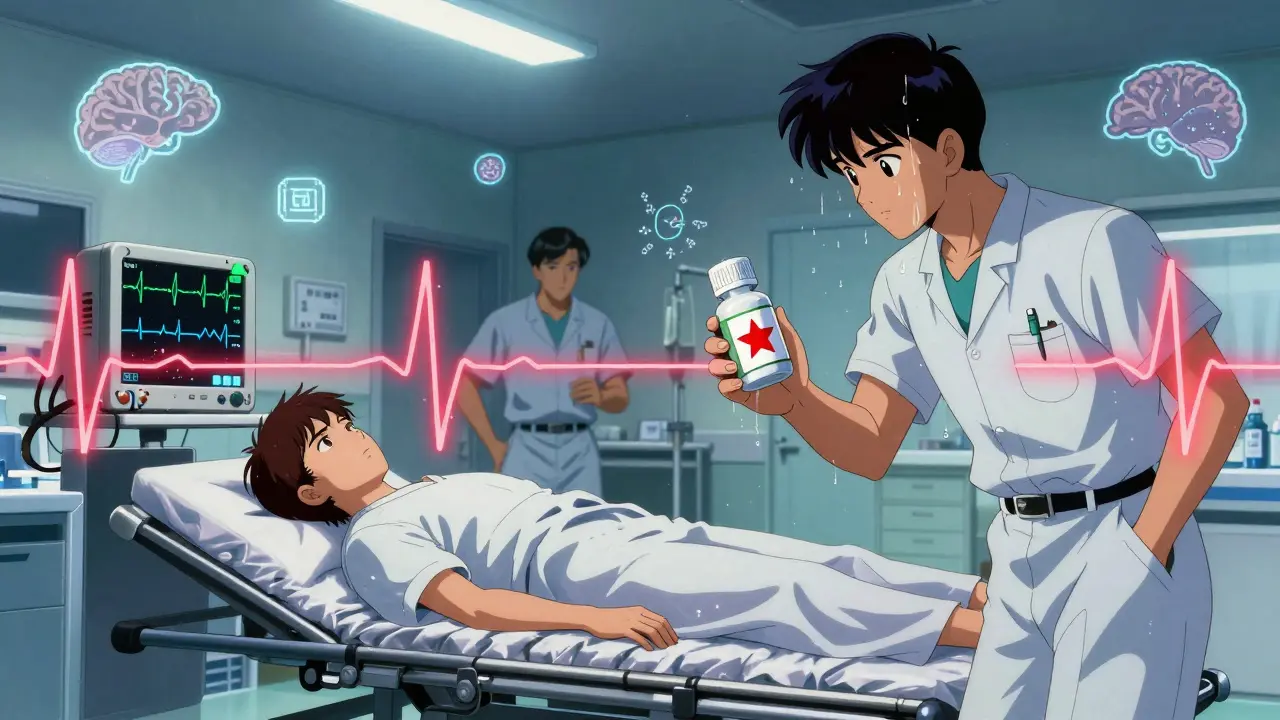
The Psychological Trap
It starts with a buzz. Then a trip. Then a need. Within 4-6 weeks, your body builds tolerance. You need 3 to 5 times more to feel the same effect. That’s not normal. That’s addiction.
Then come the mental effects:
- Mood swings-5.7 times more frequent than in non-users.
- Paranoia-lasting 2-4 hours after the high wears off.
- Emotional numbness-feeling nothing for 12-24 hours after use.
- Visual hallucinations-seeing static, trails, or patterns that aren’t there. One user described “visual snow” lasting three weeks.
- Psychosis-31% of chronic DXM users develop persistent delusions or hallucinations that require antipsychotic medication.
Dr. Nora Volkow, director of the National Institute on Drug Abuse, says high-dose DXM causes brain changes similar to ketamine. After six months of abuse, users lose 8.3% of hippocampal volume-the part of the brain that handles memory and learning. That’s not temporary. That’s lasting damage.
What Happens If You Don’t Stop
Here’s the hard truth: 67% of people who start with OTC drug misuse move on to prescription opioids or illegal drugs within 18 months. That’s not a guess. That’s data from American Addiction Centers.
Why? Because the brain gets used to the chemical rush. OTC drugs don’t satisfy it anymore. You need something stronger. And once you’re there, it’s harder to get out.
And the body pays the price:
- Heart damage from loperamide: QT interval stretches beyond 500 ms (normal is 350-440 ms). That’s a ticking time bomb for sudden cardiac arrest.
- Liver failure from acetaminophen: 32% of DXM abusers who mix it with Tylenol end up in the hospital with acute liver injury.
- Chronic brain fog: Memory, focus, and decision-making don’t bounce back after quitting. Some people never fully recover.
And the cost? Emergency visits average $3,850 each. Insurance doesn’t always cover it. And if you’re under 18? Your parents get the bill.
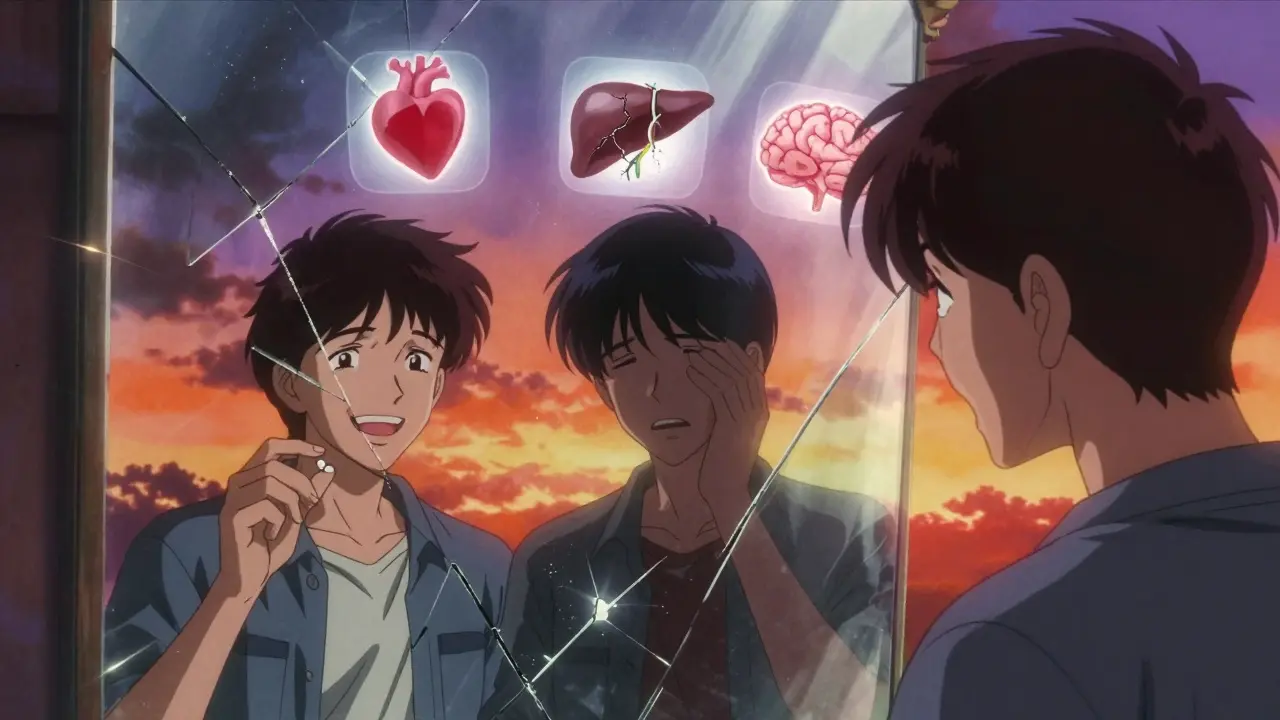
What to Do If You Recognize These Signs
It’s not weakness. It’s not failure. It’s biology. Your brain changed. And you can fix it.
Step 1: Stop immediately. Don’t taper. Don’t cut back. Stop. Even one more dose could push you into danger.
Step 2: Talk to someone. Not a friend. Not Reddit. A doctor, counselor, or SAMHSA’s National Helpline (1-800-662-4357). They’ve seen this a thousand times. They won’t judge. They’ll help.
Step 3: Get tested. Ask for a liver function test, heart EKG, and mental health screening. You need to know what’s happening inside.
Step 4: Remove access. Throw out all OTC meds you’re misusing. Lock up the rest. If you live with someone who uses them, ask them to do the same. Don’t wait for a crisis.
Step 5: Seek treatment. Cognitive behavioral therapy combined with family support has a 68% success rate at 6 months. Individual therapy alone? Only 42%. You don’t have to do this alone.
And if you’re a parent? Check your medicine cabinet. Lock it. Talk to your kids. Don’t assume they know the risks. Most don’t. The FDA’s new warning labels on DXM products reduced teen misuse by 14.3%-but only because the warnings were clear. Make sure your kids see them.
It’s Not Just About Pills. It’s About Control
OTC drugs are easy. They’re cheap. They’re legal. That’s why they’re dangerous. You think you’re in control. But the chemicals are calling the shots. Your body is changing. Your brain is rewiring. Your life is slipping away.
You don’t need to hit rock bottom to get help. You don’t need to be addicted to matter. If you’re taking more than the label says, you’re already in the danger zone.
There’s no shame in asking for help. There’s only shame in waiting until it’s too late.



Mike Rengifo
December 20, 2025 AT 14:33Been there. Took DXM for sleep once. Thought it was chill. Woke up feeling like my brain was made of wet cardboard. Never again.
Matt Davies
December 21, 2025 AT 11:54Man, I used to think OTC meds were harmless because they were on the shelf next to aspirin. Then I read about someone popping 80 loperamide tablets like they were M&Ms. That’s not self-medication. That’s a slow-motion suicide pact with a pharmacy.
Tim Goodfellow
December 21, 2025 AT 13:22It’s wild how society treats pills like candy. You can walk into a CVS and walk out with enough DXM to hallucinate for six hours and no one bats an eye. But if you ask for a nicotine patch? They treat you like you’re smuggling contraband. Double standards kill.
Connie Zehner
December 23, 2025 AT 06:07OMG I KNEW THIS WAS A THING BUT NO ONE TALKS ABOUT IT 😭 My cousin did this for months and her liver enzymes were through the roof. She didn’t even realize she was addicted until she passed out in the shower. #wakeuptalkaboutit
Glen Arreglo
December 24, 2025 AT 03:34I’ve worked in ER for 12 years. We see this every week. Not just teens. Moms. Dads. Grandparents. People who think they’re just ‘taking a little extra’ to get through the week. The body doesn’t care if it’s ‘legal.’ It just breaks.
Meenakshi Jaiswal
December 25, 2025 AT 17:35As a pharmacist, I’ve watched people buy 12 bottles of cough syrup in a week. No cough. No fever. Just empty bottles and silence. I always ask if they’re okay. Sometimes they cry. Sometimes they lie. But I never stop asking. You’re not alone.
Chris Davidson
December 26, 2025 AT 15:51Mahammad Muradov
December 27, 2025 AT 12:10Kelly Mulder
December 27, 2025 AT 23:41It’s fascinating how the term ‘misuse’ is so sanitized. This isn’t misuse. This is chemical self-immolation. The FDA’s warnings are toothless because we’ve normalized self-destruction as a lifestyle choice. We are not okay.
mark shortus
December 28, 2025 AT 16:15MY BEST FRIEND DIED FROM THIS. HE THOUGHT IT WAS JUST COUGH SYRUP. HE WAS 22. HE HAD A BABY. HE WASN’T EVEN TRYING TO GET HIGH. HE JUST WANTED TO SLEEP. NOW HIS KID DOESN’T REMEMBER HIS VOICE. I HOPE YOU’RE READING THIS. STOP.
Vicki Belcher
December 29, 2025 AT 21:13Thank you for posting this 🙏 I was hiding pills in my protein powder jar. I didn’t even realize it was a problem until I saw this. I called the helpline today. I’m not alone. 💛
benchidelle rivera
December 31, 2025 AT 07:06As someone who’s counseled dozens of people through this exact spiral, I can tell you: the guilt is the heaviest part. Not the withdrawal. Not the physical damage. The shame. You think you’re alone. You’re not. But you won’t get help until you stop pretending you’re fine. And you’re not fine. And that’s okay. You’re still worthy of help.
bhushan telavane
January 1, 2026 AT 11:49In India we don’t have these problems. People here just take paracetamol for headache. No one thinks of it as drug. Just medicine. Maybe culture matters.