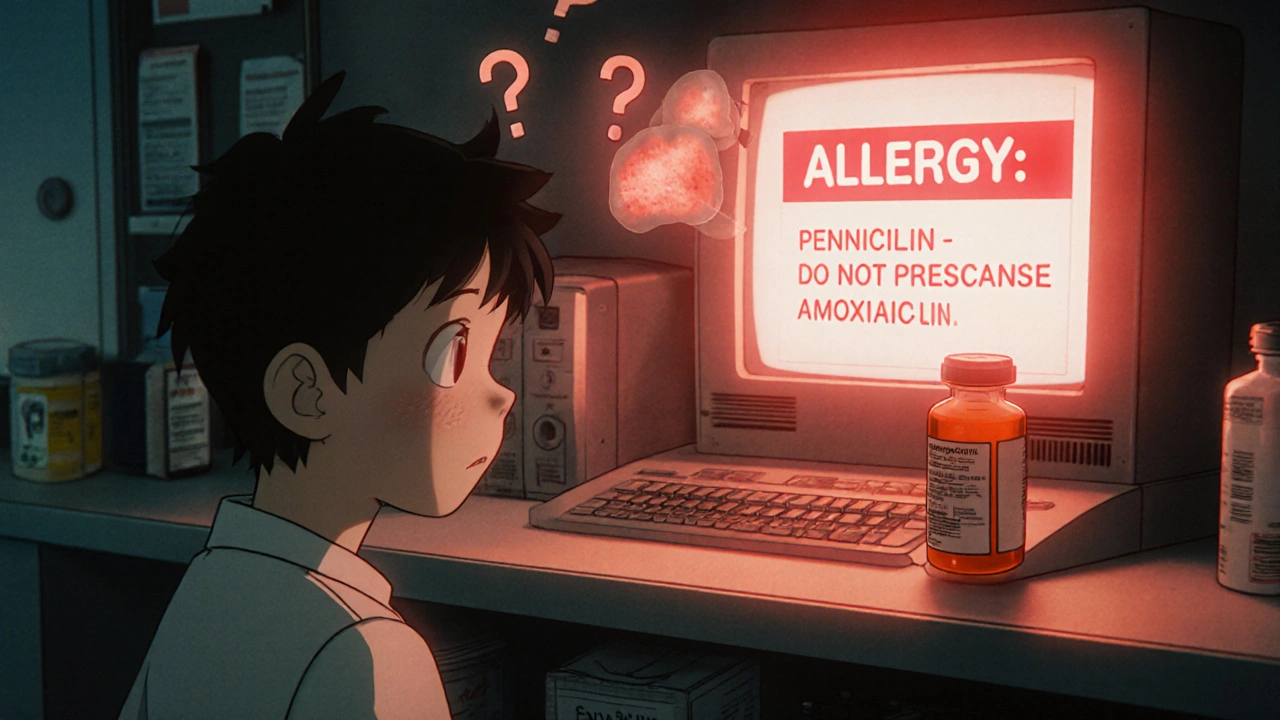
When a pharmacy system flashes an allergy alert override, a warning that a prescribed drug may cause a harmful reaction based on your known allergies or past reactions. Also known as drug interaction alert, it's meant to stop dangerous mistakes before they happen. But too often, these alerts get ignored—clicked through without a second thought. That’s not just risky, it’s common. Studies show over 30% of serious medication errors happen because someone overrode an alert without fully understanding why it appeared.
These alerts don’t appear out of nowhere. They’re triggered by real data: your recorded penicillin allergy, your history of anaphylaxis to sulfa drugs, or even a past reaction to a generic version of a medication you didn’t even know was related. The system flags it because drug interactions, when two or more medications react in a way that reduces effectiveness or increases side effects can turn a simple prescription into a hospital visit. And it’s not just about obvious allergies. Sometimes, it’s about hidden risks—like how medication safety, the practice of preventing harm from drugs through proper use, monitoring, and communication requires knowing that a common painkiller might worsen your asthma, or that an antibiotic could trigger a dangerous drop in blood pressure if you’re on a beta-blocker.
Overriding an alert isn’t always wrong. Sometimes, your doctor knows you’ve taken the drug before with no issue. But too many overrides happen without that context. That’s why it’s critical to ask: Why is this alert here? Did I have a real reaction before? Is there a safer alternative? The system doesn’t know your full story—only what’s typed into your record. You do. And when you override, you’re taking responsibility for that gap.
Look at the posts below. They cover real cases where people didn’t realize a supplement like ashwagandha could interfere with thyroid meds, or how fiber supplements can block absorption of levothyroxine. These aren’t allergies in the classic sense—but they’re still dangerous interactions that should trigger caution. Same goes for MAOIs and tyramine-rich foods, or green tea affecting warfarin. These aren’t just side effects—they’re preventable events that systems try to warn you about. When you override, you’re not just skipping a pop-up. You’re skipping a safety net.
What you’ll find here aren’t abstract theories. These are real stories, real risks, and real fixes from people who’ve been there. From anticholinergic drugs causing delirium in seniors, to corticosteroids quietly increasing ulcer risk when mixed with NSAIDs—each post shows how a single override, or lack of awareness, can change everything. Don’t treat these alerts like noise. Treat them like a conversation your body is trying to have. And if you’re overriding one, make sure you’re doing it with your eyes wide open.