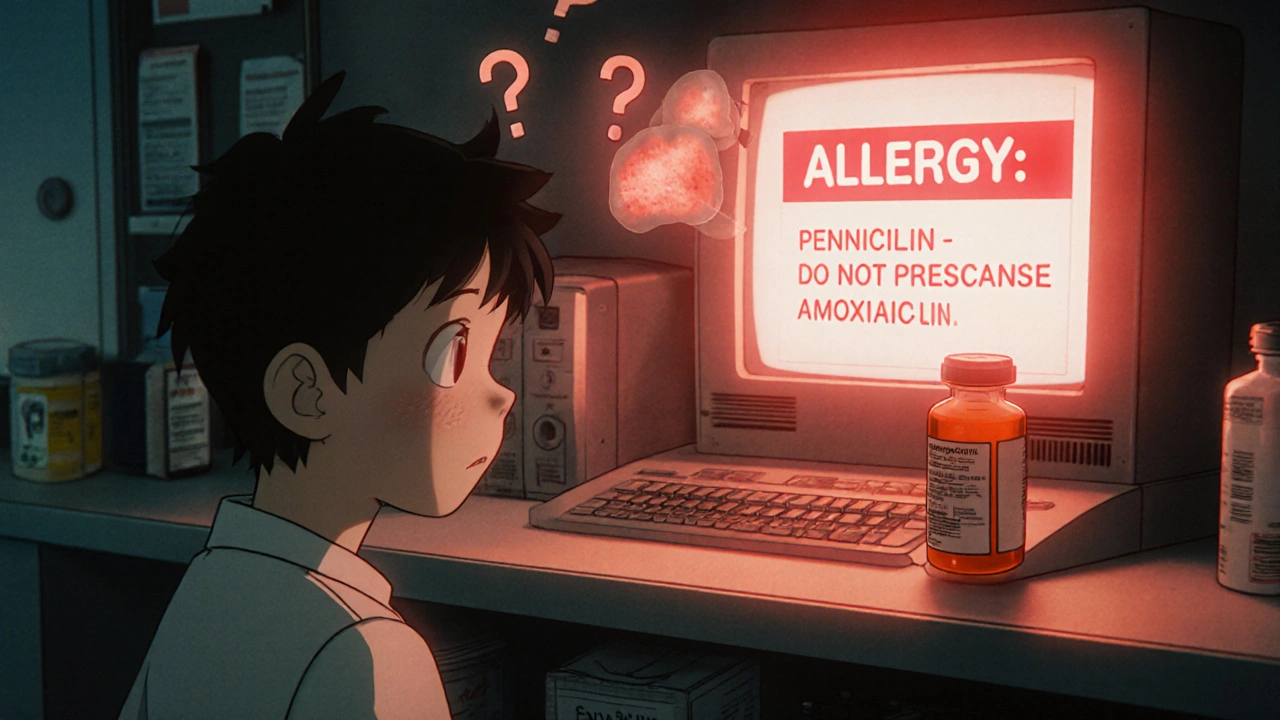
When your doctor sees you for a new prescription, they don’t just guess what might cause a reaction—they check your EHR allergy system, a digital record that logs known allergies, adverse reactions, and cross-sensitivities across your medical history. Also known as allergy alert system, it’s the silent guard that stops a life-threatening reaction before it starts. This isn’t just a list of "allergic to penicillin." It’s a smart, real-time tool that connects your past reactions to new prescriptions, flags dangerous combinations, and even warns about foods or chemicals linked to your history.
Behind the scenes, an EHR allergy system works with clinical decision support, software that analyzes your data and suggests safe alternatives when risks are detected. If you’re on levothyroxine and your chart shows a reaction to sulfites, the system might flag a filler in a generic version. If you’ve had a rash from amoxicillin, it won’t just block that drug—it might also warn against related antibiotics like cefadroxil or cephalexin, because cross-reactivity is real. These systems don’t just store data—they use it to protect you.
But the system only works if the data is accurate. Many patients don’t realize that "allergy" can mean anything from a mild itch to anaphylaxis. A poorly documented reaction—like saying "I’m allergic to ibuprofen" when you just got a stomachache—can lead to unnecessary avoidance of safe drugs. That’s why your EHR allergy system needs your input. Did Benadryl help your rash? Did you ever get swelling after a vaccine? These details matter. And when you see a specialist, they should check your EHR—not just ask you to remember.
It’s not perfect. Sometimes alerts pop up too often, and doctors start ignoring them. But when used right, an EHR allergy system cuts down on hospitalizations from drug reactions. It’s why people on lithium or warfarin don’t get accidental interactions with supplements like ashwagandha or green tea. It’s why seniors don’t end up with delirium from anticholinergic drugs they’ve been told to avoid. And it’s why you can safely take fiber supplements without worrying they’ll block your thyroid meds—if the system knows what you’re on.
Below, you’ll find real-world guides on how medications interact with your body, what to watch for, and how to make sure your health records are working for you—not against you. These aren’t theory pieces. They’re from people who’ve been there—whether it’s managing side effects from antidepressants, avoiding duplicate prescriptions, or understanding why your doctor changed your dose after switching generics. The EHR allergy system is only as strong as the data in it. And you hold the pen.