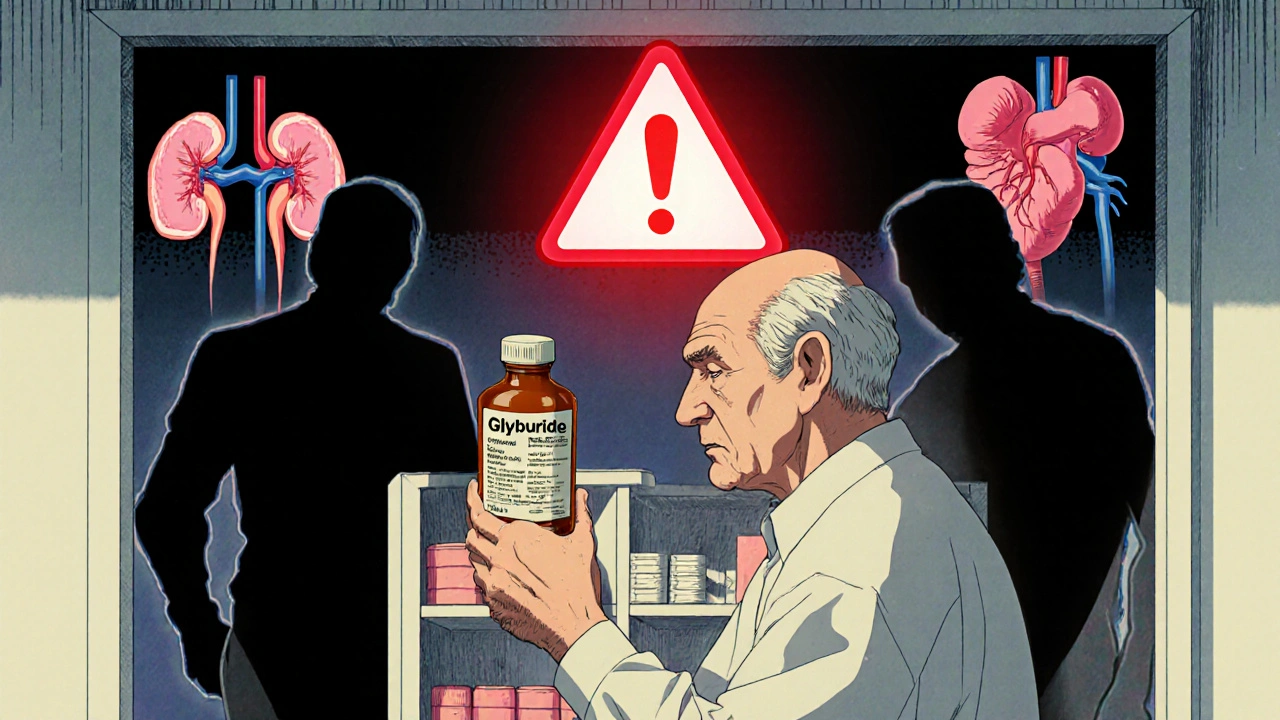
When you take glyburide, a sulfonylurea medication used to lower blood sugar in type 2 diabetes. Also known as glibenclamide, it works by telling your pancreas to make more insulin. But this power comes with real dangers — especially if you’re older, eat irregularly, or take other meds. The biggest risk isn’t a rare reaction. It’s hypoglycemia, dangerously low blood sugar that can cause confusion, sweating, seizures, or even coma. Studies show nearly 1 in 5 people on glyburide have at least one low-blood-sugar episode in a year. And it doesn’t always come with warning signs. You might feel fine until you suddenly can’t think straight.
Some people are at higher risk. If you’re over 65, skip meals, drink alcohol, or have kidney problems, glyburide sticks around longer in your body. That means your blood sugar can drop harder and stay low longer. It’s not just about the dose — it’s about how your body handles it. And if you’re taking other drugs like beta-blockers, commonly used for high blood pressure or heart conditions, they can hide the symptoms of low blood sugar, like a racing heart, so you don’t know you’re in trouble. Even NSAIDs, like ibuprofen or naproxen, can boost glyburide’s effect and push you into danger.
There’s no way around it: glyburide works — but it’s not safe for everyone. Many doctors now avoid it as a first choice because newer diabetes drugs don’t carry the same risk of lows. If you’re on glyburide and haven’t had a recent blood sugar check, you’re playing with fire. Keep fast-acting sugar on hand. Wear a medical ID. Talk to your doctor about switching if you’ve had even one scary low. This isn’t about fear. It’s about control. Below, you’ll find real stories and data from people who’ve dealt with these risks — and what they learned to stay safe.