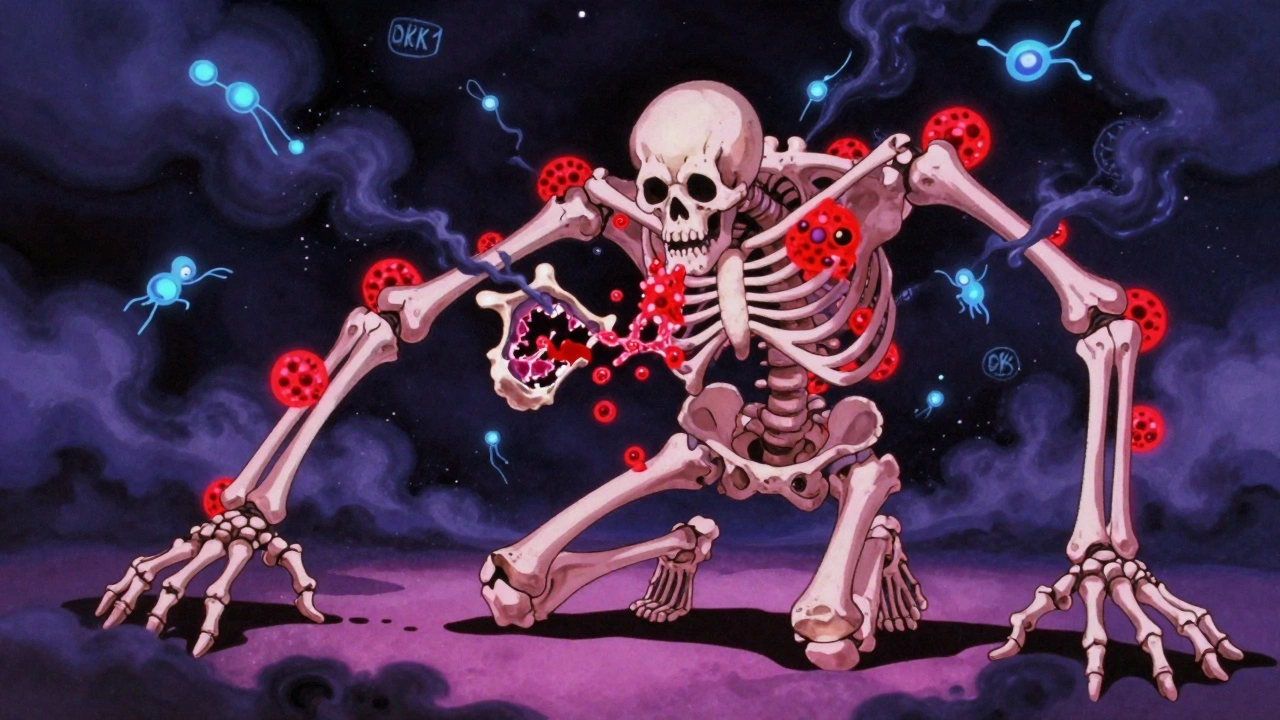
When multiple myeloma bone disease, a condition where cancerous plasma cells destroy bone tissue. It's not just about pain—it's about bones breaking without injury, nerves getting crushed, and kidneys failing from calcium overload. This isn't a side effect—it's a core part of the disease. Myeloma cells take over the bone marrow and send out signals that shut down bone builders (osteoblasts) while waking up bone destroyers (osteoclasts). The result? Holes in your bones called osteolytic lesions, areas where bone has been eaten away by cancer activity. These aren't visible on regular X-rays until they're already large, which is why early detection matters.
People with this condition often end up with fractures from simple actions—bending over, coughing, even stepping off a curb. Spine fractures are common and can lead to nerve damage or paralysis. High calcium levels from crumbling bones cause fatigue, confusion, and kidney problems. And here's the catch: many doctors still treat this like a side effect instead of a disease driver. But bone health in cancer, how well bones are protected during cancer treatment directly impacts survival. Studies show patients who get bone-targeted drugs early live longer and stay mobile longer.
You won't find this in every myeloma guide, but it's critical: drugs like zoledronic acid and denosumab don't just ease pain—they stop bone destruction. Radiation helps localized damage. Even exercise, when done safely, can strengthen what's left. And if you're on steroids or chemotherapy, you're at higher risk—those drugs weaken bones further. This isn't about supplements or calcium pills alone. It's about a coordinated plan: monitoring bone density, preventing falls, using the right drugs at the right time.
Below are real, practical posts from people who've lived through this. You'll find advice on managing pain without opioids, how to talk to your doctor about bone scans, why some treatments work better than others, and what to watch for when your bones start hurting. No fluff. Just what works.