

Anal fissures are more common than most people realize - and far more painful. You might think it’s just a minor irritation, but the sharp, burning pain during and after a bowel movement? That’s not normal. It’s a small tear in the lining of your anus, and if it doesn’t heal fast, it can turn into a cycle of pain, muscle spasms, and slow recovery. The good news? Most fissures heal on their own - but only if you treat them right.
What Exactly Is an Anal Fissure?
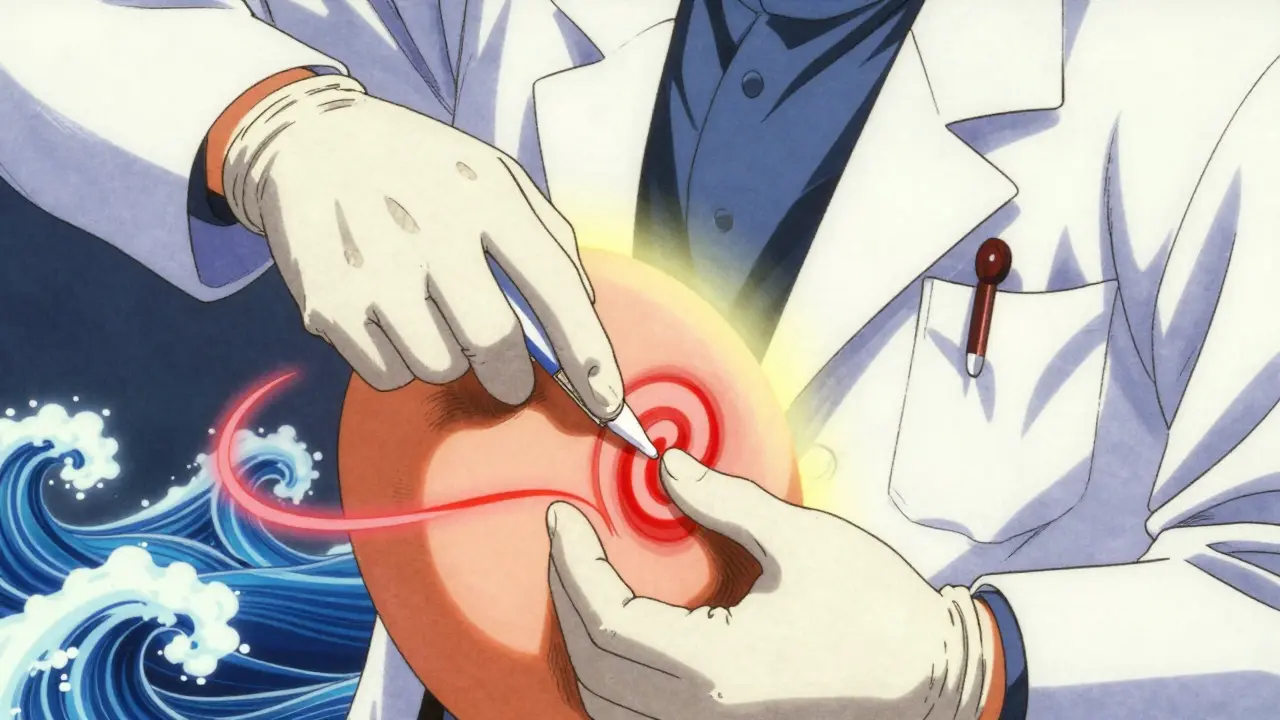
An anal fissure is a tiny crack or split in the moist tissue (mucosa) that lines the anal canal. It usually happens right after passing a hard or large stool. About 90% of these tears appear in the back of the anus (posterior midline), and the rest show up in the front (anterior midline). You’ll likely notice bright red blood on the toilet paper or in the bowl, along with a stabbing pain that can last for minutes or even hours after you go.
It’s not just about discomfort - it’s a physical loop. The tear hurts, your body reacts by tightening the internal anal sphincter muscle to protect the area. That muscle normally rests at 15-20 mmHg pressure. When it spasms, pressure spikes to 25-30 mmHg. That tightness cuts off blood flow to the tear by 40-60%, which stops healing. So the pain makes the muscle clamp down, and the clamping down keeps the tear from healing. It’s a trap.
Why Do Fissures Happen?
The main cause? Constipation and straining. Passing hard stools is the #1 trigger. But it’s not just that. Chronic diarrhea, childbirth, anal intercourse, and even inflammatory bowel diseases like Crohn’s can cause fissures. In infants, it’s common - about 64 out of every 1,000 babies develop one in their first few months. In adults, the peak age is 20-40, with equal rates in men and women - until after 50, when women are three times more likely to get them, mostly due to childbirth.
Here’s something most people don’t know: up to 10% of cases labeled as fissures turn out to be something else - like Crohn’s disease, anal cancer, or an infection. That’s why if your pain doesn’t improve in a few weeks, or if you have other symptoms like weight loss, fever, or bleeding from other areas, you need a proper checkup.
Acute vs. Chronic Fissures: What’s the Difference?
Acute fissures are fresh - less than six to eight weeks old. They look like clean, linear tears. These heal on their own in 80-90% of cases with simple care.
Chronic fissures last longer than eight weeks. They’re not just old tears - they’ve changed. You’ll often see three signs: the tear itself, a small skin tag near the opening (called a sentinel pile), and a swollen anal papilla inside. These are signs your body has given up on healing naturally. The muscle stays tight, blood flow stays low, and the wound just sits there.
Doctors use pressure measurements to decide if you’re stuck in the chronic cycle. If your internal sphincter pressure is above 25 mmHg, your chances of healing without treatment drop sharply. Below that? You’ve got a good shot at healing in six weeks with diet and baths alone.
Healing Strategies: Start With the Basics
Before you reach for creams or surgery, fix the root cause: your stool. If your poop is hard, you’re tearing the tissue again every time you go. That’s why the first step is always dietary.
- Fiber: Aim for 25-35 grams daily. That’s about 2 cups of cooked lentils, 1 cup of chia seeds, or 3 medium pears with skin. Most Americans get only 15 grams. Start slow - adding too much too fast can cause bloating. Use psyllium husk if you struggle to hit your target.
- Water: Drink 8-10 glasses a day. Fiber without water = harder stools. Your body needs the fluid to soften the bulk you’re adding.
- Sitz baths: Sit in warm (not hot) water for 10-20 minutes, 3-4 times a day, especially after bowel movements. This relaxes the sphincter muscle and increases blood flow to the area. Many people feel relief within days.
The Cleveland Clinic recommends a simple 4-step plan: increase fiber over a week, drink plenty of water, take sitz baths after every bowel movement, and apply lidocaine ointment (5%) right before going to the bathroom to numb the pain.
Topical Medications: What Works and What Doesn’t
If diet and baths aren’t enough, topical treatments are the next step. They work by relaxing the sphincter muscle so blood can reach the tear.
Nitroglycerin ointment (0.2-0.4%) - This has been around for years. It works in about half the cases, but it comes with a big downside: headaches. Up to a third of users get them, and some can’t tolerate the side effect.
Diltiazem (2%) and nifedipine (0.3%) - These calcium channel blockers are now preferred by many specialists. They heal 65-75% of fissures with fewer headaches. The NHS says patients often feel pain drop within 72 hours. Apply about 1.25 inches of ointment on your finger, gently insert it 1 inch into the anus, twice a day for 8 weeks.
Botox injections - Injecting botulinum toxin directly into the sphincter muscle temporarily paralyzes it. Healing rates are 50-80%, but the effect fades after a few months. About 40% of people have a recurrence within a year. It’s a good middle ground if you want to avoid surgery but topical creams haven’t worked.
Important note: Don’t skip the application technique. A 2023 NHS review found that 29% of topical treatment failures happened because patients didn’t insert the ointment deep enough or didn’t use it consistently.
Surgery: When Everything Else Fails
Surgical sphincterotomy is the gold standard for chronic fissures. It’s a quick outpatient procedure - 15-20 minutes under local anesthesia. The surgeon makes a tiny cut in the internal sphincter muscle to reduce pressure. Success rates? 92-98%. Most people go back to work in 3-4 days.
But there’s a catch. About 14% of people develop minor fecal incontinence - usually just a little trouble holding gas or occasional spotting. It’s rarely severe, but it’s a trade-off. Many patients say the trade-off is worth it: no more daily pain, no more avoiding social events, no more anxiety before bowel movements.
Long-term, surgical rates have dropped from 12% in 2010 to 8% in 2023 because better creams and patient education mean fewer people need surgery. Still, if you’ve tried everything and you’re suffering, surgery is the most reliable fix.
What Doesn’t Work - and Why
Some common advice is misleading. Here’s what to avoid:
- Overdoing fiber. More than 40 grams a day can make stools bulkier and harder to pass, worsening the tear. Stick to 25-35 grams unless your doctor says otherwise.
- Using laxatives long-term. Stimulant laxatives like senna can make your bowels dependent. Stick to fiber and osmotic agents like polyethylene glycol if you need help.
- Ignoring the pain. If it’s been more than 8 weeks, don’t wait. Chronic fissures don’t heal on their own - they need intervention.
- Self-diagnosing. If you have bleeding and no clear cause like constipation, get checked. Cancer and Crohn’s can mimic fissures.
One study found that 83% of Reddit users with fissures were initially misdiagnosed by their primary care doctor. Average time to correct diagnosis? Over 11 days. Don’t be one of them.

Real-Life Impact: More Than Just Pain
This isn’t just a physical issue. It’s a life disruptor. Mayo Clinic surveys show 78% of patients feel sharp, knife-like pain that lasts 30-90 minutes after bowel movements. For 42%, the pain radiates to the lower back or thighs. About 65% of people avoid social plans for days after going to the bathroom. Some skip workouts. Others stop dating. The fear of pain becomes a constant shadow.
But recovery changes everything. NHS patient feedback shows 76% using diltiazem saw pain drop within 3 days and healed fully in about 6 weeks. That’s not just a medical win - it’s a quality-of-life reset.
What’s New in 2025?
Research is moving fast. In 2023, Johns Hopkins tested stem cell injections in 32 patients with stubborn fissures. After 8 weeks, 73% healed - no surgery, no drugs. It’s still experimental, but promising.
The European Society of Coloproctology updated its guidelines in June 2023, now recommending diltiazem as the first-line topical treatment over nitroglycerin because of its better safety profile.
But the biggest threat? Our diet. Dr. Justin Maykel of UMass Chan Medical School warns that rising obesity and falling fiber intake could increase fissure cases by 15-20% in the next decade. We’re eating more processed food and less vegetables, beans, and whole grains. That’s a recipe for more tears.
When to See a Doctor
Try the basics for 2-4 weeks: fiber, water, sitz baths. If you’re not better, or if the pain is getting worse, see a doctor. If you’re over 50 and have new rectal bleeding, get checked immediately - don’t assume it’s just a fissure.
Don’t wait because you’re embarrassed. Colorectal specialists see this every day. They’ve heard it all. Your comfort is their job.
Can anal fissures heal on their own?
Yes, most acute fissures (those under 6-8 weeks old) heal on their own with simple lifestyle changes: eating more fiber, drinking plenty of water, and taking sitz baths. About 80-90% of these cases resolve without medication or surgery. But if the pain lasts longer than eight weeks, it’s likely chronic and needs targeted treatment to break the pain-spasm cycle.
What’s the fastest way to heal an anal fissure?
The fastest path is combining high-fiber diet (25-35g daily), increased water intake (8-10 glasses), and daily sitz baths. For faster relief, topical diltiazem or nifedipine ointment can reduce pain within 72 hours and lead to healing in 6-8 weeks. Surgery (sphincterotomy) offers the quickest permanent fix - healing in days - but is reserved for chronic cases that don’t respond to other treatments.
Is surgery the best option for chronic fissures?
For chronic fissures that haven’t healed after 8-12 weeks of conservative treatment, surgical sphincterotomy is the most effective option, with success rates of 92-98%. It directly reduces the high muscle pressure that prevents healing. While there’s a small risk (about 14%) of minor fecal incontinence, most patients report dramatic improvement in pain and quality of life. It’s the gold standard when other treatments fail.
Can I use over-the-counter creams for anal fissures?
Over-the-counter creams like hemorrhoid ointments or lidocaine can help numb the pain temporarily, but they don’t treat the root cause. For actual healing, you need prescription topical medications like diltiazem or nifedipine that relax the internal sphincter muscle. Lidocaine is useful before bowel movements to reduce pain, but it won’t heal the tear.
How long does it take to recover from a fissure?
Acute fissures typically heal in 4-8 weeks with proper care. Chronic fissures take longer - 6-12 weeks with topical treatments, or just days after surgery. Full tissue recovery after surgery can take up to 6 weeks, even if pain goes away sooner. Patience and consistency with diet and hygiene are key.
Can stress or anxiety cause anal fissures?
Stress and anxiety don’t directly cause fissures, but they can worsen them. Stress can lead to constipation or diarrhea, both of which increase strain on the anal area. Anxiety may also heighten your perception of pain and cause you to tense your pelvic muscles, making healing harder. Managing stress through relaxation or therapy can support recovery.
Are anal fissures dangerous?
Anal fissures themselves are not dangerous, but they can be a sign of something more serious. Persistent bleeding, unexplained weight loss, or a history of inflammatory bowel disease could point to Crohn’s disease, colorectal cancer, or infection. If a fissure doesn’t heal with standard treatment, or if symptoms change, see a specialist for further testing.
Healing an anal fissure isn’t about quick fixes - it’s about breaking a cycle. It’s about eating differently, sitting in warm water, and being patient. It’s about listening to your body when it screams during a bowel movement. The pain will go away. But only if you do the work.

Hakim Bachiri
December 28, 2025 AT 08:08Look, I don’t care what some ‘medical journal’ says-this is America. We don’t need fancy ointments or sitz baths. If your butt hurts, you’re just weak. I’ve been pooping hard since I was 12, and I never needed a ‘psyllium husk’-I just ate a steak, held my breath, and pushed like a real man. Also, Botox? That’s for Hollywood moms who can’t even lift their own grocery bags. We’ve got better things to spend money on than injecting poison into our sphincters. 😤
Gran Badshah
December 30, 2025 AT 04:49bro i had one last year after eating too much spicy chaat at the wedding. i tried everything-coconut oil, aloe vera, even my grandma’s turmeric paste. nothing worked. then i just started drinking warm water with ajwain (carom seeds) every morning. 3 days later, poof. gone. no creams, no botox. indian home remedies > western pharma. also, stop sitting on those fancy western toilets. squatting is the real cure. 🙏
Ellen-Cathryn Nash
December 31, 2025 AT 03:08Let me just say this: if you’re not eating at least 35 grams of fiber a day, you’re not just neglecting your health-you’re disrespecting your body’s sacred architecture. I’m not judging, but I’m also not holding back. You think your colon is a convenience store? No. It’s a temple. And you’re throwing garbage at the altar. Psyllium husk isn’t a ‘supplement’-it’s a moral obligation. Also, if you’re using lidocaine to numb the pain instead of fixing the root cause, you’re just postponing your reckoning. I’ve seen too many people ignore this until it’s chronic. Don’t be one of them. 🙏
Samantha Hobbs
December 31, 2025 AT 20:36okay but why is everyone acting like this is some big secret? i had one after my kid was born and my doctor just said ‘eat beans and sit in warm water’ and it was gone in 2 weeks. why are we overcomplicating this? also i used a heating pad on my butt for 10 mins after pooping and it felt like heaven. no prescription needed. also why is everyone talking about botox like it’s magic? i’m just saying… maybe stop being so dramatic. 😅
Nicole Beasley
January 2, 2026 AT 00:55OMG I JUST REALIZED I’VE BEEN DOING THIS WRONG 😭 I thought sitz baths meant showering with my butt under the faucet… no wonder it took 3 months to heal. I just started doing real sitz baths with a $12 plastic tub from Target and holy crap, the pain dropped in 2 days. also I’m using diltiazem now and it’s like my butt finally gave me a hug 🤗 also can we talk about how nobody tells you that the worst part is the FEAR of pooping? like… I’d sit on the toilet for 20 mins crying. but now? I just eat my chia pudding and go. life is good. 🌱💖
sonam gupta
January 2, 2026 AT 17:03Julius Hader
January 3, 2026 AT 11:30I’ve been a nurse for 22 years and I’ve seen hundreds of these. You know what the real problem is? People wait too long. They’re embarrassed. They Google it. They buy hemorrhoid cream. They ‘wait it out.’ Then they come in with a chronic fissure, a sentinel pile, and a full-blown anxiety disorder about bathrooms. I don’t care if you’re a CEO or a college student-this isn’t a taboo. It’s anatomy. Treat it like a sprained ankle. Rest, ice, elevation, and time. And if you’re still in pain after 4 weeks? See a pro. No shame. Just action. 🤝
Vu L
January 4, 2026 AT 02:14Let me be the voice of reason here: none of this is true. Fissures are a hoax created by Big Pharma to sell diltiazem. I’ve had one for 5 years. I eat nothing but bacon and Mountain Dew. I haven’t sat in a bath since 2017. And guess what? I’m fine. The pain? Just in my head. The bleeding? Probably just a hemorrhoid. And that ‘sphincter pressure’ thing? Total nonsense. You’re all being manipulated by gastroenterologists who need to justify their $400 consults. I’ve got a 300-page PDF from a guy named ‘Dr. Fart’ on Reddit that says the real cause is Wi-Fi radiation. I’m not saying it’s true… but I’m not saying it’s false either. 🤷♂️