
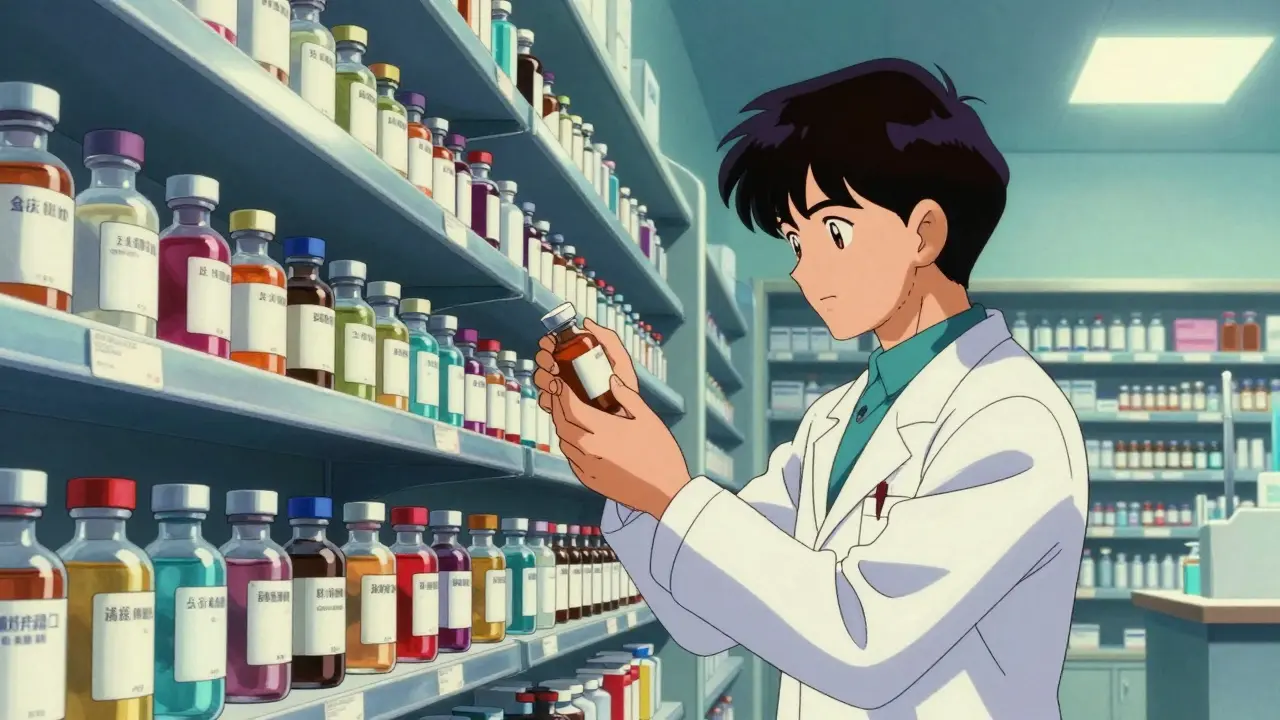
When you step into an oncology pharmacy today, you see something that looks like a miracle of modern logistics. Rows upon rows of vials contain life-saving treatments, many of them no longer bearing the original brand name they were marketed under years ago. Cancer medication combinations are the backbone of modern treatment plans, involving multiple drugs working together to stop tumor growth. However, switching from a branded version to a generic version involves more than just checking if the box label looks similar. It requires ensuring that every molecule hits the target exactly as intended, especially when those drugs interact with each other. This is where bioequivalence gets complicated.
Bioequivalence is the scientific measurement used to verify that a generic drug behaves the same way in the body as the original brand-name product. For a single pill, this means checking blood levels over time. But for a regimen like FOLFOX, used for colorectal cancer, which combines 5-fluorouracil, leucovorin, and oxaliplatin, the stakes change. If you substitute just one component with a generic, does the chemical interaction remain stable? In March 2026, with the global generic oncology market now valued at over $52 billion, understanding this distinction is critical for protecting patient safety while managing skyrocketing healthcare costs.
The Core Science of Generic Equivalence
To understand why combinations are harder than single agents, you first have to look at the baseline rules. Since the Drug Price Competition and Patent Term Restoration Act of 1984, often called the Hatch-Waxman Act, manufacturers can apply for approval via an Abbreviated New Drug Application (ANDA). They don't have to prove the drug works on humans again; they only have to prove the new version releases the drug into the bloodstream at the same rate and extent as the reference listed drug.
- The Gold Standard: For most small-molecule drugs, regulators require the 90% confidence interval of pharmacokinetic parameters (specifically AUC and Cmax) to fall between 80% and 125%.
- Therapeutic Window: For cancer drugs, the "window" between a dose that helps and a dose that harms is often razor-thin.
- Formulation Matters: Excipients-the fillers and binders in a pill-must not alter how the active ingredient dissolves or absorbs.
This works perfectly fine for a generic version of aspirin. When you take aspirin alone, a slight variation in absorption doesn't kill you. In oncology, however, we deal with Narrow Therapeutic Index (NTI) drugs, meaning even a 10% shift in exposure could mean tumor progression or severe toxicity. That is the fundamental friction point: the statistical allowance (up to 25% difference allowed by standard 80-125% range) is sometimes larger than the margin of safety required for a potent chemotherapy agent.
Why Combination Regimens Change the Rules
In a typical clinic, a doctor prescribes R-CHOP for lymphoma. This includes rituximab, cyclophosphamide, doxorubicin, vincristine, and prednisone. Imagine replacing three of these five components with different generic brands manufactured in different facilities. Theoretically, each one passed the test individually. In the real world, their interaction creates a new biological variable.
| Factor | Single-Agent Therapy | Combination Regimen |
|---|---|---|
| Bioavailability | Standard PK metrics sufficient | Drug-drug interactions alter absorption rates of all components |
| Testing Subjects | Healthy volunteers usually acceptable | Often requires patient cohorts or surrogate endpoints due to complexity |
| Risk Profile | Low systemic risk if slightly off-target | Cumulative error increases toxicity or resistance risks exponentially |
| Clinical Outcomes | Easily mapped to survival data | Outcome confounded by the synergy of the remaining branded agents |
Dr. Sarah Al Far, an oncology specialist, noted in recent literature that cumulative effects matter. If one generic absorbs slightly slower and another slightly faster, the resulting peak concentration might spike unpredictably. This isn't just theory. A survey of oncology pharmacists revealed that nearly 60% had witnessed unexpected toxicity when swapping generics in complex mixtures. This suggests that while the individual math checks out, the ecosystem chemistry changes when you swap parts of a machine running at high speed.

Regulatory Guardrails and the Orange Book
If you wonder how to know which generic is safe to use, the U.S. Food and Drug Administration's Orange Book is your primary map. This official listing tells you whether a generic has been approved and assigned a therapeutic equivalence code. An "A-rating" means the agency considers it substitutable. However, the FDA's guidance has evolved to acknowledge the nuance of cancer care.
The FDA established a specific pathway in its 2024 launch of the Oncology Bioequivalence Center of Excellence to handle exactly this issue. They recognized that standard crossover studies in healthy volunteers weren't always capturing the messy reality of treating actual cancer patients who are metabolically compromised. Consequently, agencies like the European Medicines Agency (EMA) went further, mandating comparative clinical endpoint studies for certain high-risk combinations. They want to see the survival numbers match, not just the blood levels.
It is also worth noting that biologics play by different rules entirely. A monoclonal antibody like trastuzumab cannot be "generic." You get a biosimilar instead. The 351(k) pathway under the Biologics Price Competition and Innovation Act requires proving structural similarity, functional similarity, and clinical equivalence. So, when we talk about bioequivalence challenges, we must distinguish between small molecules (chemicals) and large molecules (proteins).
Cost Versus Risk: The Economic Equation
No discussion about generics is complete without looking at the wallet. Branded oncology drugs average roughly $150,000 annually per patient. Generic versions can slash this to $45,000. For the American Cancer Society, the potential savings amount to $14.3 billion annually across the U.S. system. These aren't abstract numbers; they determine access to care.
Yet, the Gulf Cancer Consortium found that 42% of surveyed oncologists still hesitate to substitute generics in combination regimens. Why? Because a cost saving of 30-80% means nothing if the patient relapses prematurely or suffers severe neuropathy. Some systems have adopted Multi-Criteria Decision Analysis tools. One such tool developed by the GCC Oncology Formulary Committee weighs manufacturing quality at 30%, supply reliability at 15%, and patient trust at 10%. This approach acknowledges that price is necessary but not sufficient for safety.
Consider the case of generic vincristine. Reports exist where formulation differences altered peak plasma concentrations, leading to neurotoxicity cases that didn't appear with the brand. Conversely, at MD Anderson, retrospective analysis showed that generic capecitabine was perfectly equivalent in survival rates compared to the brand when combined with oxaliplatin. This duality drives home the point: generic success depends on the specific molecule, not just the category.

Practical Implementation for Clinicians
So, how does a hospital run this show practically in 2026? First, rely on evidence-based protocols. The UCSF decision support algorithm is a great example, reducing inappropriate substitutions by over 60% through real-time alerts about NTI components. Pharmacists are now spending hours reviewing bioequivalence data before approving formulary switches.
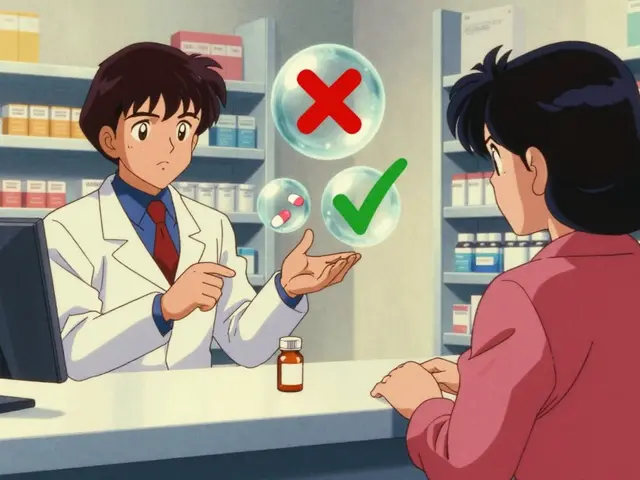
For the prescribing physician, the strategy involves sticking to A-rated products whenever possible. If a patient is stabilizing on a specific regimen, changing the generic manufacturer mid-cycle introduces variables that are hard to track. Consistency becomes part of the medical advice. Furthermore, educating the patient is vital. Surveys show 63% of patients worry about these swaps. Clear communication helps maintain adherence and reduces anxiety.
Future Trajectory of Oncology Bioequivalence
Looking ahead, the National Cancer Institute projects that by 2030, a significant portion of combination therapies will need specialized assessment protocols. We are moving away from simple blood draws toward modeling and simulation. The FDA's endorsement of physiologically based pharmacokinetic (PBPK) modeling allows scientists to predict drug interactions computationally before testing humans. This technology will eventually allow us to answer the question: "Will this generic work in this specific cocktail?" with mathematical precision rather than clinical trial statistics.
We are seeing a harmonization of standards globally, with mutual recognition agreements spreading. However, the core mission remains unchanged: ensure the generic delivers the cure without delivering harm. As the landscape shifts toward more targeted therapies and immunotherapies, the definition of "bioequivalent" will tighten, ensuring that the financial relief of generics never compromises the safety of the combination that saves lives.
Are all generic cancer drugs bioequivalent?
Most generic cancer drugs demonstrate bioequivalence according to FDA standards. However, for drugs with a narrow therapeutic index, the margins are tighter, and some formulations may behave differently in combination regimens compared to single-agent use.
What is the Orange Book rating?
The Orange Book provides therapeutic equivalence ratings. An 'A' rating indicates the generic is considered therapeutically equivalent to the Reference Listed Drug, possessing identical strength, dosage form, and route of administration.
Why are combination therapies harder to match?
Combinations involve drug-drug interactions. Swapping multiple generics simultaneously changes the pharmacokinetic profile of each drug, potentially altering absorption rates and increasing toxicity risks beyond what individual testing reveals.
How much cheaper are generic oncology drugs?
Generics typically offer savings ranging from 30% to 80%. On average, annual costs drop from $150,000 for branded therapies to around $45,000 for generic alternatives.
Do doctors prefer brand names for combinations?
Many oncologists prefer consistency once a regimen is started. Surveys indicate concerns about cumulative toxicity if multiple generic components interact unpredictably, though evidence supports the safety of many established generic combinations.


Molly O'Donnell
April 1, 2026 AT 14:20The statistical allowance is larger than the margin of safety required for potent agents.
Russel Sarong
April 3, 2026 AT 11:07The stakes are incredibly high when we talk about patient safety in oncology treatments. It is heartbreaking to see how financial pressures impact clinical decisions daily. Every single molecule must align perfectly to ensure the cancer cells are targeted effectively. We cannot afford even minor deviations in absorption rates during these critical regimens. The interaction between different drugs creates a complex web of biological variables! Generic formulations save money but sometimes risk the therapeutic window stability. Doctors worry constantly about unexpected toxicity appearing in vulnerable patients. Pharmacists spend hours reviewing data before approving any formulary switches now. Consistency remains the most vital factor for stabilizing a treatment cycle successfully. Switching manufacturers mid-cycle introduces untrackable variables into the equation. Patient anxiety increases significantly without clear communication regarding changes. Adherence drops when trust erodes due to perceived safety risks in medications. Regulatory bodies are updating standards to address these nuanced pharmacokinetic issues better. Modeling technology might finally help us predict interactions computationally soon. Ultimately the mission must remain unchanged and focused on delivering the cure safely.
Rod Farren
April 4, 2026 AT 06:33We need to focus on the pharmacokinetic parameters specifically regarding AUC and Cmax levels. Narrow Therapeutic Index drugs demand stricter bioequivalence testing than standard crossover studies provide. Excipients play a massive role in dissolution rates and subsequent absorption profiles within the gut. PBPK modeling is becoming essential for simulating drug-drug interactions in silico prior to human trials. The Orange Book ratings do not always capture the full scope of combination regimen compatibility risks.
Sharon Munger
April 5, 2026 AT 16:50i think consistency matters more than cost savings. changing makers too often confuses the metabolic pathways.
Jenny Gardner
April 7, 2026 AT 05:54This is amazing!!! It really helps patients!!!--The FDA guidance is evolving rapidly to handle the nuance of cancer care!!! We must stay informed on the latest therapeutic equivalence codes!!! Safety protocols are crucial for maintaining trust in healthcare systems!!!
Owen Barnes
April 9, 2026 AT 02:49therasutic window is key tho. generic swithces might mess with the pk profile big time. gotta be carefull with NTI drugs mainly. hope they find better ways to test soon.
Christopher Beeson
April 9, 2026 AT 13:57The economic equation suggests we prioritize savings over survival outcomes. Human life becomes a variable in a cost-benefit analysis spreadsheet. Trust in medical institutions erodes when profits dictate substitution policies. The system operates on a foundation of acceptable risk rather than absolute safety.
Rocky Pabillore
April 10, 2026 AT 05:53Obviously obvious to anyone with basic reading comprehension skills. You would think people understand the difference between small molecules and biologics by now.
Cara Duncan
April 11, 2026 AT 18:18Hope everyone stays safe 💕 Healthcare access is so important for families. 🏥 #MedicationSafety 🙏 Lets keep learning together!