

Heart disease is still the number one killer worldwide. But what most people don’t realize is that what you cook with every day can make a real difference-either helping your heart or quietly harming it. It’s not about cutting out fat entirely. It’s about choosing the right kind. The oils and fats in your pantry are more powerful than you think. One tablespoon of the wrong oil can undo weeks of good habits. And reading food labels? That’s not just a chore-it’s your best defense.
What Makes an Oil Heart-Healthy?
Not all fats are created equal. Your body needs fat. But the type matters more than the amount. Heart-healthy oils are high in monounsaturated fats and low in saturated fat. They also contain omega-3s or omega-9s that reduce inflammation and help balance cholesterol. The science is clear: swapping out saturated fats for unsaturated ones can lower your "bad" LDL cholesterol by 5% to 15%, according to the PREDIMED study published in The New England Journal of Medicine.
Look for oils with at least 55% monounsaturated fat and less than 15% saturated fat. Extra virgin olive oil hits that mark with 73% monounsaturated fat and only 14% saturated fat. Avocado oil? It’s even better-67% monounsaturated, 12% saturated. And then there’s algae oil, a newer player with 86% monounsaturated fat and almost no saturated fat. These aren’t just trendy-they’re backed by clinical data.
On the flip side, oils like coconut oil are 82% saturated fat. That’s more than butter. The American Heart Association says it’s not heart-healthy, no matter what marketing claims say. Same goes for palm oil and shortening. They raise LDL cholesterol and don’t offer the protective benefits of unsaturated fats.
Top 5 Heart-Healthy Oils Compared
| Oil | Monounsaturated Fat | Saturated Fat | Smoke Point | Best For | Price (per 16.9 fl oz) |
|---|---|---|---|---|---|
| Extra Virgin Olive Oil | 73% | 14% | 375-410°F | Dressings, low-heat sautéing | $8.99-$14.99 |
| Avocado Oil | 67% | 12% | 520°F | Roasting, grilling, frying | $12.99-$19.99 |
| Algae Oil | 86% | 11% | 535°F | High-heat cooking, baking | $24.99 |
| Canola Oil | 62% | 7% | 400°F | Baking, stir-frying | $6.99-$9.99 |
| Almond Oil | 70% | 7% | 420°F | Light sautéing, drizzling | $15.99-$22.99 |
Notice how avocado and algae oils outperform olive oil when it comes to high heat? That’s because smoke point matters. When oil heats past its smoke point, it breaks down and creates harmful compounds. Olive oil is great for salads and gentle cooking, but if you’re searing a steak or roasting veggies at 425°F, you’re better off with avocado or algae oil.
What to Avoid Like the Plague
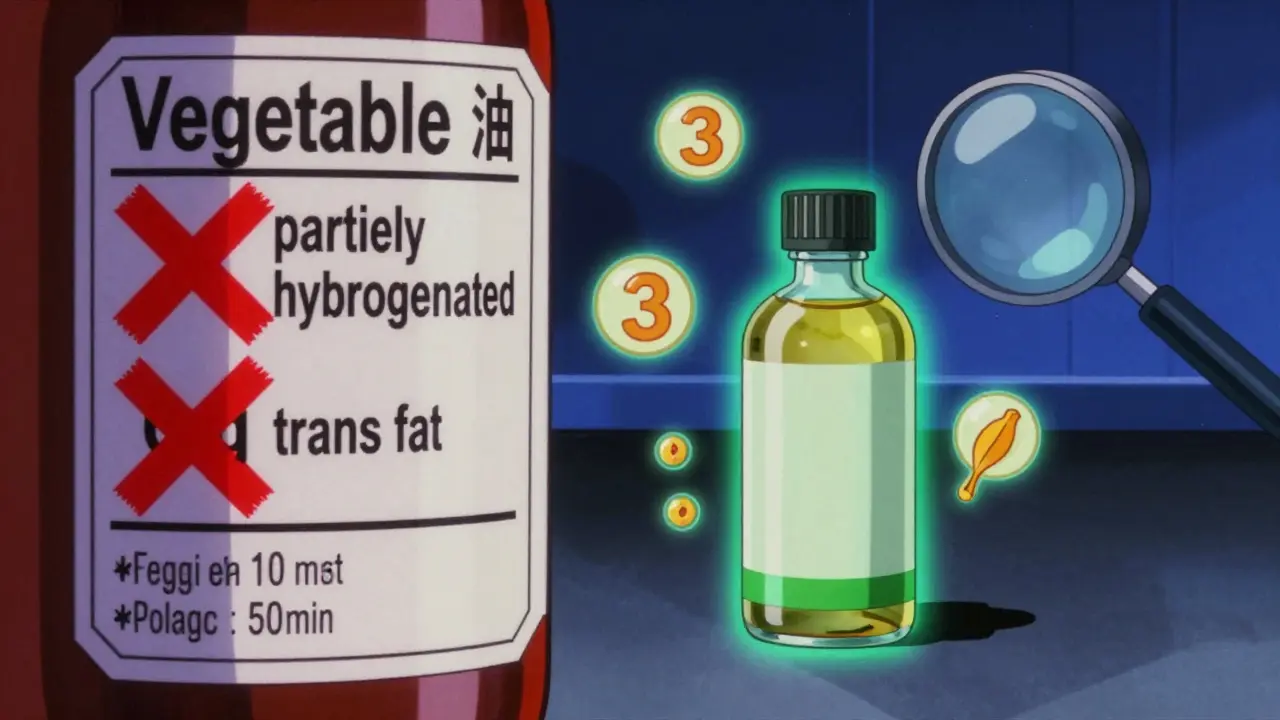
Trans fats are the worst. They’re made by adding hydrogen to liquid oils to make them solid-think margarine, fried foods, and packaged baked goods. They raise LDL cholesterol and lower HDL (the "good" kind). The FDA banned partially hydrogenated oils in 2020, but here’s the catch: if a product has less than 0.5 grams of trans fat per serving, it can legally say "0g trans fat" on the label. That means you can eat three servings and still get 1.2 grams-enough to hurt your heart over time.
Watch out for "vegetable oil" on labels. That’s a vague term. It could mean soybean, corn, or sunflower oil-all high in omega-6 fatty acids. Too much omega-6 without enough omega-3 triggers inflammation. The ideal ratio? No more than 4:1 omega-6 to omega-3. Most people eat 15:1 or worse. That’s like pouring gasoline on a fire.
And don’t be fooled by "light" or "pure" olive oil. Those are refined versions stripped of antioxidants. Stick to "extra virgin"-it’s cold-pressed, unrefined, and packed with polyphenols that act like natural anti-inflammatories. In fact, one compound in extra virgin olive oil, oleocanthal, works similarly to 10% of a standard ibuprofen dose. That’s not marketing. That’s science.
How to Read a Label Like a Pro
Here’s how to scan a nutrition label in under 10 seconds:
- Check saturated fat first. Aim for less than 2 grams per serving. If it’s higher than that, skip it.
- Look for "trans fat"-even if it says "0g," check the ingredients. If you see "partially hydrogenated," walk away.
- Find the oil name. Is it "canola oil" or just "vegetable oil"? Be specific. Generic terms hide unhealthy blends.
- Look for certifications. The Heart Foundation’s "Tick" label in Australia, or similar EU certifications, mean the product met strict health standards. They’re trustworthy.
- Check the ingredients list. The first ingredient should be the oil itself. If sugar, corn syrup, or preservatives come first, it’s not a healthy choice.
Also, look for words like "cold-pressed," "expeller-pressed," or "unrefined." These mean the oil was extracted without chemicals or extreme heat, preserving its nutrients. Refined oils lose their antioxidants and become more prone to oxidation.

Storage and Usage Tips That Save Your Health
Even the best oil turns bad if you store it wrong. Oils high in polyunsaturated fats-like flaxseed, walnut, or even some fish oils-go rancid fast. They need refrigeration and should be used within 30 to 60 days. Olive oil? Store it in a dark cupboard away from the stove. Heat and light break it down.
Don’t reuse frying oil. Every time you heat oil, it degrades. Reheating it creates free radicals and toxic compounds. One study found reused oil had 40% more harmful oxidation products than fresh oil.
And don’t use one oil for everything. Use extra virgin olive oil for drizzling, canola for baking, avocado for roasting, and algae for searing. Having multiple oils on hand isn’t expensive-it’s smart. It’s like having different tools for different jobs.
Why This Matters More Than Ever
Heart disease kills 17.9 million people every year. That’s more than cancer, accidents, and diabetes combined. But here’s the good news: up to 80% of heart disease is preventable through diet and lifestyle. Choosing the right oils is one of the easiest, most effective changes you can make.
And it’s not just about cholesterol. It’s about inflammation. Chronic inflammation is the silent driver behind artery damage, high blood pressure, and plaque buildup. Omega-9 and omega-3 fats in heart-healthy oils calm that fire. Polyphenols in extra virgin olive oil? They’re like a natural shield.
More than 25,000 U.S. stores now carry algae oil. It’s not a fad-it’s the next step in cooking science. With 86% monounsaturated fat and a smoke point higher than avocado oil, it’s ideal for modern kitchens. And it’s more sustainable: it takes 90% less land to produce than olive oil.
But none of this matters if you’re not reading labels. The market is flooded with misleading claims. "Natural," "pure," "heart-smart"-these words mean nothing without proof. The real proof is in the numbers: saturated fat under 15%, no trans fat, and no hydrogenated oils in the ingredients.
Start small. Swap one oil this week. Replace your cooking spray with avocado oil. Use olive oil for your morning eggs instead of butter. Read the label on your next bottle of salad dressing. You don’t need to overhaul your kitchen overnight. Just make one better choice today.
What’s the best oil for frying?
Avocado oil and algae oil are the best for frying because they have the highest smoke points-520°F and 535°F respectively. They stay stable at high heat and don’t break down into harmful compounds. Olive oil is fine for light frying, but not for deep frying. Avoid canola or sunflower oil for high-heat cooking-they oxidize quickly and can create inflammation.
Is coconut oil heart-healthy?
No. Coconut oil is 82% saturated fat, which is higher than butter. The American Heart Association says it raises LDL ("bad") cholesterol and increases heart disease risk. Claims about "medium-chain fats" being healthy are not backed by clinical evidence. Stick to unsaturated fats like olive, avocado, or algae oil for heart health.
Can I use butter or lard if I’m eating less of it?
Even small amounts of saturated fat from butter or lard add up. Replacing them with unsaturated fats-even just 10% of your daily intake-can lower heart disease risk by 30%. It’s not about moderation. It’s about substitution. Use avocado oil instead of butter on toast. Use olive oil instead of lard in baking. The benefit is real and measurable.
What’s the difference between extra virgin and regular olive oil?
Extra virgin olive oil is cold-pressed and unrefined, meaning it keeps its antioxidants, polyphenols, and natural flavor. Regular olive oil is refined with heat and chemicals, stripping away most health benefits. It’s also often blended with cheaper oils. If you’re buying olive oil for heart health, extra virgin is the only choice.
How do I know if my olive oil is real?
A lot of "extra virgin" olive oil in the U.S. is fake. Up to 60% fail purity tests. Look for certifications like the COOC (California Olive Oil Council) or EU PDO labels. Check for a harvest date-real olive oil has one. And taste it: good extra virgin has a peppery finish and fruity aroma. If it tastes greasy or bland, it’s probably not genuine.
Heart-healthy cooking isn’t about perfection. It’s about progress. One better choice at a time. Start with your oil. Read the label. Choose the oil that lowers your bad cholesterol and fights inflammation. Your heart will thank you.


Sumit Mohan Saxena
February 27, 2026 AT 17:00From a clinical nutrition standpoint, the data presented here is both accurate and well-sourced. The emphasis on monounsaturated fats over saturated fats aligns with the 2020 AHA dietary guidelines and the PREDIMED trial outcomes. Algae oil, while newer, demonstrates a compelling lipid profile with 86% monounsaturated fat and negligible saturated content, making it a viable alternative for high-heat applications. The distinction between extra virgin and refined oils is critical-polyphenol retention is directly correlated with anti-inflammatory biomarkers in human studies. Storage protocols matter: exposure to light and heat accelerates lipid peroxidation, which generates aldehydes linked to endothelial dysfunction. For individuals with cardiovascular risk factors, systematic substitution of saturated fats with unsaturated alternatives yields measurable reductions in LDL particle concentration within 6–8 weeks.
Brandon Vasquez
February 28, 2026 AT 22:51One better choice at a time. That’s all anyone needs to hear.
Miranda Anderson
March 2, 2026 AT 07:05I’ve been using avocado oil for everything for about a year now and honestly it’s changed how I cook. I used to panic about smoke points, but now I just throw things on the grill or roast at 450 without thinking twice. The flavor’s neutral enough that it doesn’t overpower, and I’ve noticed my skin’s less dry too-maybe because I’m not eating as many inflammatory oils? I also started reading labels religiously after realizing my ‘olive oil’ dressing had soybean oil as the second ingredient. Who even puts that in salad dressing? Anyway, I switched to a brand with a harvest date and now I feel like I’m actually doing something good for myself. It’s not perfect, but it’s progress. And honestly? That’s enough.
Gigi Valdez
March 2, 2026 AT 21:53The scientific foundation of this post is sound. The lipid profile data for algae oil is particularly compelling, given its high monounsaturated fat content and low saturated fat percentage. The smoke point comparison between oils is also clinically relevant, as thermal degradation products such as acrolein and 4-hydroxy-2-nonenal are implicated in oxidative stress and arterial inflammation. The recommendation to avoid products labeled with 'vegetable oil' without specification is valid, as the omega-6 to omega-3 ratio in many commercial oils exceeds 15:1, a known pro-inflammatory threshold. However, accessibility and cost remain barriers. Algae oil at $24.99 per bottle is not feasible for many households. A more practical approach may involve combining cost-effective canola oil with occasional use of extra virgin olive oil for cold applications, rather than mandating premium alternatives.
Vikas Meshram
March 4, 2026 AT 00:10You people are missing the point entirely. The real issue is not which oil you use-it’s that you’re all too lazy to cook from scratch. Every single one of you is buying pre-made salad dressings, packaged snacks, and frozen meals with hidden trans fats and refined oils. Stop blaming the oil. Start blaming yourself. You think reading labels is hard? Try reading a cookbook. I’ve been using cold-pressed sesame oil since 2012 and I don’t even own a bottle of avocado oil. You don’t need expensive oils. You need discipline. And stop calling coconut oil bad-it’s been used for thousands of years in Ayurveda. You’re all just brainwashed by Big Pharma and their cholesterol obsession. Your heart isn’t broken because of saturated fat. It’s broken because you eat like robots.
Ben Estella
March 4, 2026 AT 10:44Yeah right. Algae oil? 86% monounsaturated? That’s some Silicon Valley nonsense. You think some lab-grown algae oil is gonna save your heart when you’re still eating processed chicken nuggets and Mountain Dew? Meanwhile, my grandpa fried everything in lard and lived to 92. He didn’t read labels. He didn’t care about smoke points. He cooked with what worked. And guess what? He didn’t have a stent. The whole 'heart-healthy oil' thing is just another way for corporations to sell you overpriced junk. Stick with butter. It’s real. It’s natural. It’s not some algae in a bottle labeled 'sustainable' while they ship it from China.
Byron Duvall
March 4, 2026 AT 11:35Wait a minute. Who funded this article? Algae oil companies? Because I just looked up the patent for algae oil production-there’s a direct link to a venture capital firm that also owns a major olive oil brand. This whole thing is a scam. They want you to stop using olive oil so they can monopolize the market with algae. And don’t get me started on the '0g trans fat' loophole-that’s not an oversight, that’s a conspiracy. The FDA knew. They let it slide because they’re in bed with Big Food. You think people are getting heart disease because of bad oils? No. It’s the glyphosate in the oil, the microplastics from the plastic bottles, and the EMF radiation from your smart fridge. This is all a distraction. Read the ingredients. Look for 'algal oil'-that’s code for GMO lab product. Don’t trust anything labeled 'heart-healthy.' That’s just marketing speak for 'buy this.'
Katherine Farmer
March 4, 2026 AT 14:54How quaint. You’ve all reduced complex nutritional biochemistry to a simple oil hierarchy, as if the human body operates like a combustion engine with fuel grades. The notion that monounsaturated fats are universally 'better' ignores individual metabolic variation-some people thrive on saturated fat, others are genetically predisposed to oxidize polyunsaturates into inflammatory byproducts. And algae oil? A corporate bio-engineered product with zero long-term human trials, yet you treat it like holy scripture. Meanwhile, the entire 'read the label' directive is performative. The average consumer cannot interpret lipid profiles, nor should they be expected to. This isn’t health advice-it’s a luxury performance for the upper-middle class who can afford $25 bottles of oil and the leisure time to read labels. The real public health crisis is food insecurity, not coconut oil. But you’d rather lecture people about their pantry than demand policy change. How very elegant.