

Meglitinide Meal Timing Calculator
This calculator shows when you should eat after taking meglitinides (repaglinide or nateglinide) to prevent dangerous low blood sugar. Missing your meal within the recommended window increases hypoglycemia risk by 3.7x.
Your Safe Eating Window
⚠️ Danger Zone
✅ Safe Zone
What To Do If You Missed Your Meal
1. Take fast-acting carbs immediately
Consume 15g of glucose (4-6oz juice, regular soda, glucose tablets)
2. Recheck blood sugar
Check again after 15 minutes
3. Repeat if needed
If below 70 mg/dL, consume another 15g of carbs
4. Severe symptoms
If confused or unable to swallow, use glucagon
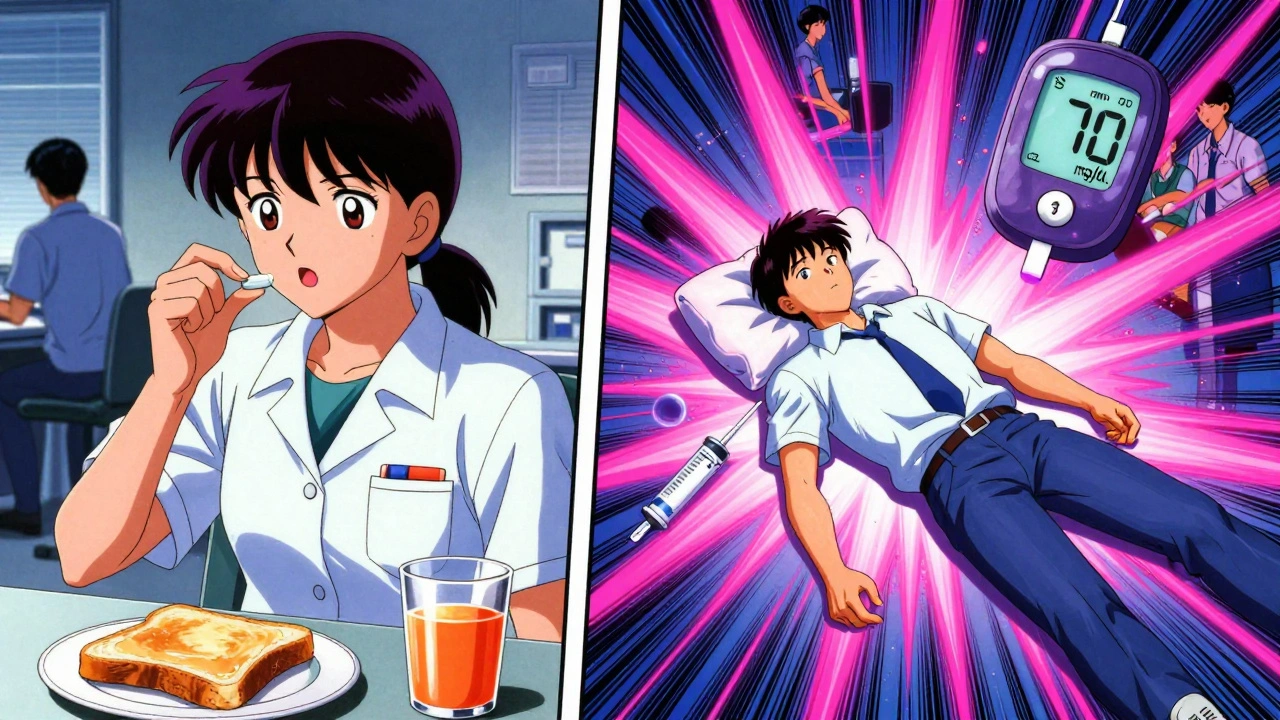
When you take a diabetes medication like meglitinides, your blood sugar can drop dangerously low-not because of too much medicine, but because of too little food. This isn’t a rare side effect. It’s built into how the drug works. If you skip breakfast, delay lunch, or eat a snack instead of a full meal, you’re putting yourself at high risk for hypoglycemia. And this isn’t just a warning on the label-it’s a real, measurable danger backed by clinical data.
How Meglitinides Work (And Why They’re So Fast)
Meglitinides-mainly repaglinide and nateglinide-are short-acting drugs designed to help people with type 2 diabetes control blood sugar spikes after meals. They work by telling the pancreas to release insulin quickly, right when you eat. Repaglinide starts working in 3 to 5 minutes; nateglinide kicks in even faster, within a minute. Both reach peak levels in your blood within an hour, and their effects fade within 2 to 4 hours.
This speed is their advantage. Unlike older drugs like sulfonylureas that keep pumping out insulin all day, meglitinides are like a quick burst-only active when you need them. That’s why doctors prescribe them for people with unpredictable schedules: shift workers, older adults with memory issues, or anyone who doesn’t eat at the same time every day.
But here’s the catch: if you don’t eat after taking the pill, your body still gets the insulin signal. No food means no glucose to balance it out. Your blood sugar plummets. And fast.
The Numbers Don’t Lie: Skipping Meals = High Risk
Studies show that skipping just one meal after taking a meglitinide increases your chance of hypoglycemia by 3.7 times. In one study, patients who missed meals saw their blood sugar drop below 70 mg/dL within 90 minutes of dosing. That’s the official threshold for hypoglycemia-and it’s when symptoms like shaking, sweating, confusion, or fainting start to appear.
Worse, 41% of all hypoglycemia events in people taking meglitinides happen between 2 and 4 hours after taking the pill. That’s the exact window when the drug is strongest-and when people are most likely to have skipped or delayed a meal. It’s not random. It’s predictable. And it’s preventable.
For older adults, the risk is even higher. The American Diabetes Association’s 2025 guidelines point out that irregular meal intake, combined with age-related changes in metabolism and insulin sensitivity, makes this group especially vulnerable. Cognitive decline, loneliness, or simply forgetting to eat can turn a safe medication into a life-threatening one.
Who Should Use Meglitinides-and Who Should Avoid Them
Meglitinides aren’t for everyone. They’re prescribed to about 4.2% of people with type 2 diabetes in the U.S., mostly when metformin isn’t enough and sulfonylureas cause too many low blood sugar episodes. They’re especially useful for people with:
- Unpredictable meal times (e.g., shift workers, caregivers)
- Renal impairment (repaglinide is mostly cleared by the liver, not the kidneys)
- History of hypoglycemia with longer-acting drugs
But they’re a bad fit for people who frequently skip meals, have poor appetite, or struggle with memory or routine. If you can’t reliably eat within 15 to 30 minutes of taking the pill, you shouldn’t be on it.
People with advanced kidney disease (eGFR below 30) are at 2.4 times higher risk of hypoglycemia on meglitinides. While repaglinide is safer than sulfonylureas here, it’s not risk-free. Doses need to be cut in half (60 mg instead of 120 mg) for those with severe kidney problems.
How to Use Meglitinides Safely
The key to staying safe isn’t just taking the pill-it’s matching it to your food. Here’s what works:
- Dose only when you’re eating. Don’t take it before you leave the house, before bed, or “just in case.” Wait until you’re sitting down with a meal or snack that has carbs.
- Take it 15 minutes before eating. Too early? Insulin peaks before food arrives. Too late? You miss the window and your blood sugar spikes.
- Never skip a meal after dosing. Even a small snack with 15 grams of carbs can prevent a crash. A banana, a handful of crackers, or a glass of milk is enough.
- Don’t combine with other insulin-stimulating drugs. Taking meglitinides with sulfonylureas or insulin multiplies your hypoglycemia risk. Studies show this combo increases low blood sugar events significantly (p=0.018).
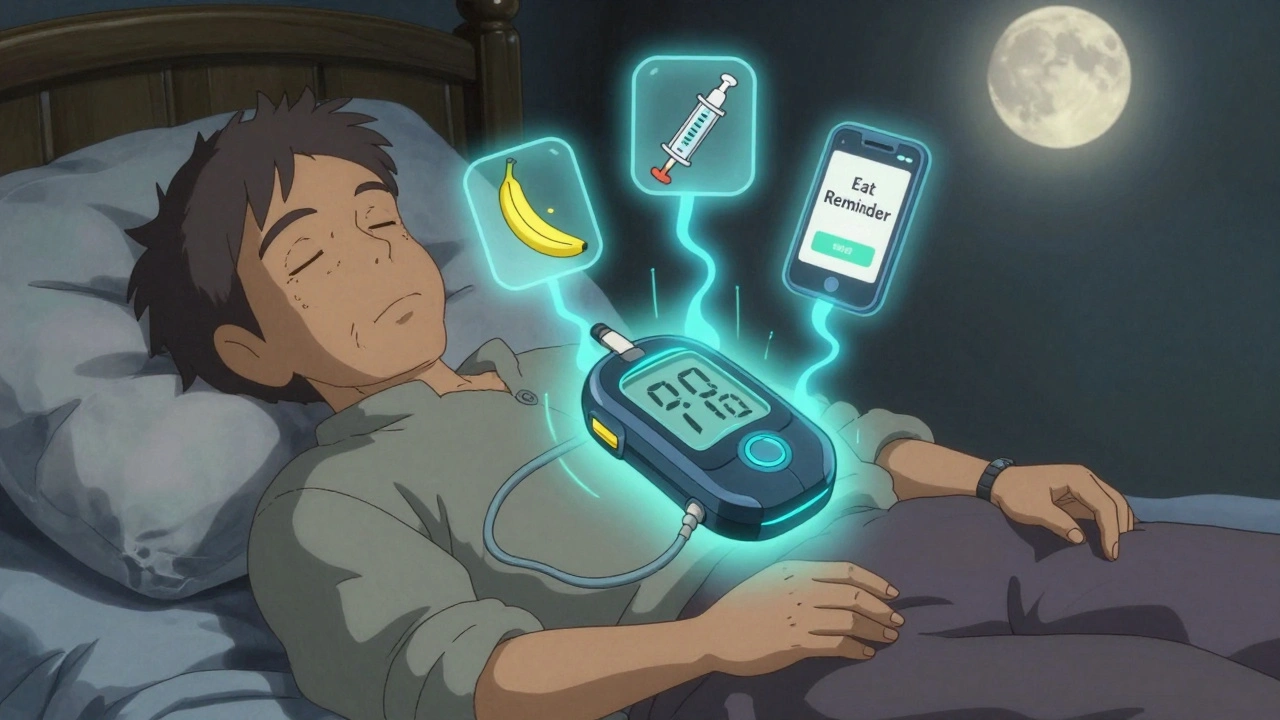
Some patients use smartphone apps that send reminders: “Eat in 10 minutes? Take your pill now.” One trial found this cut hypoglycemia events by 39%. If you forget meals often, this kind of tech help isn’t a luxury-it’s a necessity.
What to Do If You Miss a Meal
If you’ve already taken your meglitinide and realize you won’t be eating:
- Don’t panic-but act fast.
- Drink 4 to 6 ounces of juice or a regular soda (not diet).
- Check your blood sugar immediately.
- Wait 15 minutes and check again.
- If it’s still below 70 mg/dL, take another 15 grams of fast-acting carbs.
Keep glucose tablets or gel on hand. Don’t rely on candy bars-they have fat and protein that slow sugar absorption. You need pure glucose, fast.
If you’re confused, dizzy, or unable to swallow, someone else needs to give you a glucagon injection. Make sure a family member or caregiver knows how.
Alternatives to Meglitinides
If meal timing is too unpredictable, or if you’ve had multiple hypoglycemic episodes, talk to your doctor about other options:
- Metformin-first-line, doesn’t cause low blood sugar, taken twice daily.
- SGLT2 inhibitors (like empagliflozin)-lower blood sugar by flushing out sugar through urine, low hypoglycemia risk.
- GLP-1 agonists (like semaglutide)-slow digestion, reduce appetite, and stimulate insulin only when blood sugar is high. These have the lowest hypoglycemia risk of any diabetes drug, unless combined with insulin or sulfonylureas.
These newer drugs are becoming more popular. In 2022, SGLT2 inhibitors were prescribed to 18.7% of U.S. patients with type 2 diabetes-nearly four times more than meglitinides. But for some people, meglitinides still fit better. The goal isn’t to avoid them entirely-it’s to use them correctly.
The Future: Safer Dosing?
Researchers are working on extended-release versions of repaglinide. Early trials show a new formulation (repaglinide XR) reduces hypoglycemia by 28% in people with irregular meals. It’s still in Phase II, but it could be a game-changer for those who can’t stick to strict meal schedules.
Until then, the best tool you have is awareness. Your body doesn’t care if you’re busy, tired, or distracted. It only responds to insulin and glucose. If you take meglitinides, your meals aren’t optional-they’re part of the treatment plan.
There’s no magic pill that fixes poor eating habits. But if you treat your meals like medicine-timed, consistent, and reliable-you can stay safe and in control.
Can I take meglitinides if I skip meals often?
No. Meglitinides are designed to be taken right before meals. If you regularly skip meals, delay eating, or eat inconsistently, this drug will likely cause dangerous drops in blood sugar. Talk to your doctor about alternatives like metformin, SGLT2 inhibitors, or GLP-1 agonists, which don’t carry the same meal-dependent risk.
What happens if I take meglitinide and then don’t eat?
Your pancreas releases insulin, but there’s no food to raise your blood sugar. Insulin pulls glucose out of your bloodstream, causing hypoglycemia. Symptoms include shakiness, sweating, dizziness, confusion, and in severe cases, loss of consciousness. Blood sugar can drop below 70 mg/dL within 90 minutes. Always have fast-acting carbs on hand if you take this drug.
Is repaglinide safer than nateglinide for kidney patients?
Yes. Repaglinide is mostly broken down by the liver (98% via CYP3A4 and CYP2C8 enzymes), making it a better choice than sulfonylureas for people with kidney disease. Nateglinide is cleared by both liver and kidneys. For those with eGFR below 30, repaglinide doses should be reduced to 60 mg per meal instead of the standard 120 mg to lower hypoglycemia risk.
Can I take meglitinides with insulin?
It’s possible, but it increases hypoglycemia risk significantly. Studies show combining meglitinides with insulin raises low blood sugar events with statistical significance (p=0.018). If you’re on both, you need very precise meal timing, frequent blood sugar checks, and likely a continuous glucose monitor (CGM). Most doctors avoid this combo unless absolutely necessary.
Do I need a continuous glucose monitor (CGM) if I take meglitinides?
Not always, but if you have irregular meals, are over 65, have kidney issues, or have had hypoglycemia before, a CGM is strongly recommended. Studies show CGMs reduce hypoglycemia episodes by 57% in meglitinide users with unpredictable eating patterns. It gives you real-time alerts before your blood sugar drops too low.


Kenny Leow
December 1, 2025 AT 16:05Man, I wish my doctor had explained this like that. I was on repaglinide for a bit and skipped breakfast once-ended up in the ER thinking I was having a stroke. Turned out my blood sugar was 48. Learned the hard way. Now I keep granola bars in my car, purse, and damn near my sock drawer. 🙏
Suzanne Mollaneda Padin
December 1, 2025 AT 19:54This is one of the clearest explanations I’ve ever read on meglitinides. The 3.7x risk stat really sticks with you. I’m a diabetes educator and I’ve seen too many patients get caught off guard because they thought ‘it’s just a pill’-like it works on its own. It’s not a pill, it’s a timing tool. Match it to food, or don’t take it at all. Period.
Edward Hyde
December 3, 2025 AT 02:00So what you’re saying is if I’m too lazy to eat, I shouldn’t be on meds that require me to eat? Groundbreaking. Next you’ll tell me smoking causes lung cancer or that drinking bleach is bad. I’m shocked. 😏
Lauryn Smith
December 4, 2025 AT 22:29My grandma takes this and forgets meals all the time. I started setting her phone to buzz at 8am, 12pm, and 6pm with a voice note saying ‘eat now, then take pill.’ She hates it but hasn’t had a low since. It’s not glamorous, but it works.
Bonnie Youn
December 6, 2025 AT 11:11STOP SCARING PEOPLE. This is so overblown. I’ve been on nateglinide for 5 years and I’ve never had a low. I skip meals all the time. My body knows what to do. Stop making people paranoid about their meds. You’re not helping, you’re just creating anxiety.
Charlotte Collins
December 8, 2025 AT 10:41Interesting how the article conveniently omits that meglitinides are aggressively marketed by Big Pharma to replace sulfonylureas after lawsuits piled up. The ‘quick-acting’ narrative? Pure marketing. The real reason? They’re more expensive. And guess who pays? You. The patient. The system doesn’t care if you live or die-it cares about the profit margin on repaglinide tablets.
Mary Ngo
December 9, 2025 AT 01:46One must question the ontological implications of insulin as a biological imperative versus the existential void created by modern meal scheduling. If one takes a pill predicated on the ritual of ingestion, and the ingestion is absent, does the insulin still exist as potentiality? Or does it collapse into a hypoglycemic wavefunction, observable only in the collapse of homeostasis? The pharmaceutical industry, in its hubris, has commodified the sacred act of eating-turning nourishment into a pharmacokinetic variable. We are not patients. We are variables. And variables, my friends, are not sentient.
Alexander Williams
December 9, 2025 AT 10:10Statistically, the 41% hypoglycemia peak window aligns with the circadian trough in glucagon counterregulation, particularly in older adults with reduced hepatic glycogenolysis. The pharmacodynamics of repaglinide’s CYP3A4 metabolism make it preferable in renal impairment, but the absence of real-time CGM integration in clinical protocols remains a critical gap in risk mitigation. Without continuous feedback, we’re managing a dynamic system with static interventions.
Margaret Stearns
December 9, 2025 AT 13:51i read this and thought of my uncle. he takes repaglinide and forgets to eat because he’s always watching tv. i bought him glucose gels and put them next to his remote. he says it’s dumb but he hasn’t passed out since. also, he keeps calling them ‘the little sugar pills’ which is cute but wrong. they’re not sugar pills. they’re insulin pills. just saying.
elizabeth muzichuk
December 10, 2025 AT 07:10They don’t want you to know the truth. Meglitinides were designed by corporations to keep you dependent. They know you’ll skip meals. They count on it. That’s why they make you carry glucose tabs. That’s why they sell you CGMs. That’s why they profit from your fear. You’re not sick. You’re being manipulated. Wake up.
amit kuamr
December 10, 2025 AT 22:41In India we dont use meglitinides much because people eat irregularly and doctors know its dangerous. We use metformin or even insulin if needed. Why America always choose expensive risky drugs? Simple. Profit. Your system is broken.
Kelly Essenpreis
December 12, 2025 AT 05:43So if I take this drug and then eat a bag of chips instead of a meal im still gonna crash right? I mean its not like the carbs matter as long as its food right? I dont care what the science says I like my Doritos and I dont wanna feel like a lab rat