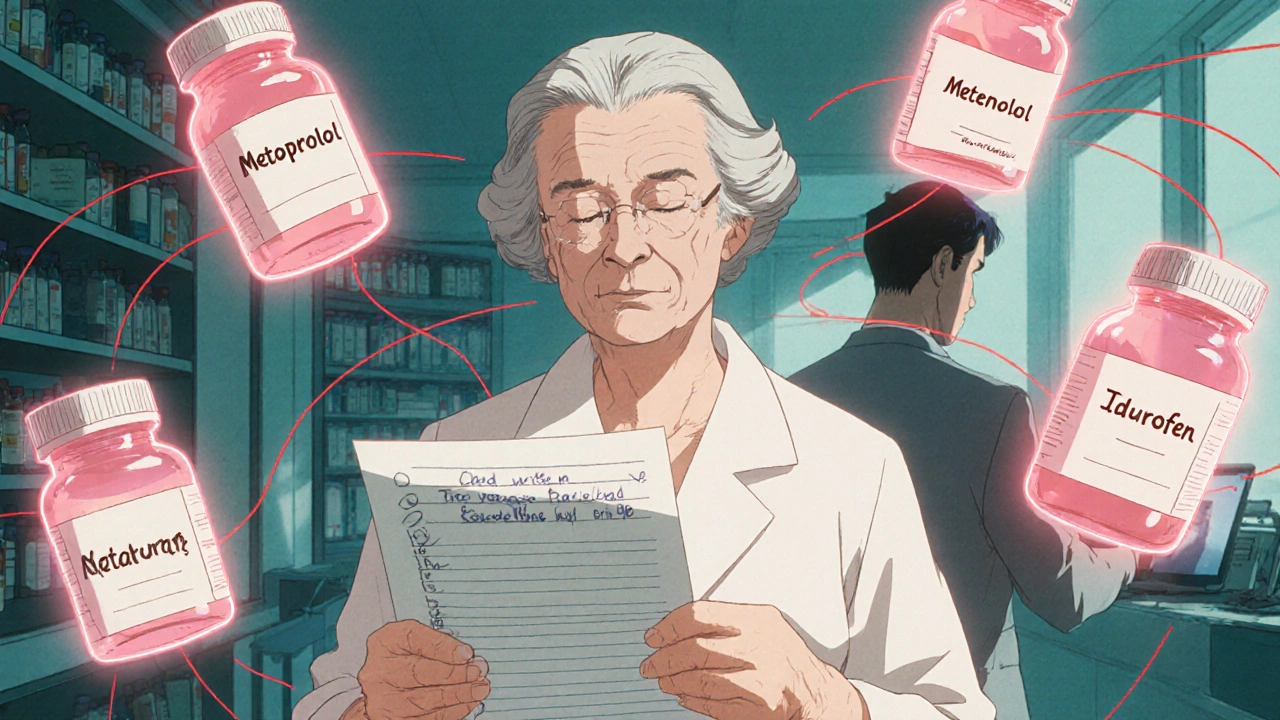
When you take two different pills that contain the same active ingredient, you’re dealing with duplicate medications, the accidental use of two or more drugs with identical or nearly identical active components. Also known as drug duplication, this isn’t just a paperwork error—it’s a silent risk that lands people in the ER every day. It happens when a doctor prescribes one drug, your pharmacist fills a generic version, and then you pick up an OTC product that contains the same thing—like taking both a prescription ibuprofen and a store-brand pain reliever with ibuprofen as the main ingredient. The result? Too much of a good thing becomes too much of a bad thing.
These overlaps are especially common with anticholinergic drugs, medications that block acetylcholine and are used for allergies, sleep, and overactive bladder, where mixing Benadryl, oxybutynin, and even some stomach meds can trigger confusion or delirium in older adults. Or consider blood thinners, drugs like warfarin that require precise dosing and are easily affected by other substances—green tea, herbal supplements, or even switching from brand to generic without monitoring can create hidden duplication risks. Even something as simple as taking both a brand-name and generic version of Synthroid or Abilify without checking with your provider can throw off your treatment.
Many people don’t realize that duplicate medications aren’t always obvious. One pill might be labeled as a brand name, another as a generic, and neither says what’s inside in plain language. That’s why using a drug interaction checker, a tool that scans your full medication list for hidden overlaps and dangerous combos is a must. It’s not just about avoiding side effects—it’s about making sure every pill you take has a clear reason to be there.
What you’ll find in the posts below isn’t just a list of drugs—it’s a practical guide to spotting, preventing, and fixing these hidden overlaps. From how dose adjustments after switching to generics can trigger problems, to why some people end up taking two antibiotics that do the same job, or how lithium affects your thyroid while another drug masks the symptoms—you’ll see real cases, real risks, and real fixes. No fluff. Just what you need to keep your meds safe and your body healthy.