
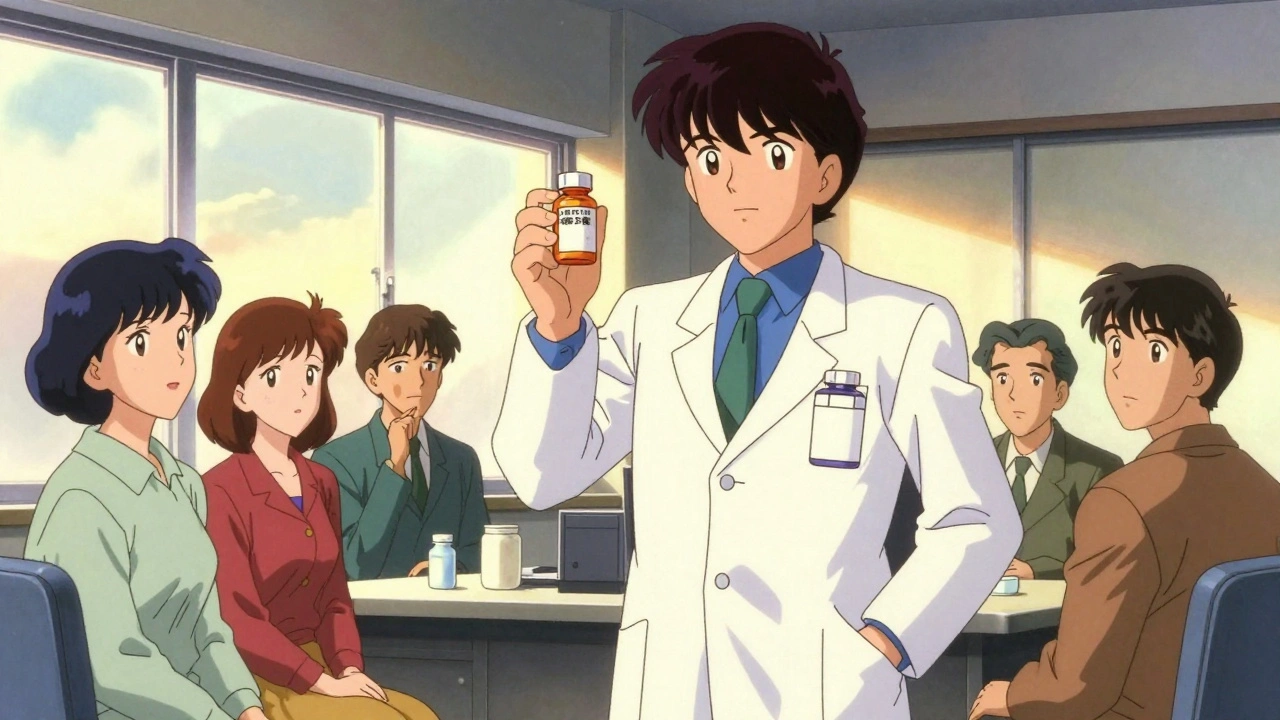
Every year, employees miss work or perform poorly because they skip their meds. Not because they’re lazy. Not because they don’t care. But because the cost is too high, or they’re scared the generic won’t work. That’s where pharmacists step in-right in the middle of workplace wellness programs-and change the game.
Why Generic Medications Matter in the Workplace
Generic drugs aren’t cheap knockoffs. They’re the exact same medicine as the brand-name version, with the same active ingredients, same strength, same safety profile. The FDA requires them to be bioequivalent-meaning they work in your body the same way, within 80% to 125% of the brand drug’s absorption rate. Yet, 40% of employees still believe generics are inferior. That myth costs employers billions. The numbers don’t lie. In the U.S., generics make up 90% of all prescriptions filled but only 22% of total drug spending. That gap? It’s pure savings. And when employees take their meds as prescribed-especially for chronic conditions like high blood pressure, diabetes, or cholesterol-hospital visits drop, absenteeism falls, and productivity rises. The CDC says better adherence alone could prevent 125,000 deaths a year and save the system $300 billion. But getting people to switch from brand to generic? That’s not just about price. It’s about trust. And that’s where pharmacists come in.The Pharmacist’s Unique Role in Wellness Programs
Pharmacists are the only healthcare pros who see every medication a patient takes-prescriptions, OTCs, supplements, even vitamins. That’s why they’re the best people to spot duplication, interactions, or unnecessary brand-name drugs. In workplace wellness programs, pharmacists don’t just hand out pills. They do Medication Therapy Management (MTM). That means sitting down with employees-on-site, over video, or during health fairs-and asking: “What are you taking? Why? Are you having side effects? Are you skipping doses because it’s too expensive?” They check the Orange Book to confirm therapeutic equivalence. They pull up MAC (Maximum Allowable Cost) lists to find the lowest-priced generic. They use tools like McKesson’s OneStop Generics to automate substitutions where allowed. And they explain, clearly and calmly, that the ibuprofen in a $3 generic is chemically identical to Advil. Employers who include pharmacists in their wellness programs see 15-20% higher adherence rates than those who don’t. And prescription costs drop by 20-30%.How Pharmacists Change Minds-One Conversation at a Time
Most employees don’t refuse generics because they’re irrational. They’re afraid. They’ve heard stories. Or their doctor never explained the difference. Pharmacists tackle this head-on. One pharmacist in Seattle told a diabetic employee: “I take the same generic metformin you’re on. My blood sugar’s stable. So is yours.” Another showed a patient a photo of the same pill made by the brand company-just sold under a generic label. “Authorized generics,” she called them. Same factory. Same batch. Lower price. These aren’t sales pitches. They’re conversations built on trust. And they work. Surveys show 78% of employees feel more confident about generics after talking to a pharmacist. That’s huge. In one company with 8,000 employees, a pharmacist-led MTM program cut diabetes-related ER visits by 19% in 10 months. Why? Because people stayed on their meds. Not because they were forced. Because they understood.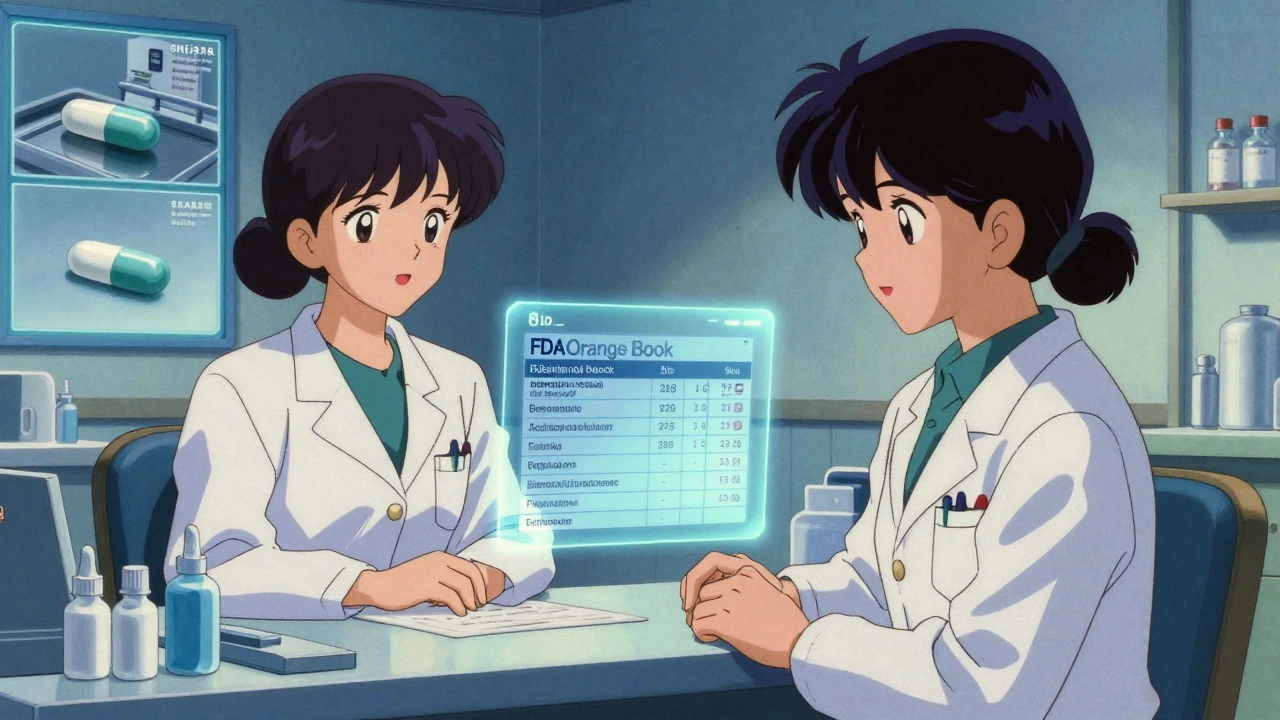
What’s Working in Real Programs
Large employers (5,000+ workers) are already doing this. 68% now include pharmacist consultations in their wellness offerings, according to the Business Group on Health. CVS Caremark, Express Scripts, and OptumRX all have clinical pharmacists embedded in their PBM services. Some companies host on-site pharmacy clinics. Others partner with telehealth platforms so employees can book 15-minute virtual MTM sessions during lunch. Walmart Health Centers, for example, now have pharmacists working alongside primary care providers for employer clients. Early data shows a 23% drop in prescription costs among those employees. The structure is simple:- Employees get flagged for high-cost prescriptions or poor adherence through claims data.
- A pharmacist reaches out-by phone, email, or in person.
- They review all meds, identify cost-saving generics, and check for duplicates.
- If needed, they contact the prescriber to suggest a switch (with full clinical justification).
- They follow up in 30 days to make sure the switch stuck.
Barriers-And How to Beat Them
Not everything’s smooth. Some states require prescriber approval before a pharmacist can swap a brand for a generic-even if they’re therapeutically equivalent. That’s called therapeutic interchange. It sounds smart. But it kills speed and cost savings. One pharmacist on Reddit wrote: “In my state, I can substitute generics, but I need the doctor’s OK for therapeutic interchange. So I call the office. They say ‘no’ because they don’t know the generic. So I send them the FDA bioequivalence data. They still say no. I lose.” Another barrier? Lack of training. Pharmacists aren’t born knowing how to explain drug formularies to HR managers or how to navigate PBM contracts. The best programs give them 2-3 months of specialized training in pharmacoeconomics, benefit design, and patient communication. And then there’s the myth that generics are “inferior.” That’s not true. But it’s persistent. So the best pharmacists bring proof: FDA approval documents, manufacturing photos, even their own prescription bottles.Why This Beats Other Cost-Cutting Tricks
Employers have tried everything: three-tier formularies, higher copays for brands, mandatory prior authorizations. Some work. But they’re blunt instruments. They punish people. They breed resentment. Pharmacist-led generic promotion? It’s a scalpel. It’s personalized. It’s educational. It respects the patient. A study from Watson Wyatt found that 84% of employers use three-tier formularies. But only 45% have mandatory generic programs. And even then, adherence doesn’t improve much unless a pharmacist is involved. Why? Because people don’t switch because of a copay change. They switch because someone explained it to them-and made them feel safe.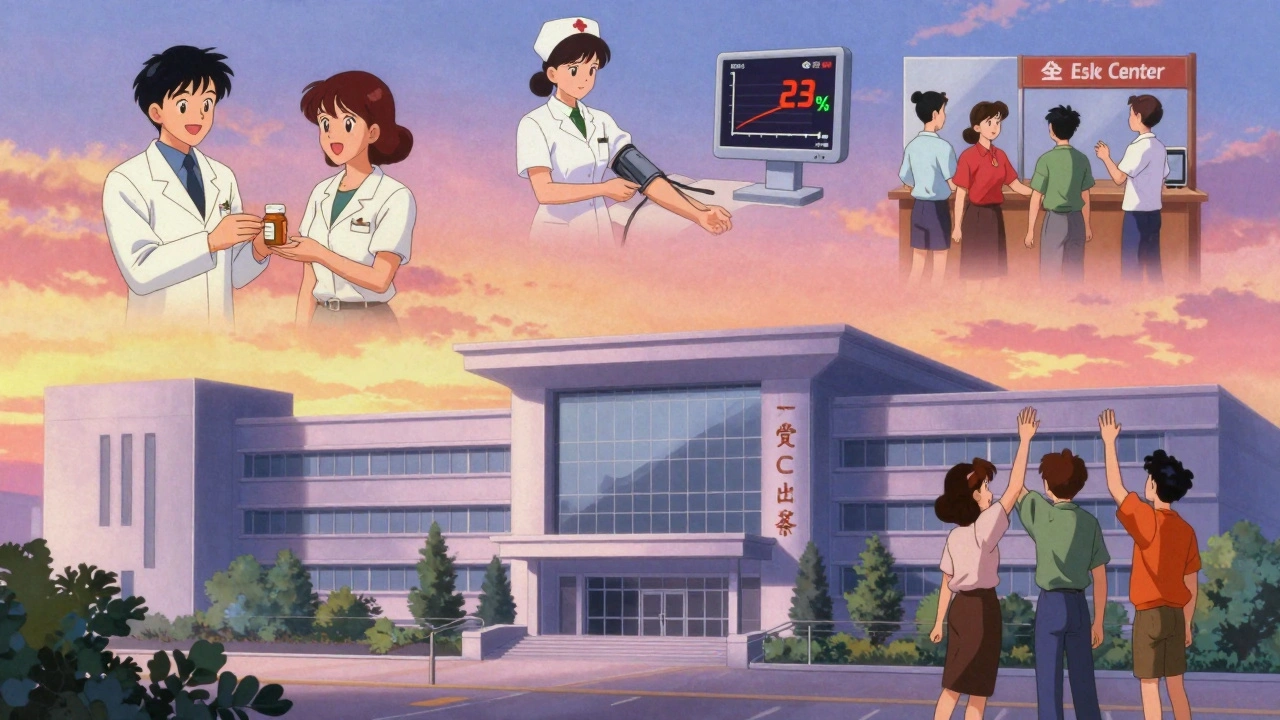
The ROI Is Real
For every $1 spent on pharmacist-led medication optimization, employers save $7.20 in medical costs, according to the American Pharmacists Association. That’s not a guess. It’s based on real data from 12 large employers over five years. The savings come from:- Lower drug costs (generics cost 80% less on average)
- Fewer ER visits and hospitalizations
- Reduced absenteeism and presenteeism (showing up but not performing)
- Lower turnover (employees stay when they feel their health is supported)
What’s Next for Pharmacists in the Workplace
The 2024 PBM Transparency Act is forcing pharmacy benefit managers to stop hiding spread pricing. That means employers can finally see what they’re really paying. And they’ll demand more value. Pharmacists are positioned to lead that charge. They’re not just cost-cutters. They’re health advocates. They’re the bridge between clinical care and financial reality. Soon, we’ll see pharmacists integrated into mental health programs, helping patients stay on antidepressants. Into weight management, ensuring diabetes meds are used correctly. Into chronic pain programs, reducing opioid overuse. The Bureau of Labor Statistics predicts a 4% growth in pharmacist jobs through 2032-and most of that growth will be in clinical, consulting, and workplace roles. This isn’t the future. It’s already here. And the companies that get it right? They’ll have healthier teams. Lower costs. And employees who actually feel cared for.How to Start
If you’re an employer wondering where to begin:- Look at your top 10 most expensive prescriptions. Are any of them brand-name drugs with generic equivalents?
- Ask your PBM: Do you have clinical pharmacists on staff who can do MTM for employees?
- Start small: Offer 50 free 15-minute MTM sessions to employees on chronic meds.
- Track results: Compare prescription costs and adherence rates before and after.
- Share wins: Tell your team, “We saved $120,000 last quarter because 142 people switched to generics-and kept taking them.”
Are generic drugs really as effective as brand-name drugs?
Yes. The FDA requires generics to have the same active ingredient, strength, dosage form, and route of administration as the brand-name drug. They must also meet the same strict standards for purity, stability, and bioavailability. The only differences are in inactive ingredients (like fillers or dyes) and packaging. In over 98% of cases, pharmacists correctly identify when a generic is an appropriate substitute.
Why do some employees still refuse generics?
Mostly because of misinformation. Some believe generics are made in lower-quality factories, or that they don’t work as well. Others had a bad experience years ago with a poorly manufactured generic. Pharmacists address this by showing FDA approval documents, explaining the ANDA process, and sharing personal stories-like, “I take the same generic for my blood pressure.” Trust is built through transparency, not mandates.
Can pharmacists switch my brand drug to a generic without my doctor’s approval?
It depends on your state. In 49 states, pharmacists can substitute a generic for a brand-name drug if it’s listed as therapeutically equivalent in the FDA’s Orange Book. But in some states, they need prescriber approval for therapeutic interchange-especially if the drug is for a complex condition like epilepsy or thyroid disease. That’s why pharmacist involvement in wellness programs includes working directly with prescribers to streamline these changes.
How do I know if my employer’s wellness program includes pharmacist services?
Check your benefits handbook or ask HR. Look for terms like “Medication Therapy Management,” “pharmacist consultation,” or “PBM clinical services.” If you’re on a chronic medication and haven’t been contacted by a pharmacist, you can request a free MTM session. Many programs allow employees to self-refer.
Is this just a cost-cutting scheme by insurance companies?
No. While cost savings are real, the goal isn’t to cut corners-it’s to improve outcomes. Studies show that when pharmacists help patients stay on their meds, ER visits drop, hospital stays shorten, and productivity improves. That’s better for employees and employers alike. The $7.20 return for every $1 invested isn’t just about drug prices-it’s about keeping people healthy and at work.

Nicholas Heer
December 7, 2025 AT 14:44soooooo... the government is secretly making pharmacists push generics so they can control our bodies through the PBM cartel? i mean, why else would they care if i take the blue pill vs the red pill? it’s all a psyop to make us dependent on Big Pharma’s cheap knockoffs. they even use the same factory? yeah right. my cousin’s neighbor’s dog had a heart attack after taking a generic. coincidence? i think not.
Sangram Lavte
December 9, 2025 AT 07:20This is actually a very practical approach. In India, generics have been the norm for decades and the outcomes are comparable when taken correctly. The real issue is education - not cost. If pharmacists are trained to communicate clearly, adherence improves naturally. No need for coercion, just clarity.
Oliver Damon
December 10, 2025 AT 09:18What’s fascinating here is how this shifts the paradigm from cost-control to value-based care. The traditional model treats medication adherence as a behavioral problem - punish with higher copays, reward with discounts. But this? This is systems thinking. Pharmacists are the only clinicians who see the full pharmacological picture. Embedding them in wellness programs doesn’t just reduce spend - it reorients healthcare toward continuity, not transaction. The $7.20 ROI isn’t magic. It’s systems optimization.
Stacy here
December 11, 2025 AT 08:07Oh my god, this is the most realistic thing I’ve read all year. I’ve been on the same generic blood pressure med for 7 years. My doctor never explained it. My pharmacist? She pulled out her own bottle, showed me the label, and said, ‘This is literally the same pill your doctor prescribed - just without the marketing budget.’ I cried. Not because I was sad - because someone finally treated me like a person, not a claims code. And now I take it. Every. Single. Day. This isn’t about saving money. It’s about dignity.
Kyle Flores
December 12, 2025 AT 01:12man i used to think generics were sketchy til my grandma got on one for her diabetes. she was scared as hell. so her pharmacist sat with her for 45 min, showed her the FDA paper, even called her old doctor to confirm. now she’s like ‘why did i waste 5 years on brand stuff?’ the real hero here isn’t the savings - it’s the patience. we need more of this.
Ryan Sullivan
December 13, 2025 AT 03:47Let’s be honest - this is just another corporate wellness gimmick dressed up as clinical innovation. Pharmacists are being weaponized as cost-cutting agents under the guise of ‘patient advocacy.’ The real issue? Employers don’t want to pay for healthcare. They want employees to silently absorb the burden while being told they’re ‘empowered.’ The data looks good, sure. But the moral calculus? Questionable.
Wesley Phillips
December 13, 2025 AT 19:33generic = same pill, different bag. duh. but let’s be real - if your pharmacist is your emotional support human now, maybe we’ve gone too far? i mean, i get it, but why does my blood pressure med need a TED Talk? just put the blue pill in the bottle and move on. also, ‘authorized generics’? sounds like a Netflix documentary about pharmaceutical betrayal.
Desmond Khoo
December 14, 2025 AT 20:13THIS. THIS IS THE STUFF. 🙌
My company started this last year and my dad (68, on 5 meds) got a 15-min call from a pharmacist. Turned out he was taking TWO versions of the same thing. Saved him $400/mo. He’s now texting me memes about generics like they’re the new crypto. This isn’t a program - it’s a revolution. Let’s get more pharmacists in workplaces. Like, NOW.
Louis Llaine
December 14, 2025 AT 21:16So let me get this straight - we’re paying pharmacists to do the job doctors refuse to do? And we’re calling it ‘wellness’? Classic. Next they’ll make baristas explain insulin dosing during latte orders. At least admit this is just healthcare triage with better PR.
Jane Quitain
December 15, 2025 AT 05:29i just want to say thank you to the pharmacists out there. i was scared to switch to generic for my antidepressants and i thought i’d feel weird or numb or something… but after talking to mine, i felt so seen. i’m still on it. and i’m alive. and that’s all that matters. 💛
David Brooks
December 16, 2025 AT 11:38THIS IS THE FUTURE. I’ve seen it. My sister works at a Walmart Health Center. Last week, a guy came in for his blood thinner - brand name, $800/month. Pharmacist found the generic, called his doctor, switched it. Saved him $750. He cried. Not because he was poor - because someone actually cared enough to fix it. This isn’t a cost-saving tactic. It’s the only thing keeping healthcare human anymore.
Jennifer Anderson
December 17, 2025 AT 09:37my boss just told me we’re rolling this out next quarter and i’m so excited!! i’ve been on the same med for 3 years and never knew i could get it cheaper. i’m gonna tell my whole family. maybe they’ll finally stop thinking generics are ‘fake’ drugs. p.s. i spelled ‘pharmacist’ wrong 3 times in this comment but you get the point 😅