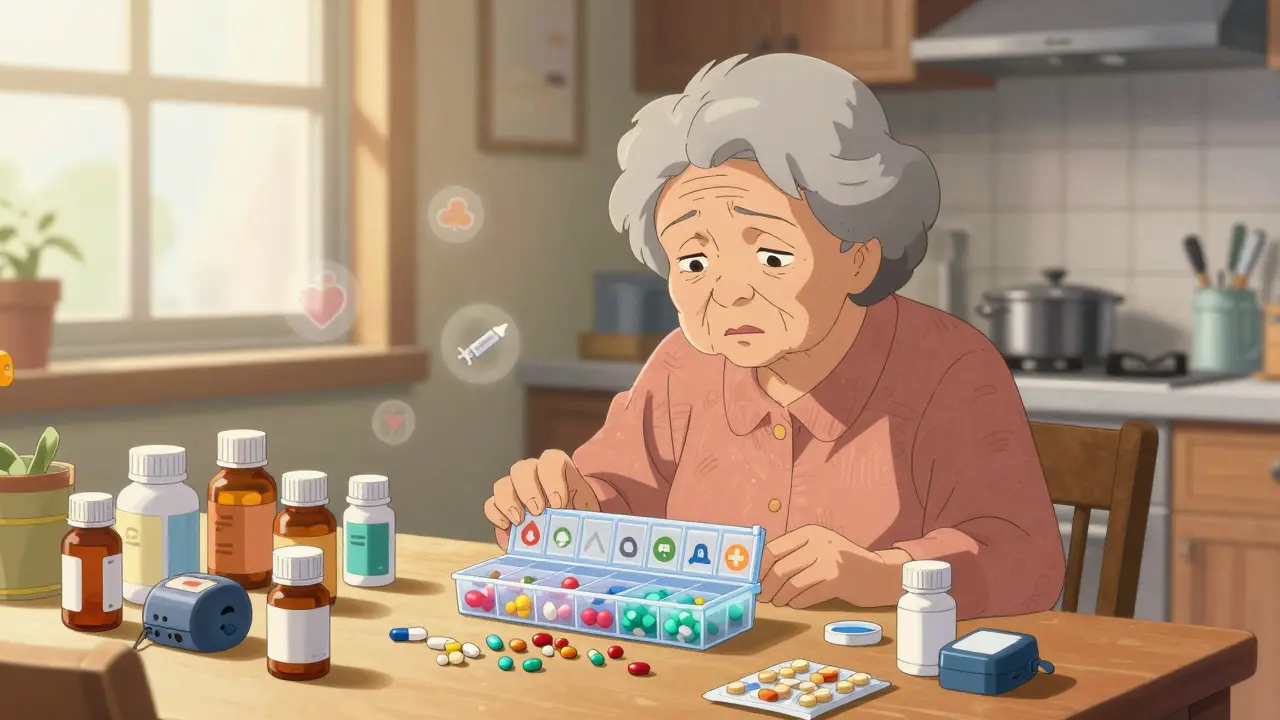
When you’re an older adult, a person typically aged 65 or older who may manage multiple chronic conditions and medications. Also known as seniors, this group often relies on several prescriptions at once, making medication safety a daily concern. It’s not just about taking pills—it’s about knowing which ones work together, which ones clash, and when a generic switch might need a dose tweak.
Many duplicate medications, the accidental use of two drugs with the same active ingredient, often from different doctors happen after specialist visits. One doctor prescribes a painkiller, another adds a sleep aid, and suddenly you’re taking two versions of the same thing—risking overdose or side effects. This is why keeping a real-time list of every pill, supplement, and patch you take is one of the simplest, most life-saving habits for older adults. Pair that with using just one pharmacy, and you cut the risk of dangerous overlaps by half.
Switching to generic medications, lower-cost versions of brand-name drugs that must meet the same FDA standards sounds smart—until your blood thinner or thyroid medicine stops working right. Drugs like warfarin and levothyroxine have a narrow therapeutic index, meaning tiny changes in dose can cause big problems. That’s why some older adults need their doses adjusted after a generic switch. And don’t forget food interactions: green tea, a common beverage that contains vitamin K and can interfere with blood thinners like warfarin, can throw off your INR levels. Even something as simple as grapefruit juice can mess with how your body handles meds.
Side effects aren’t just annoying—they can be dangerous. Antidepressants might kill your sex drive. Lithium can slow your thyroid. Doxepin, used for chronic pain, can make you dizzy. These aren’t rare issues. They’re common enough that we’ve got specific guides on how to fix them without ditching your treatment. You don’t have to suffer in silence. There are proven swaps, add-ons, and timing tricks that restore quality of life.
And when things go wrong fast—a sudden rash, trouble breathing, a seizure—you need a plan. That’s why building a home emergency kit, a small, organized collection of essentials like antihistamines, antacids, and epinephrine for sudden drug reactions is just as important as filling your prescriptions. Keep it near the door. Know what’s in it. Teach a family member how to use it.
Older adults aren’t just patients—they’re people managing complex health systems with limited time, energy, and support. The good news? You don’t need to be an expert. You just need clear, practical steps. Below, you’ll find real guides written for real lives: how to avoid duplicate pills, how to check for dangerous drug interactions, how to spot when a generic isn’t working, and what to do when side effects hit hard. No fluff. No jargon. Just what works.